 Image 1 of 9
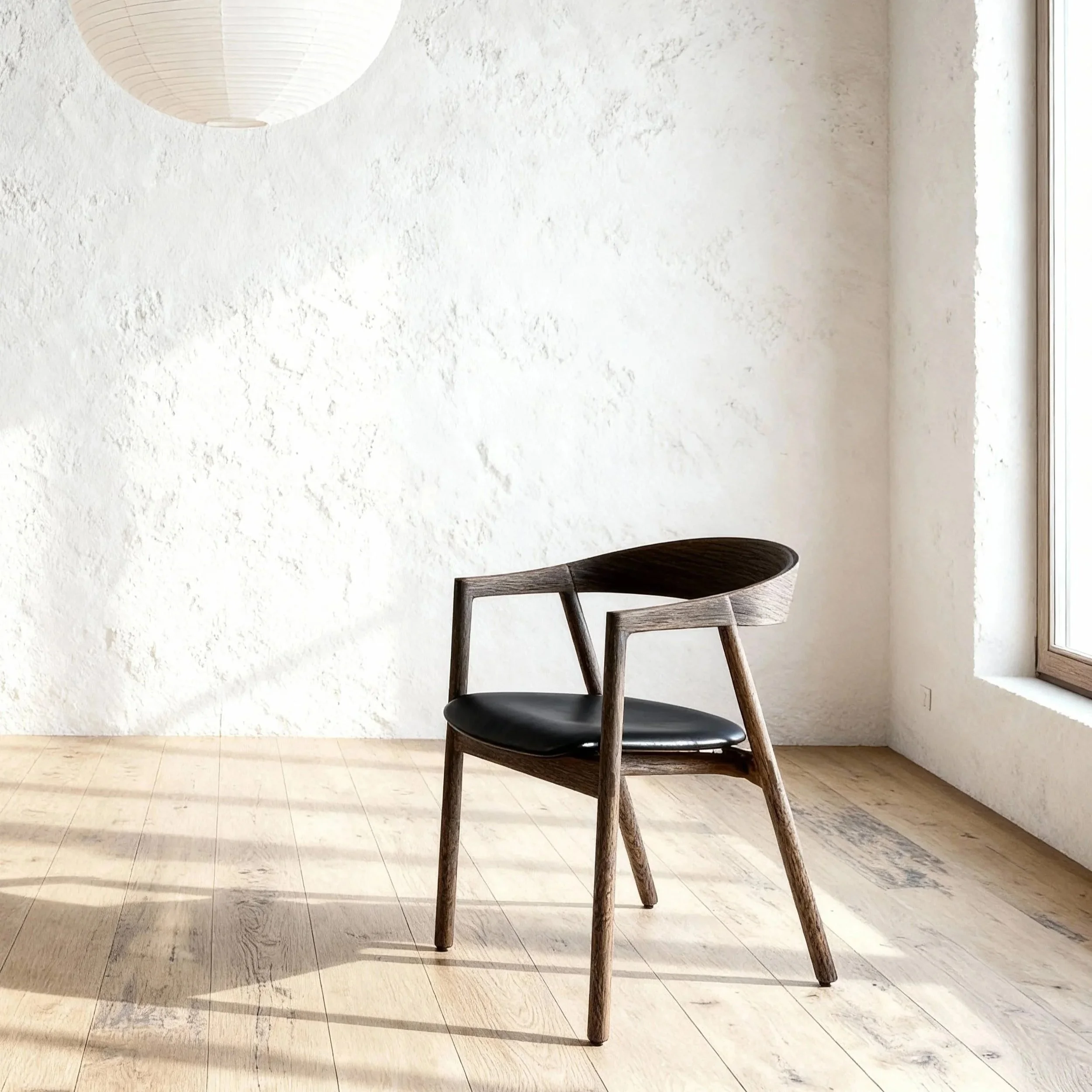 Image 2 of 9
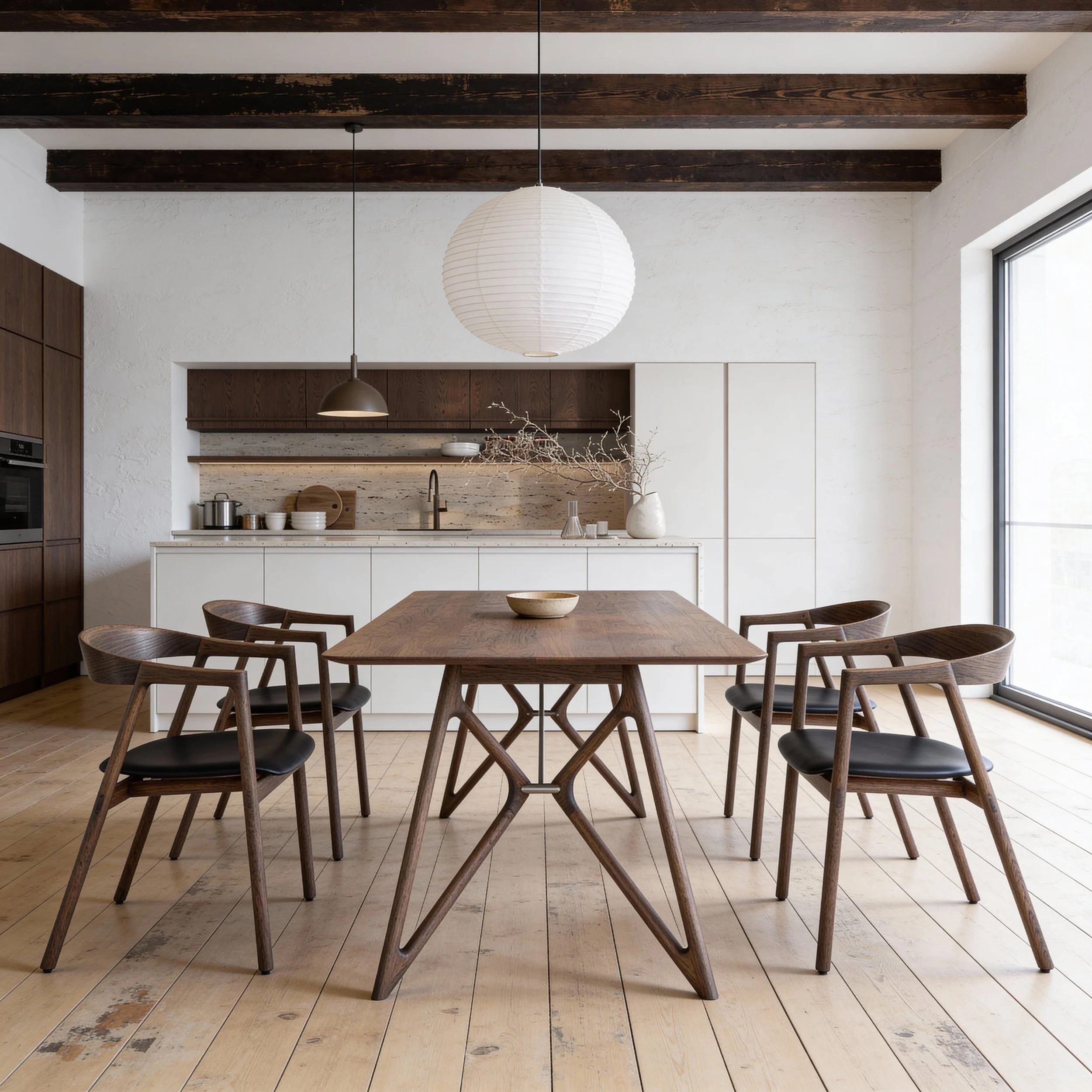 Image 3 of 9
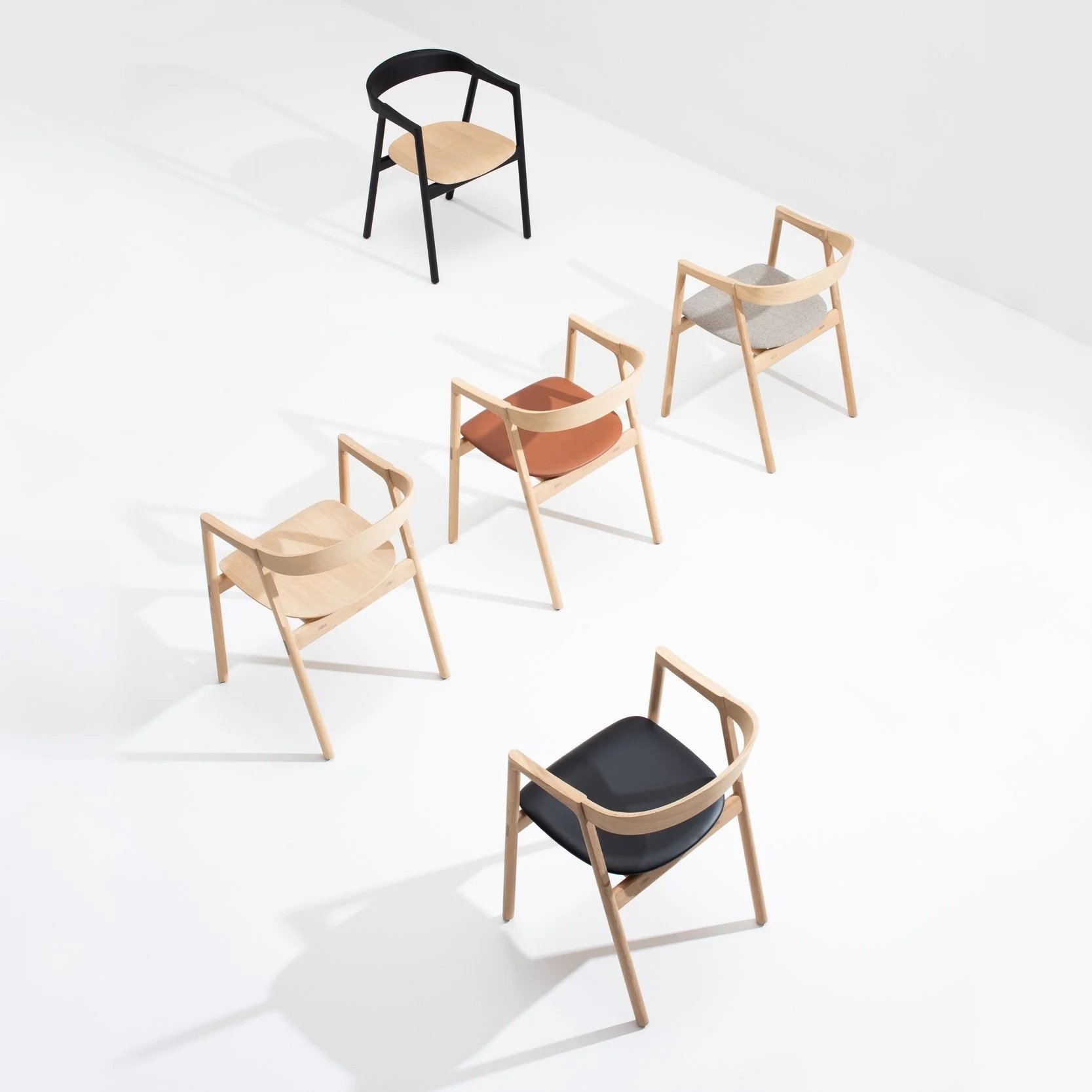 Image 4 of 9
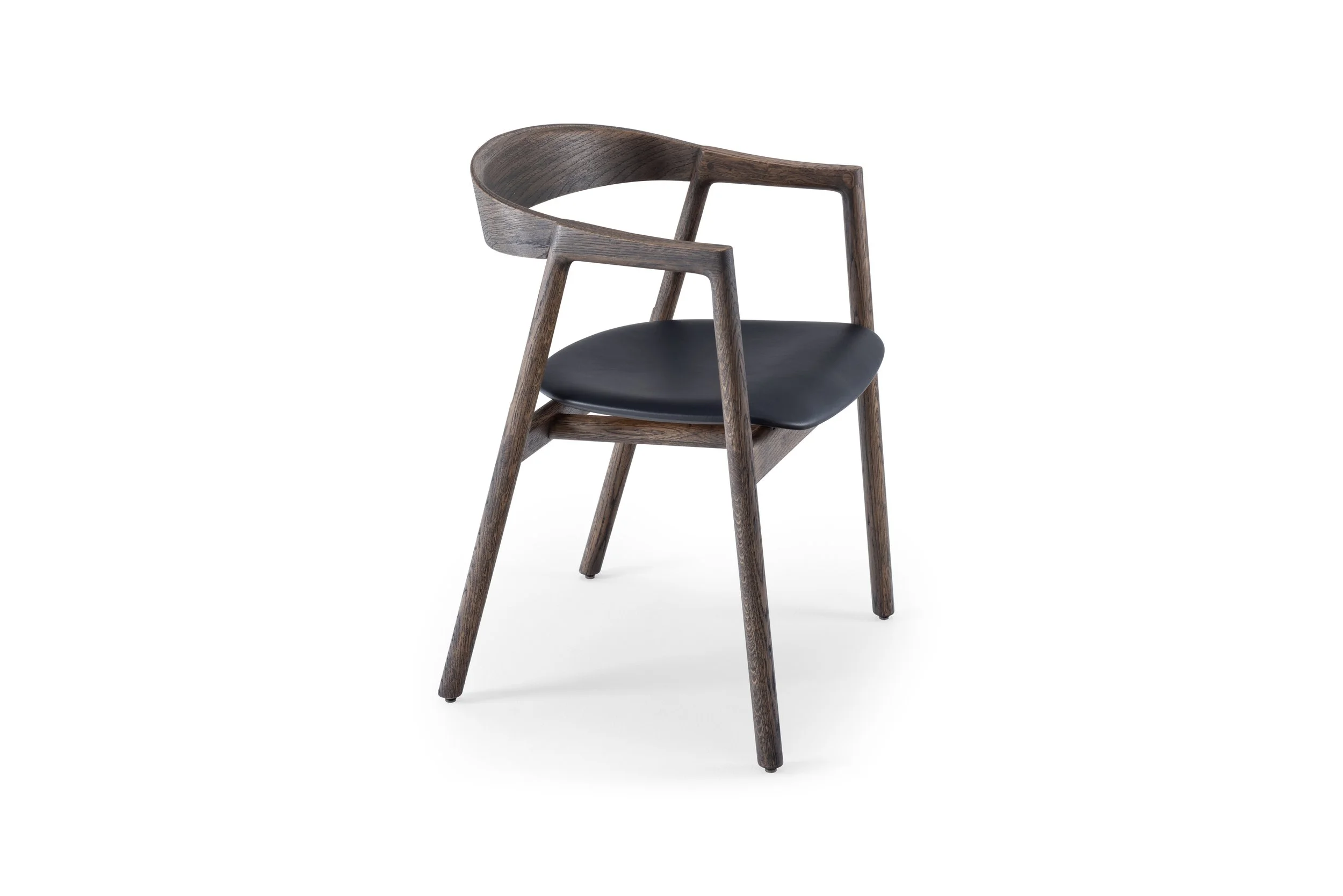 Image 5 of 9
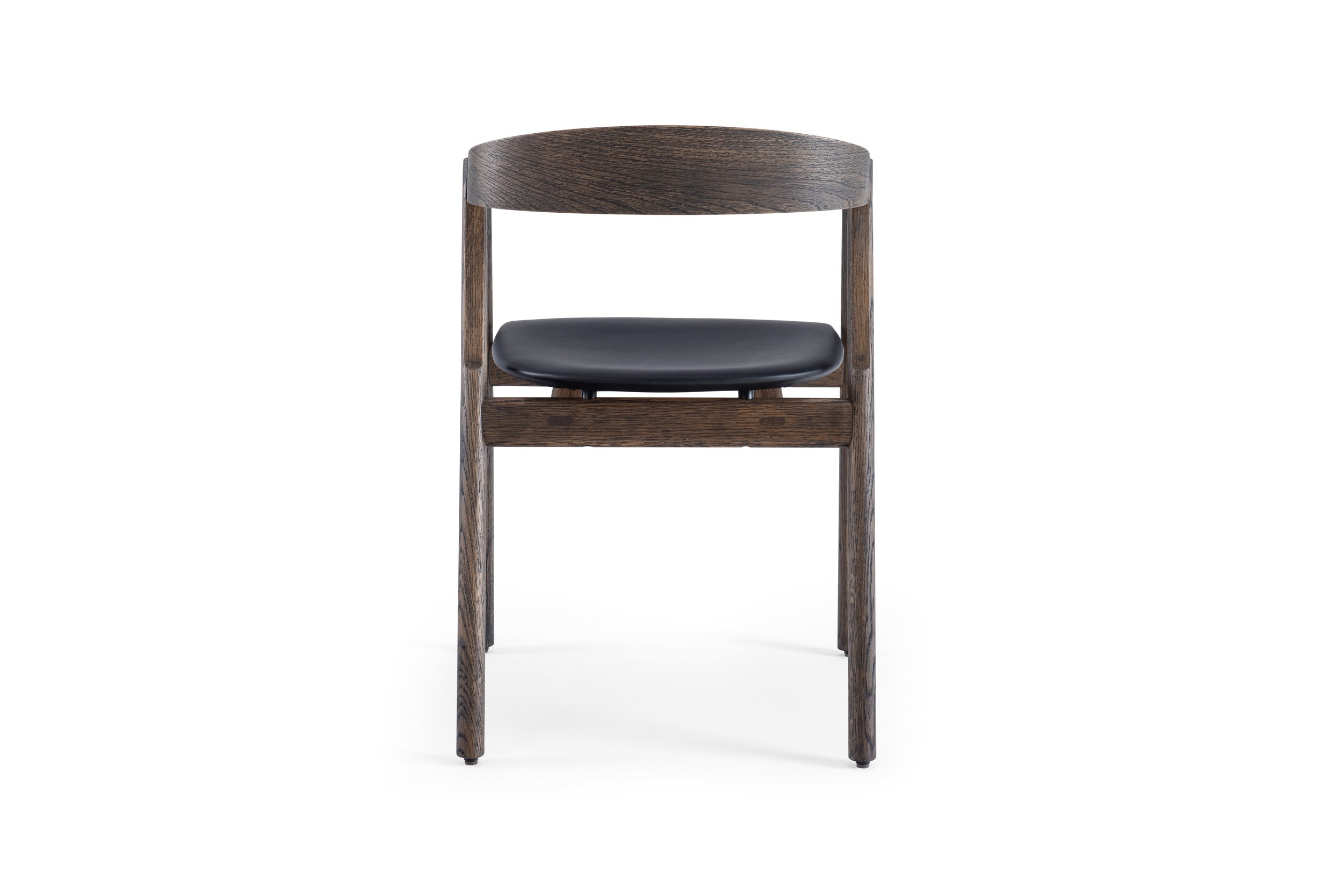 Image 6 of 9
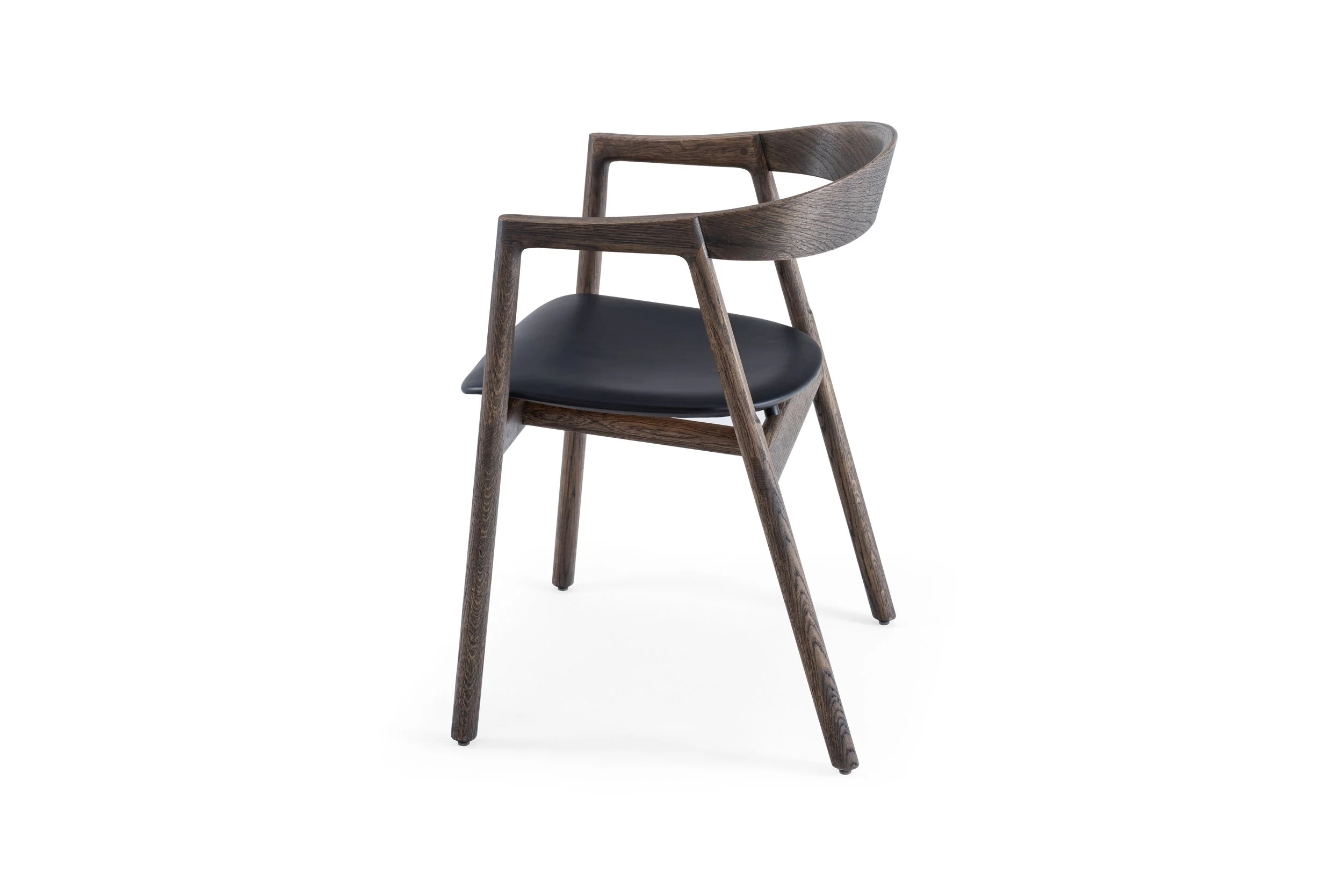 Image 7 of 9
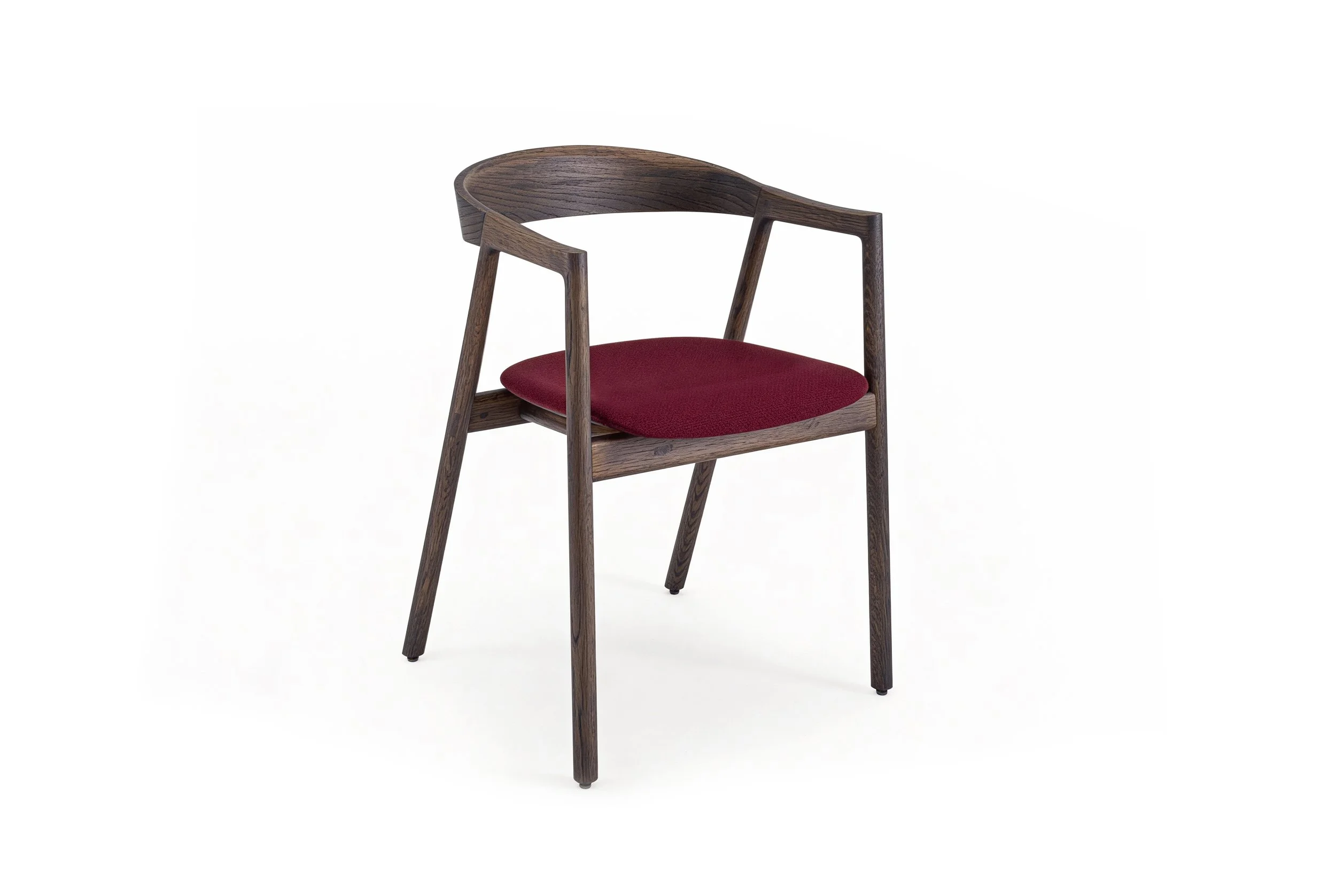 Image 8 of 9
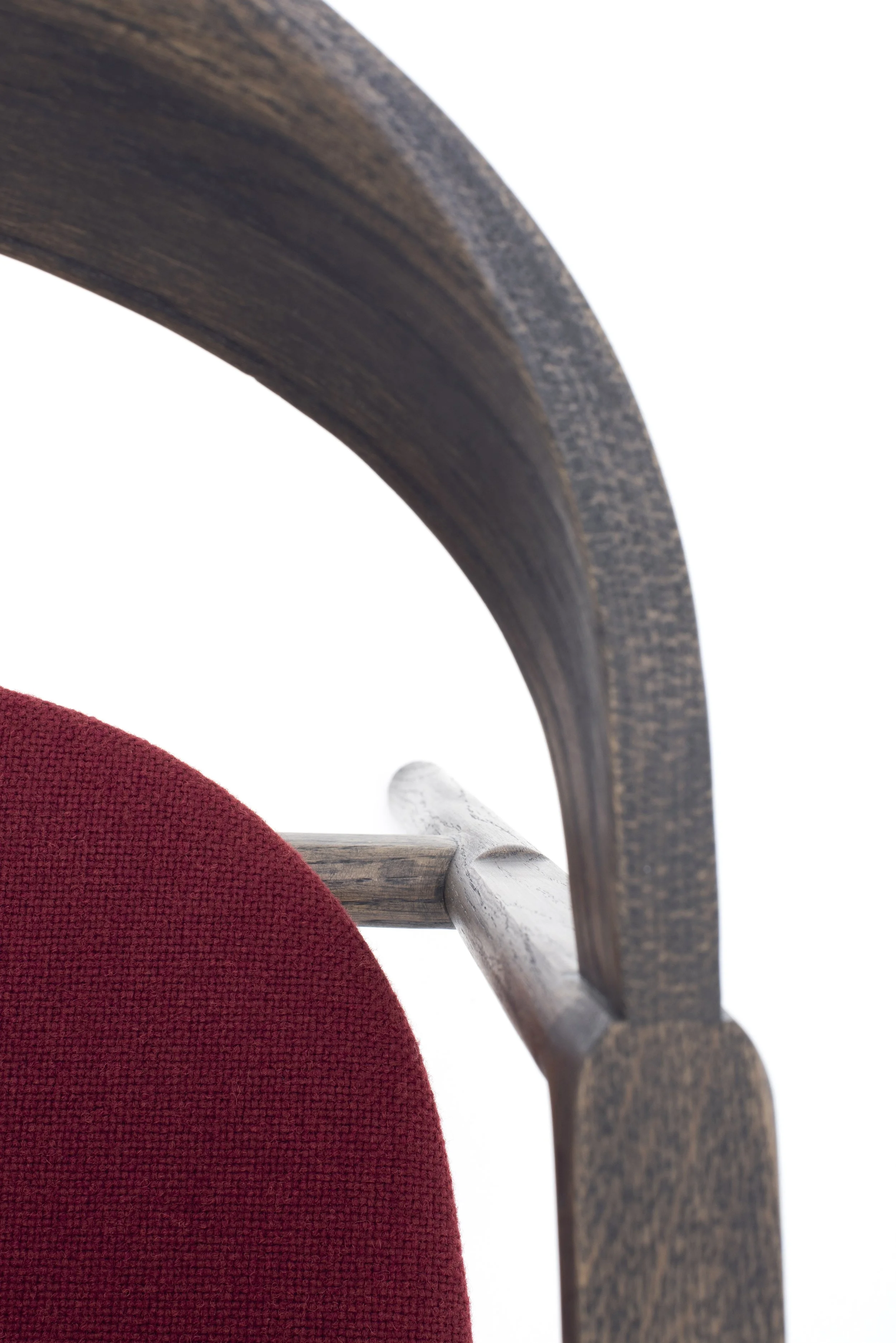 Image 9 of 9
Muna Chair
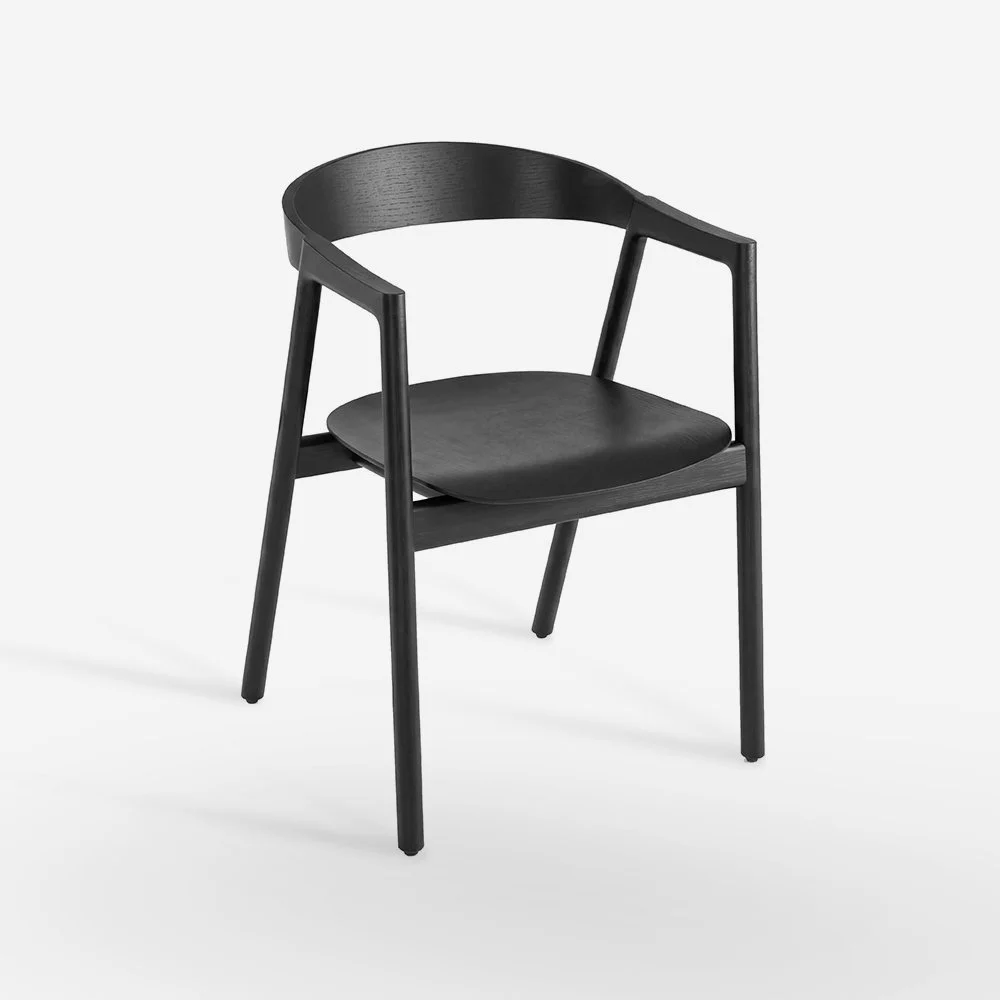
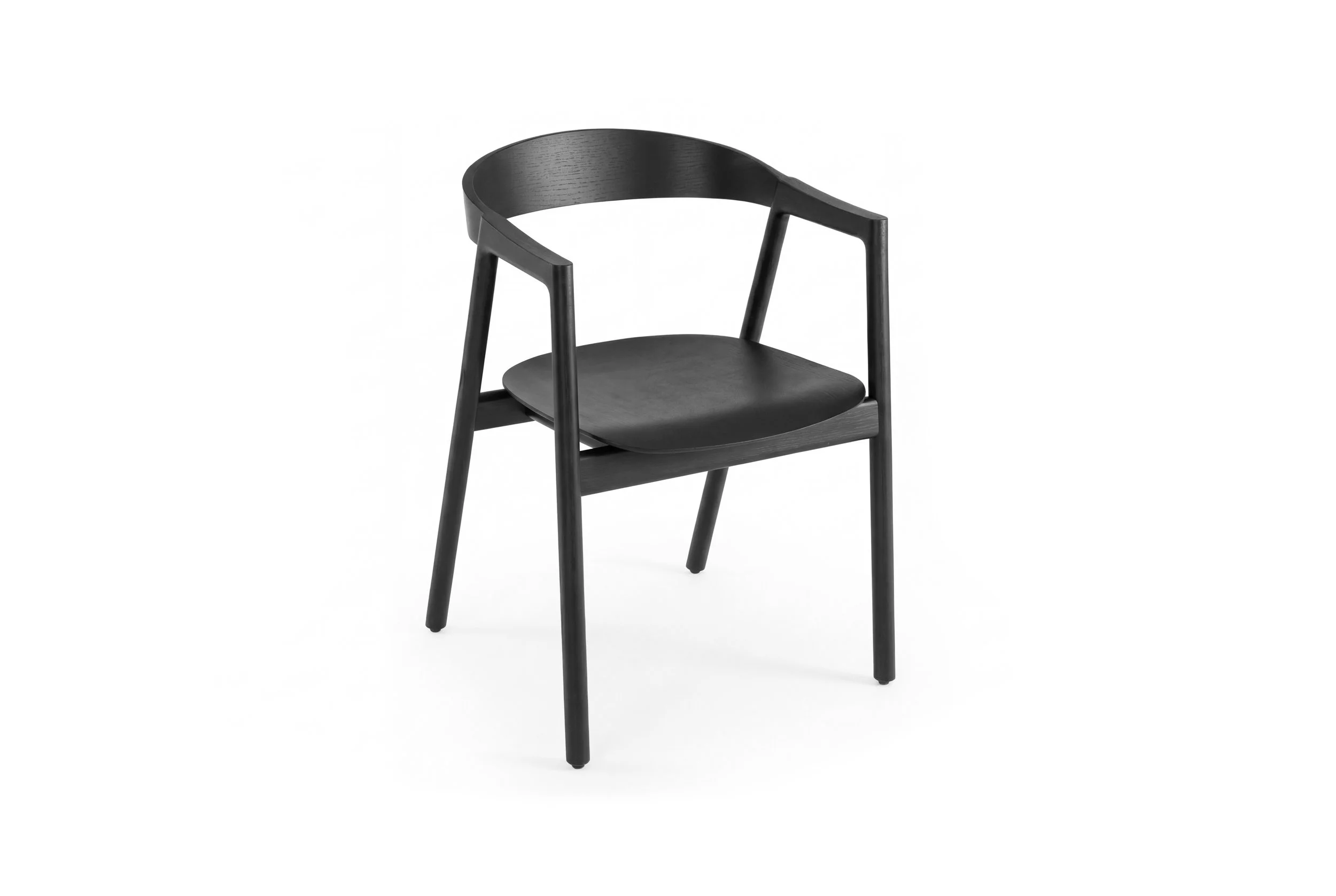
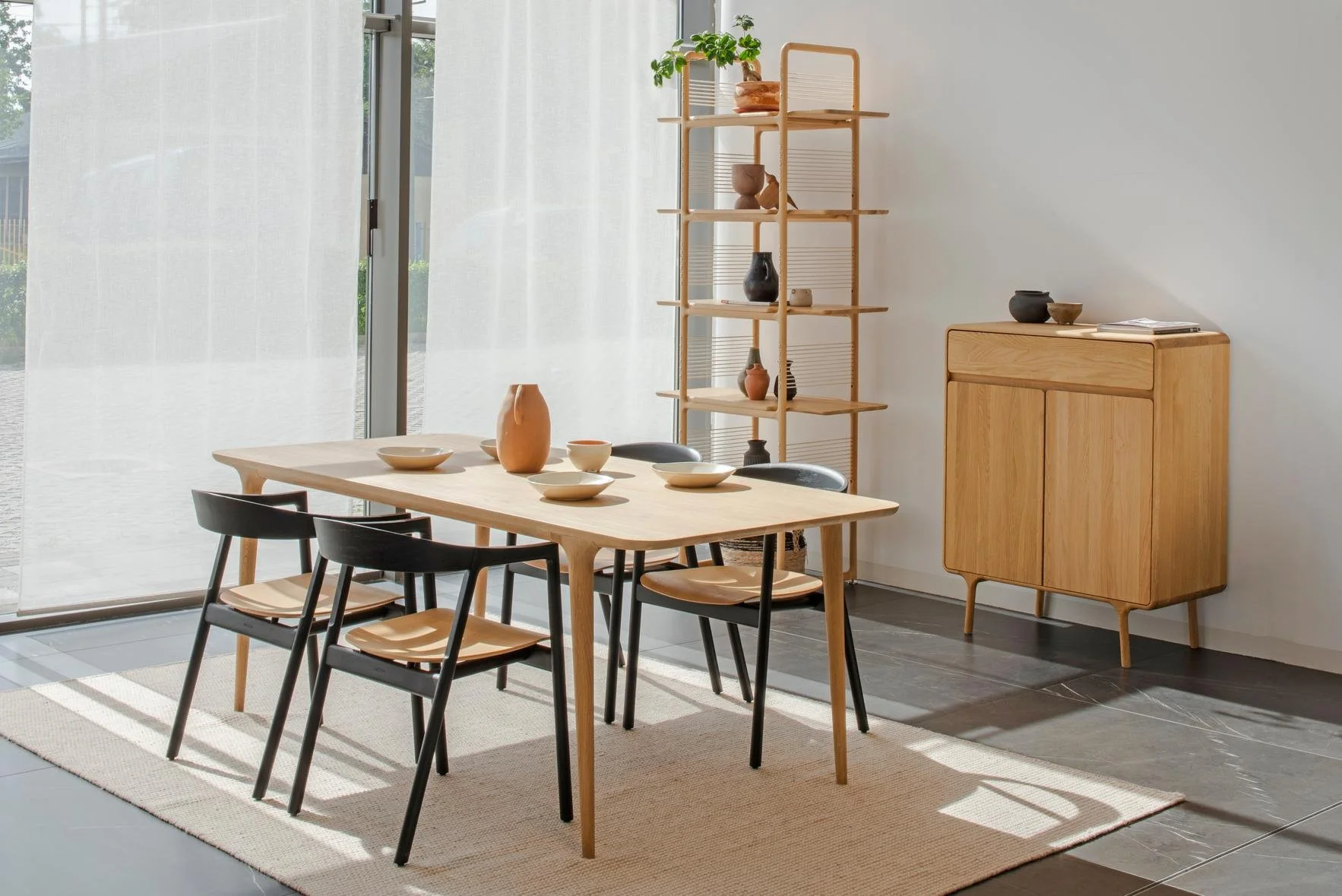
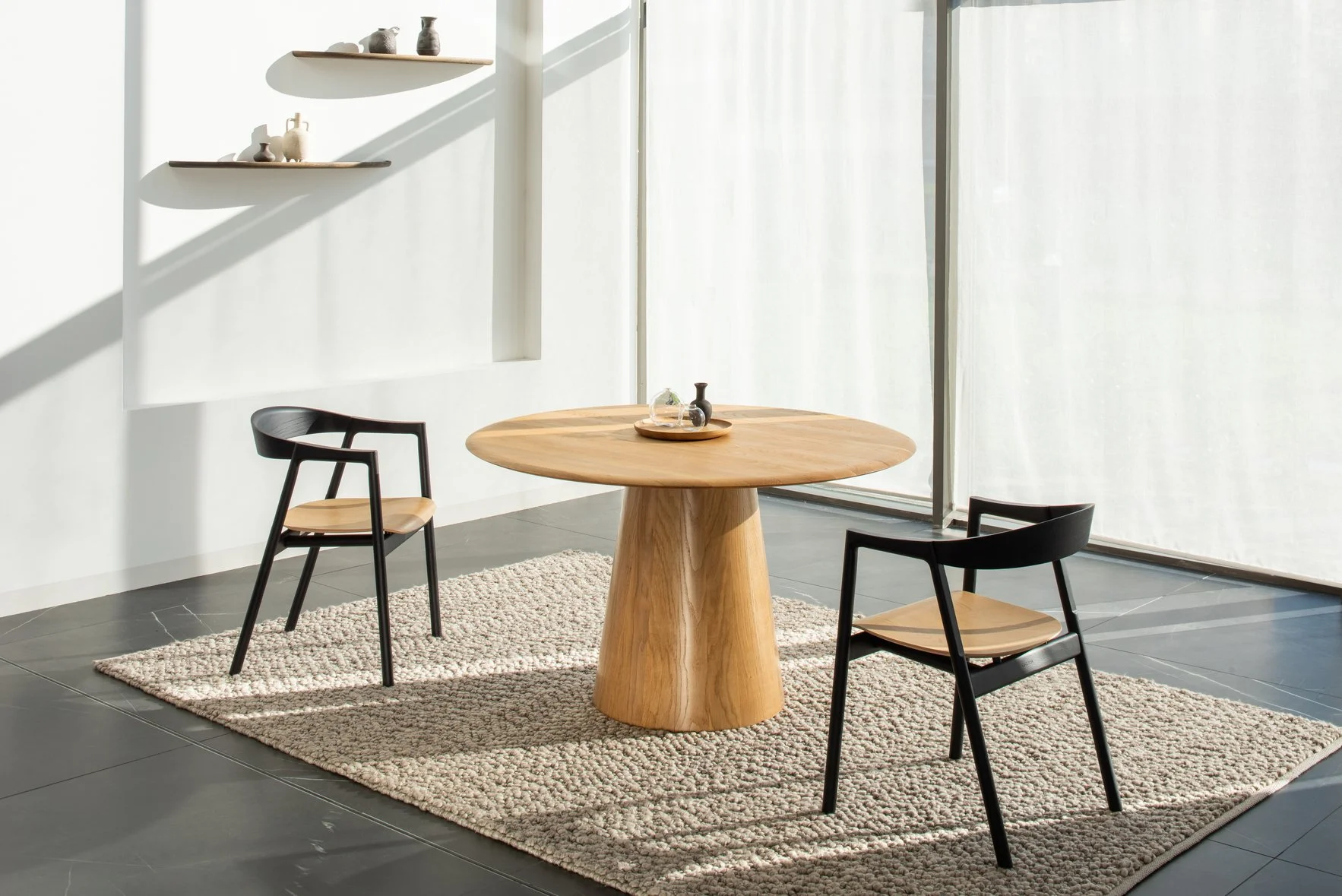
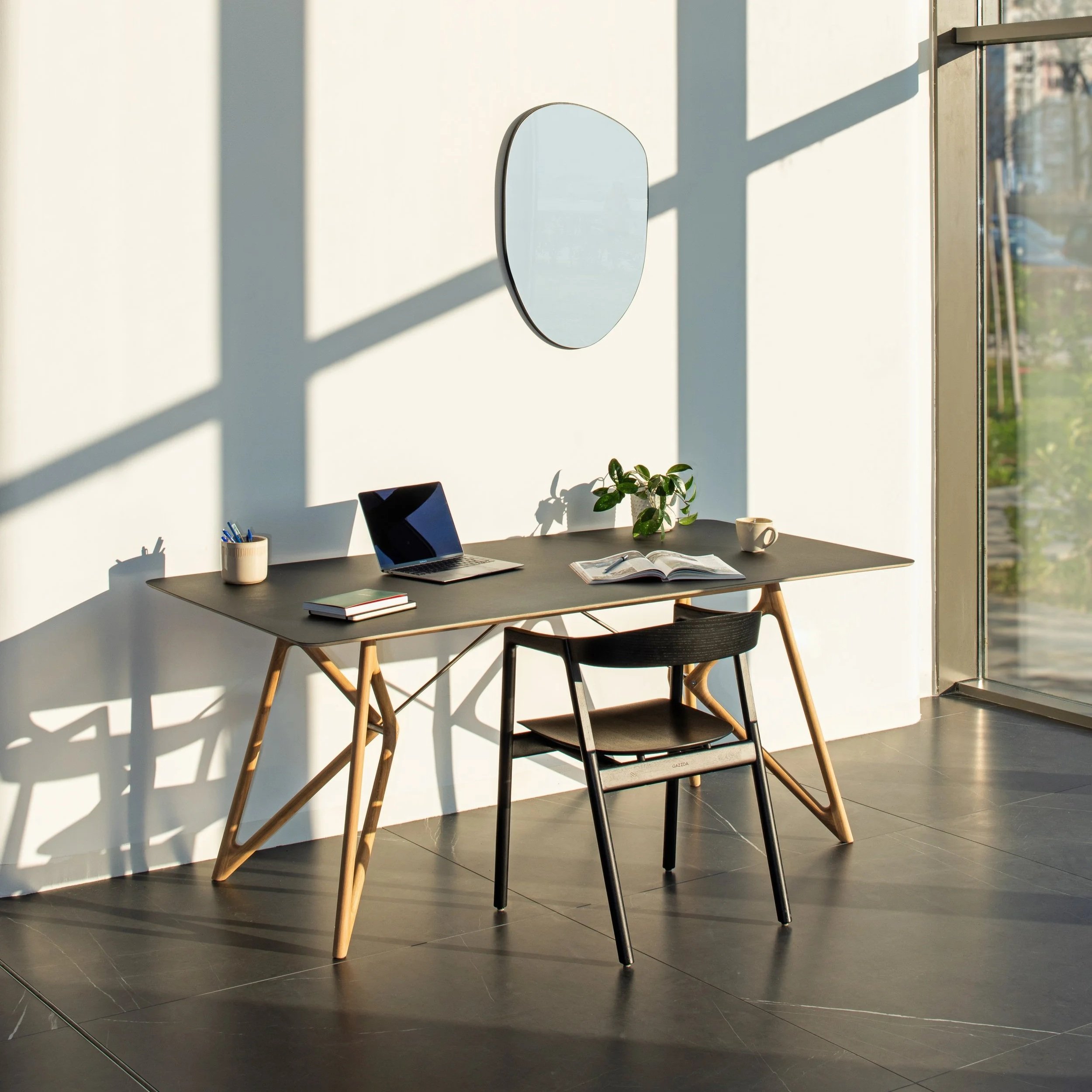
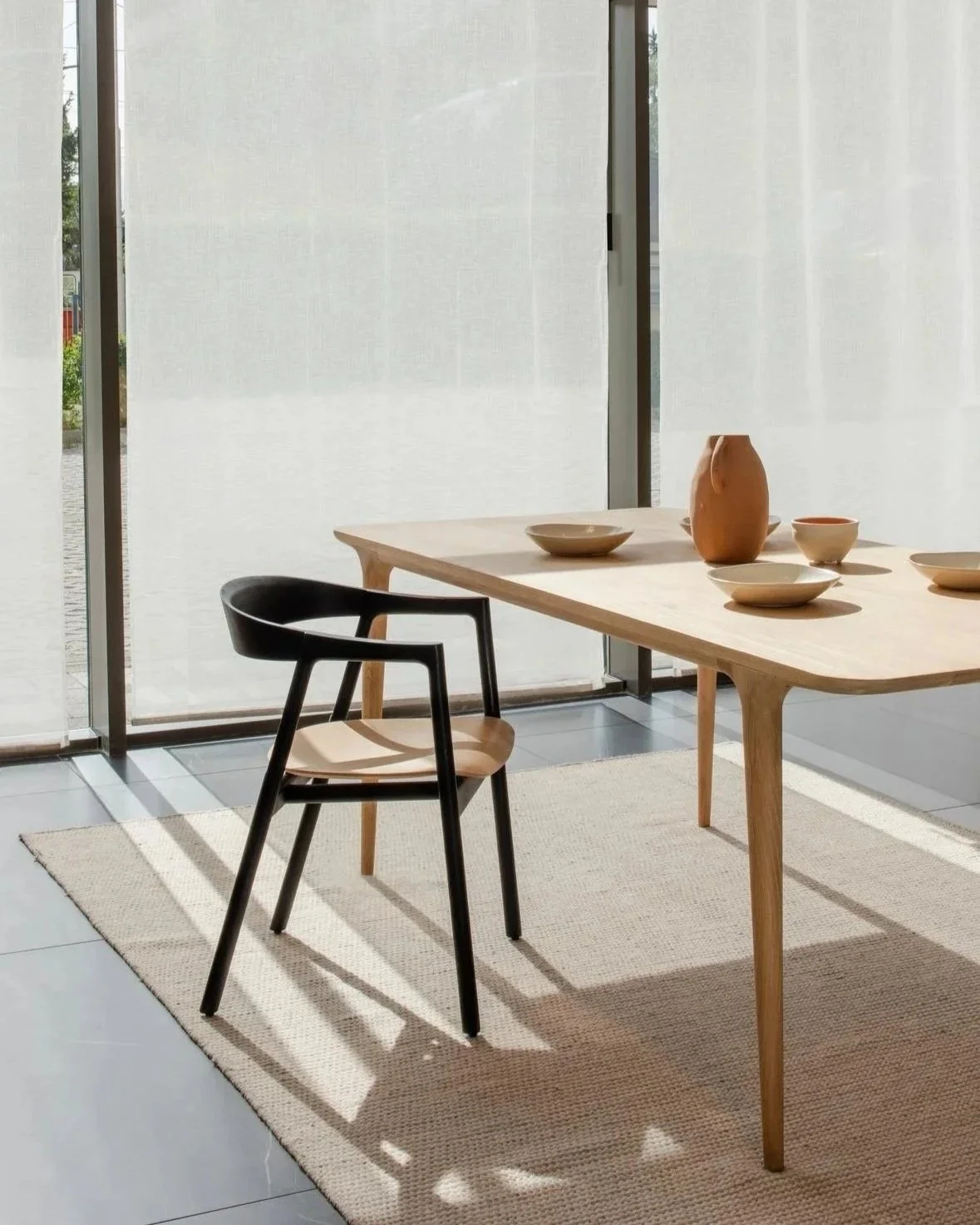
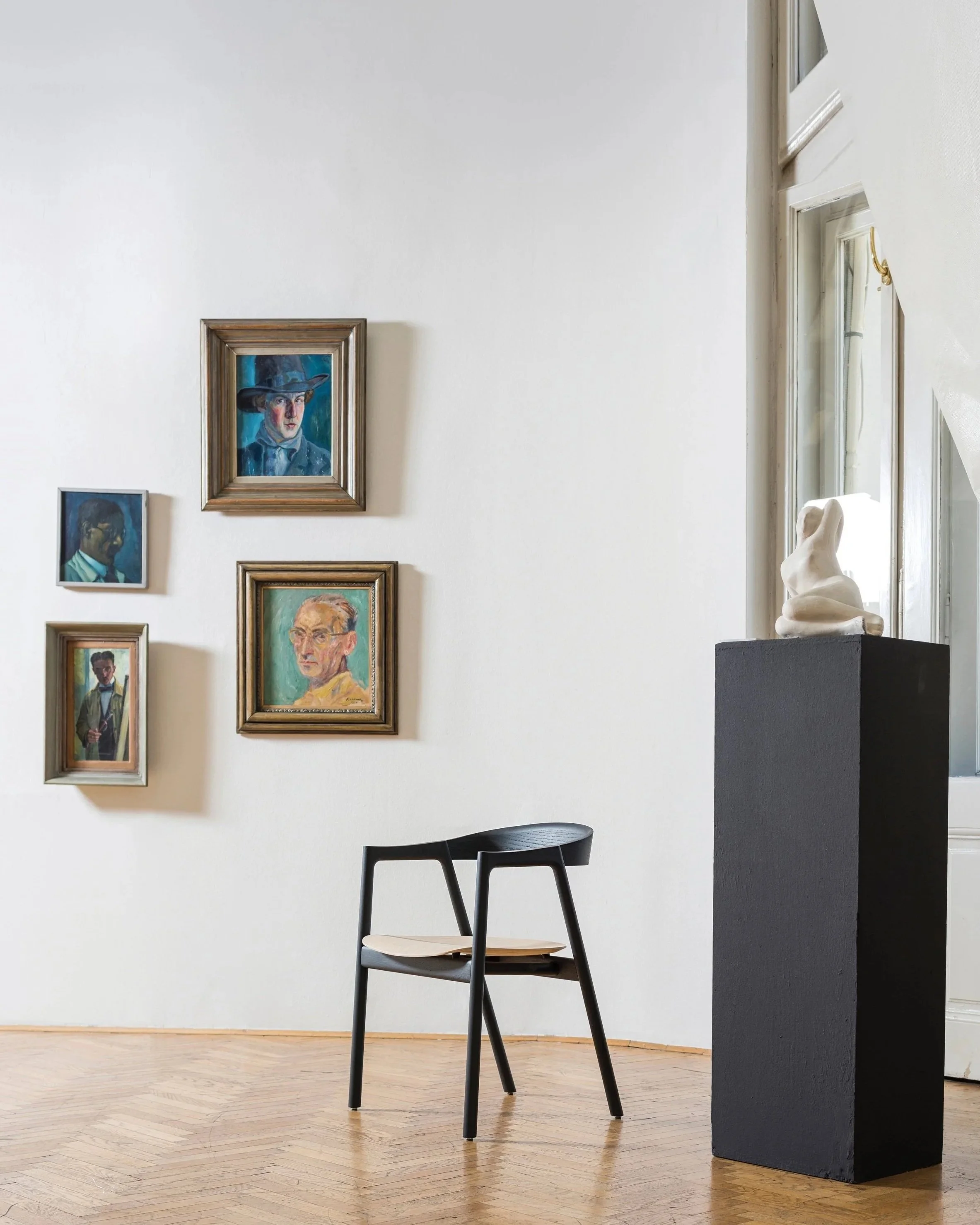
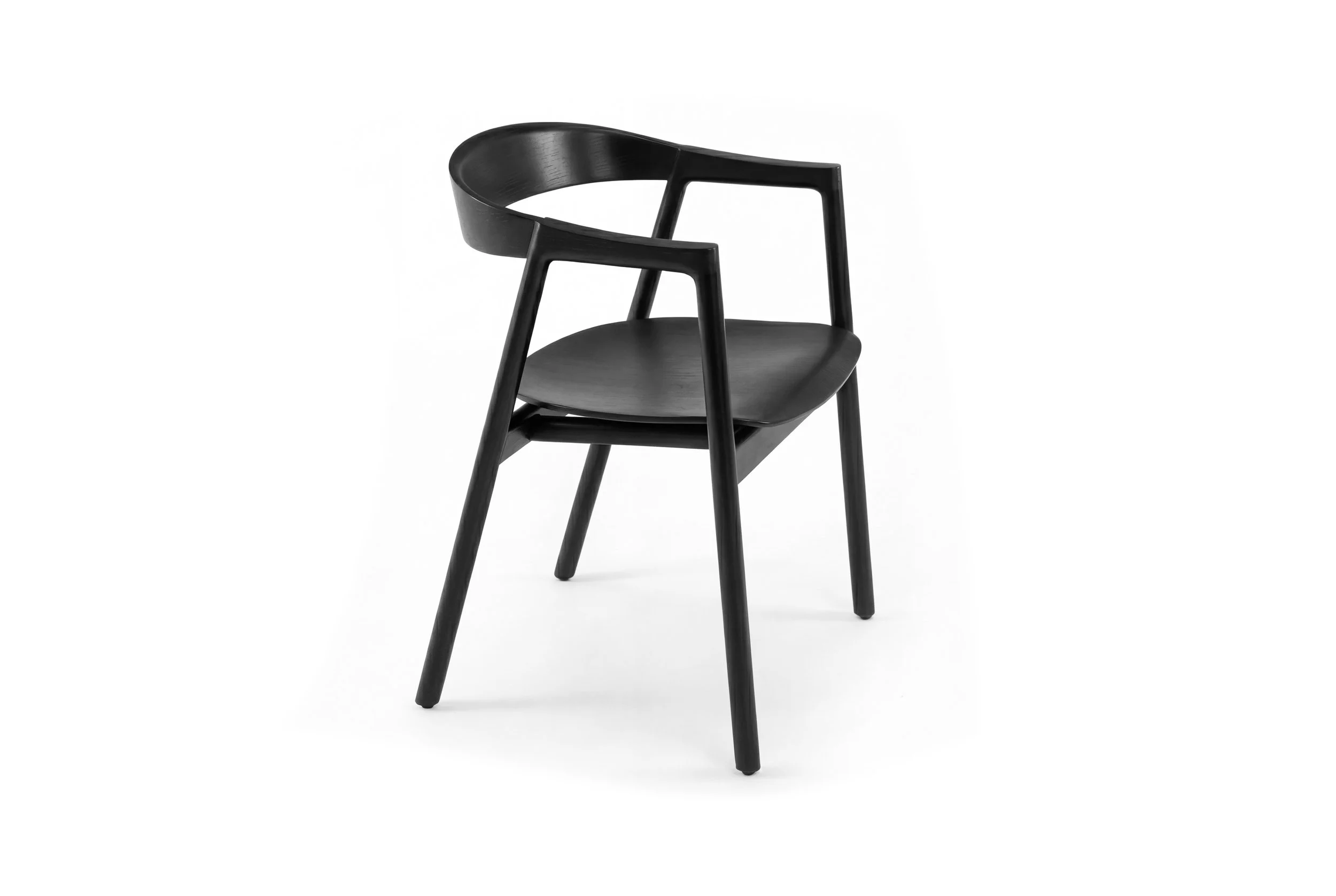
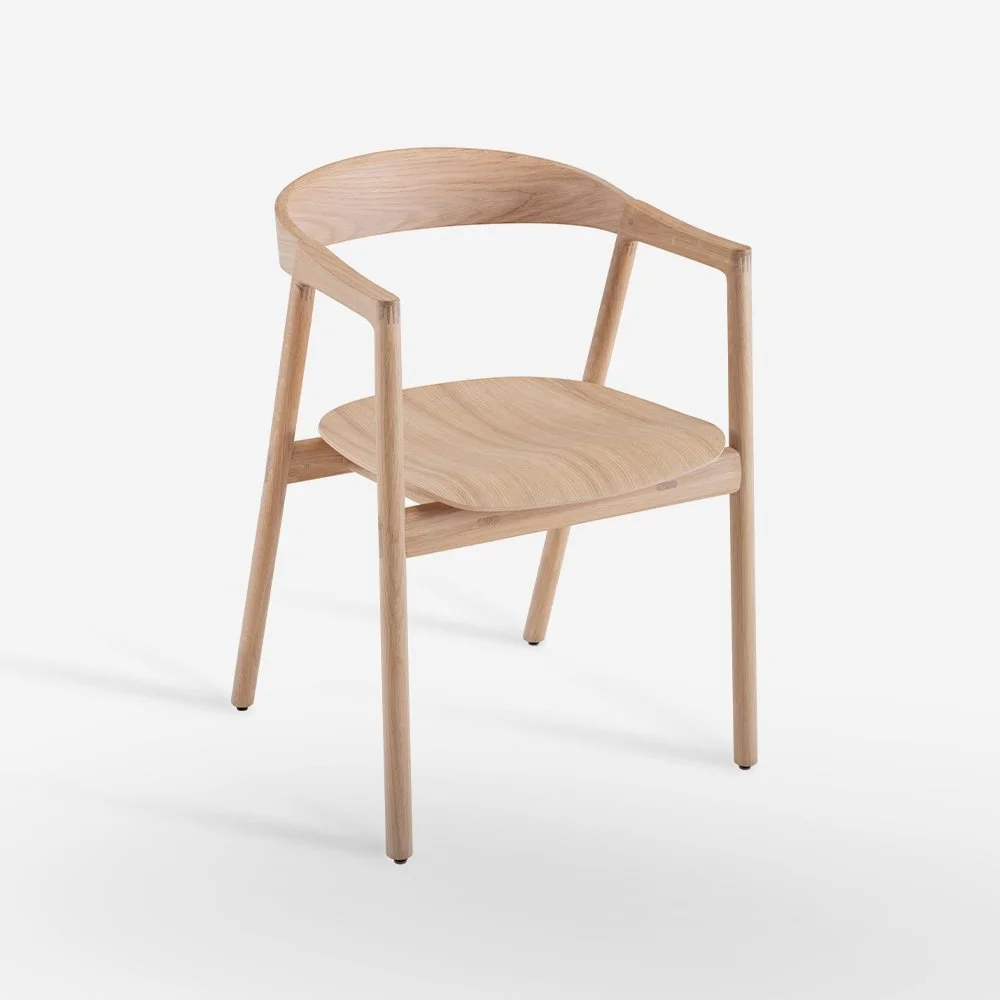
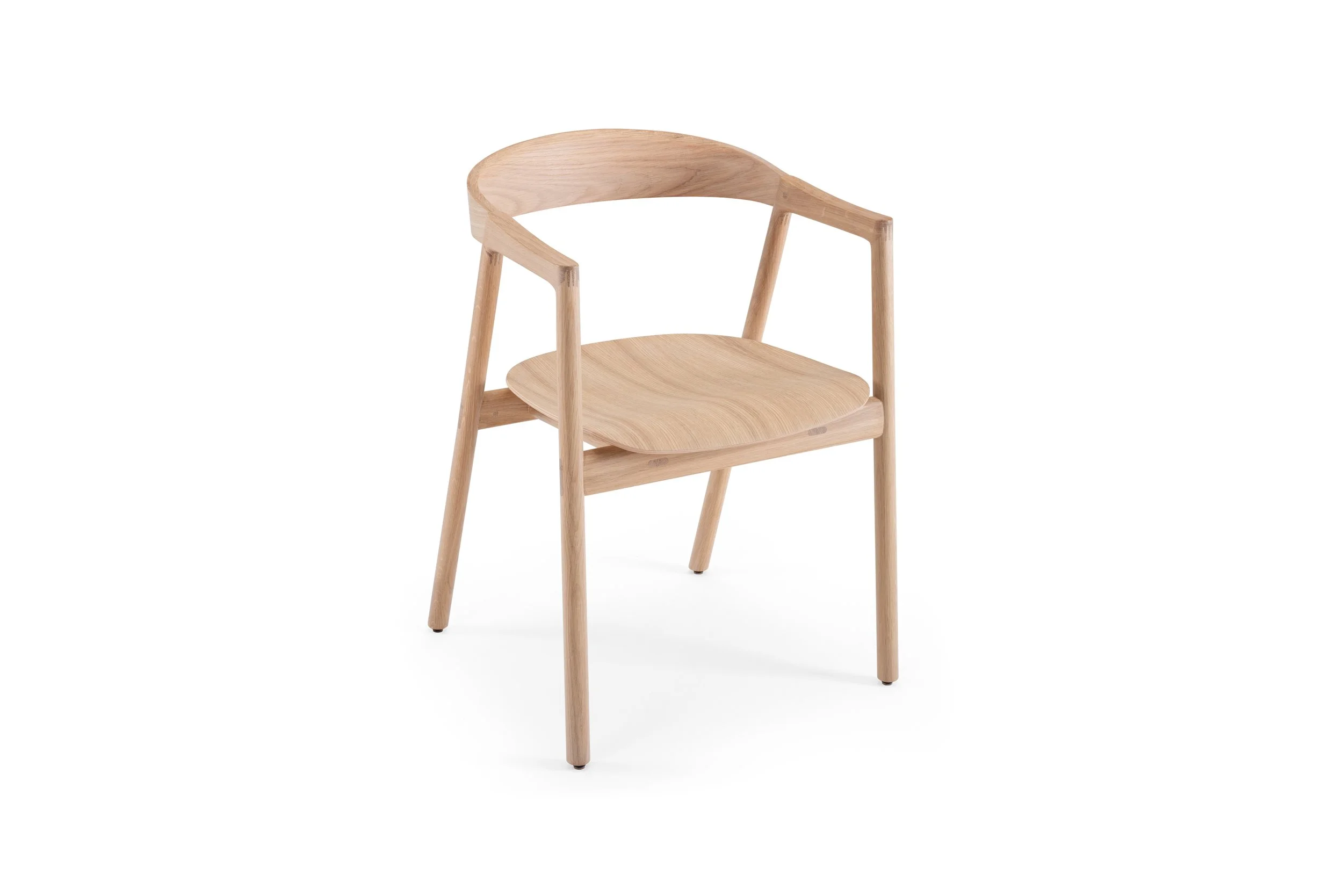
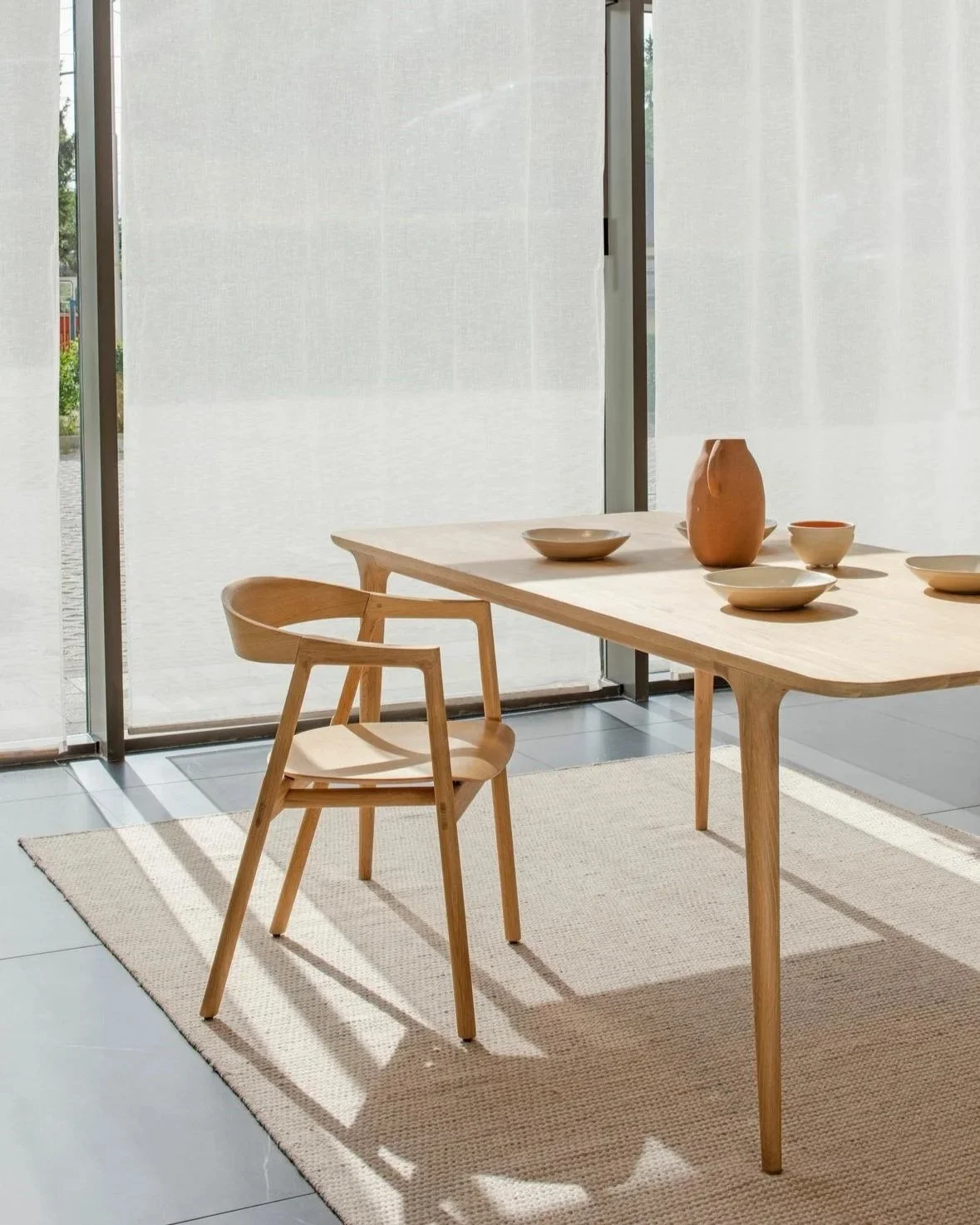
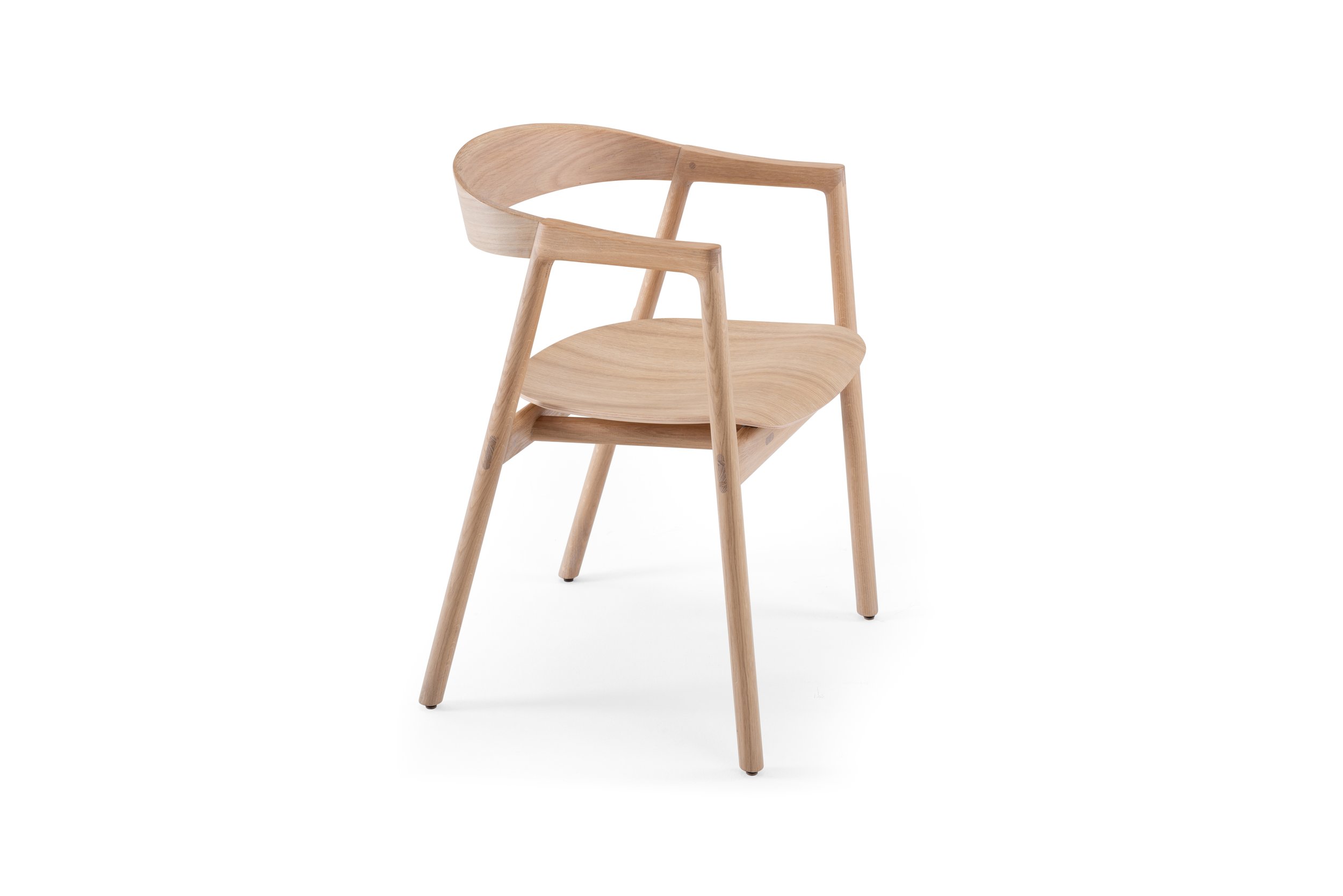
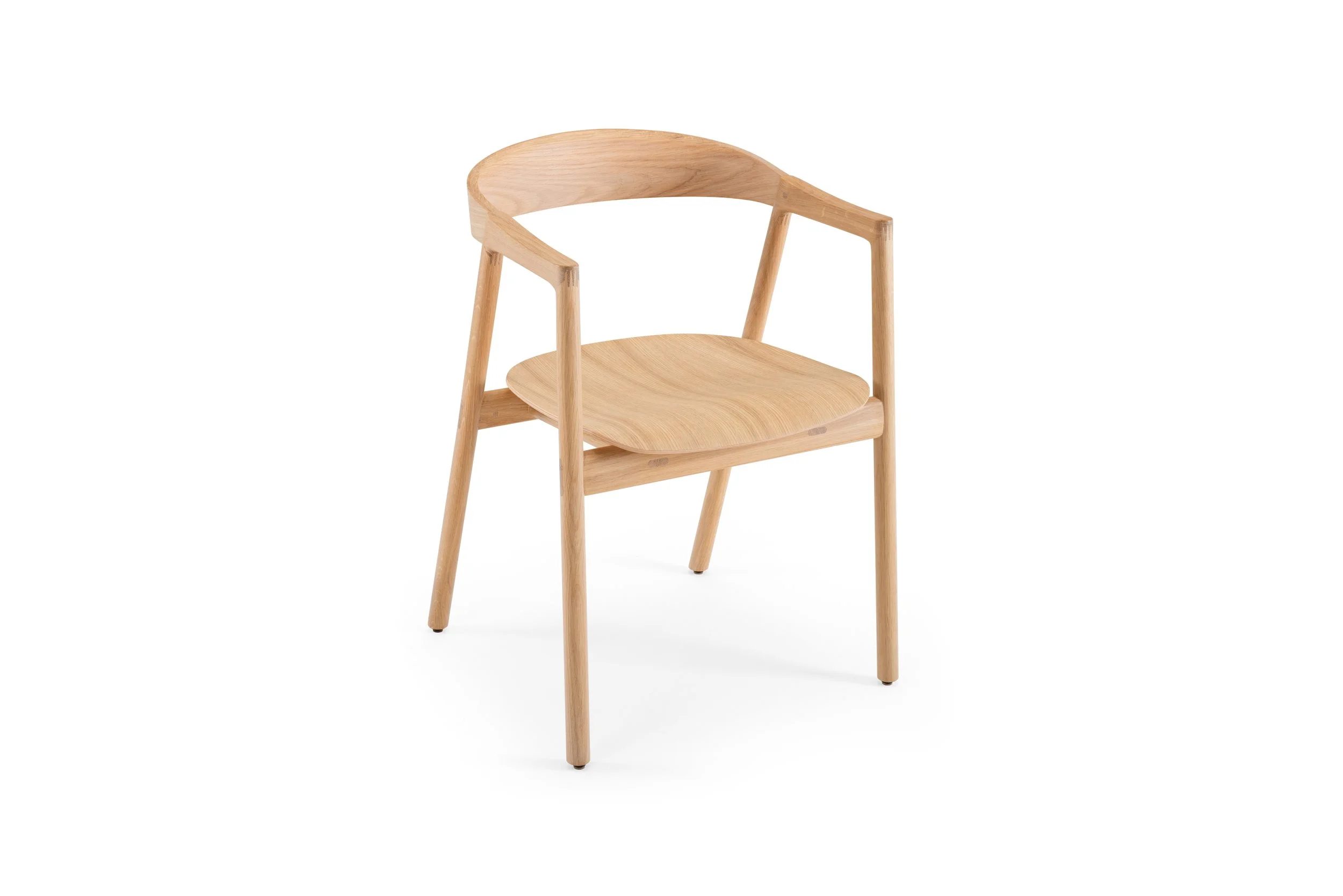
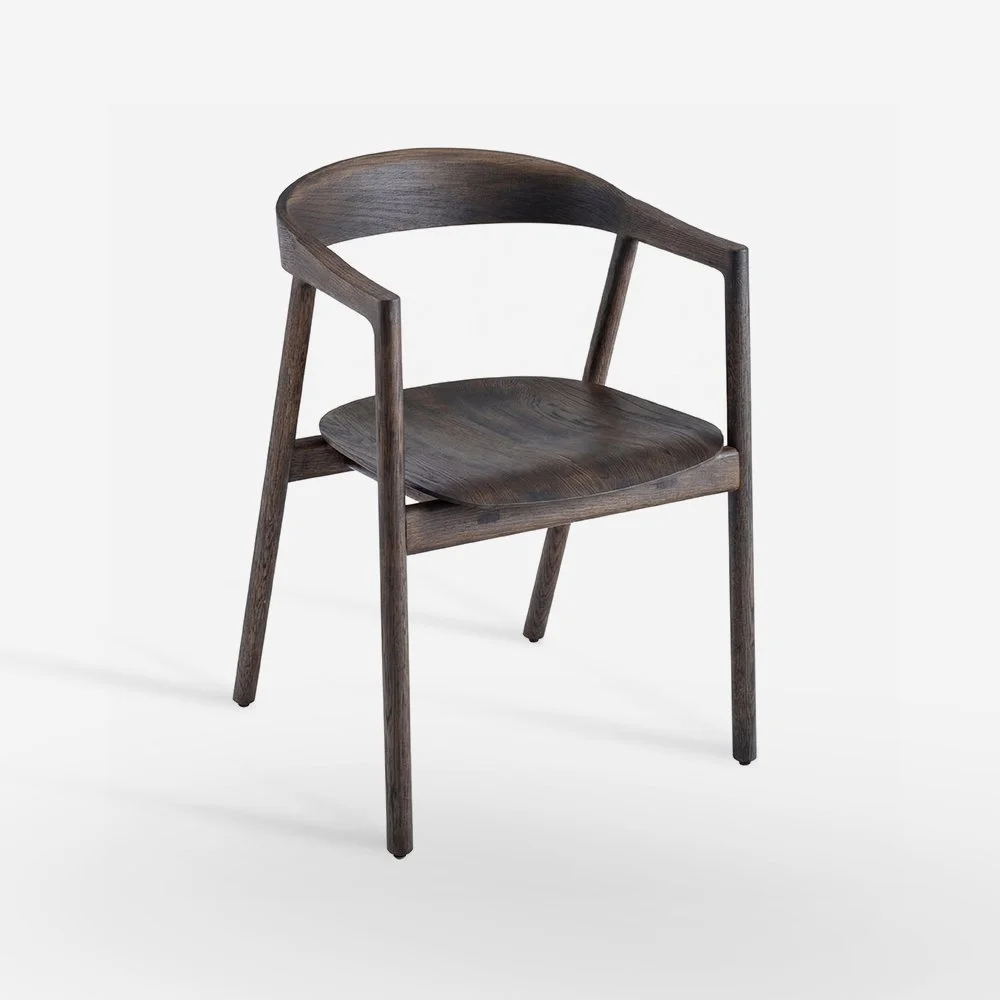
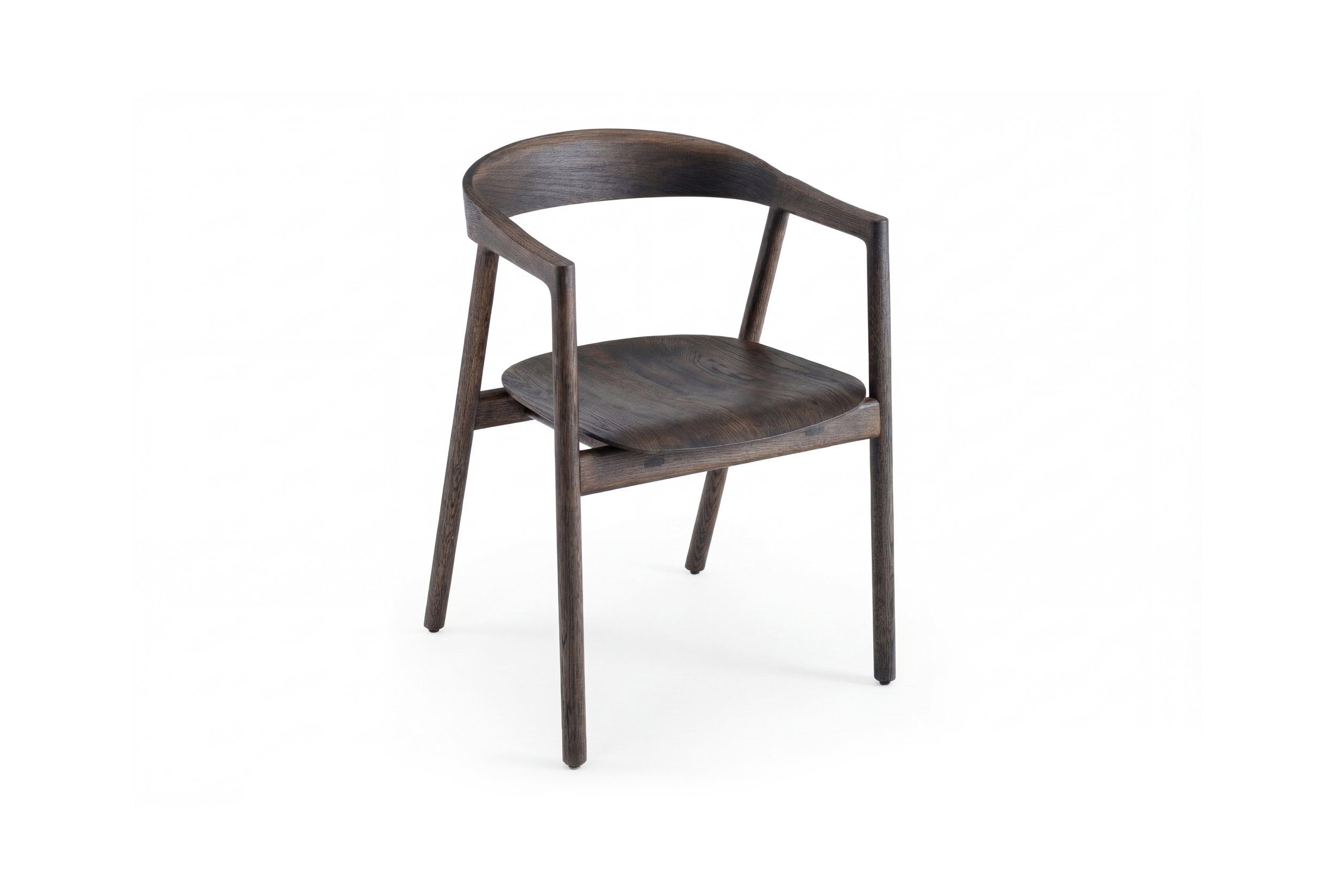
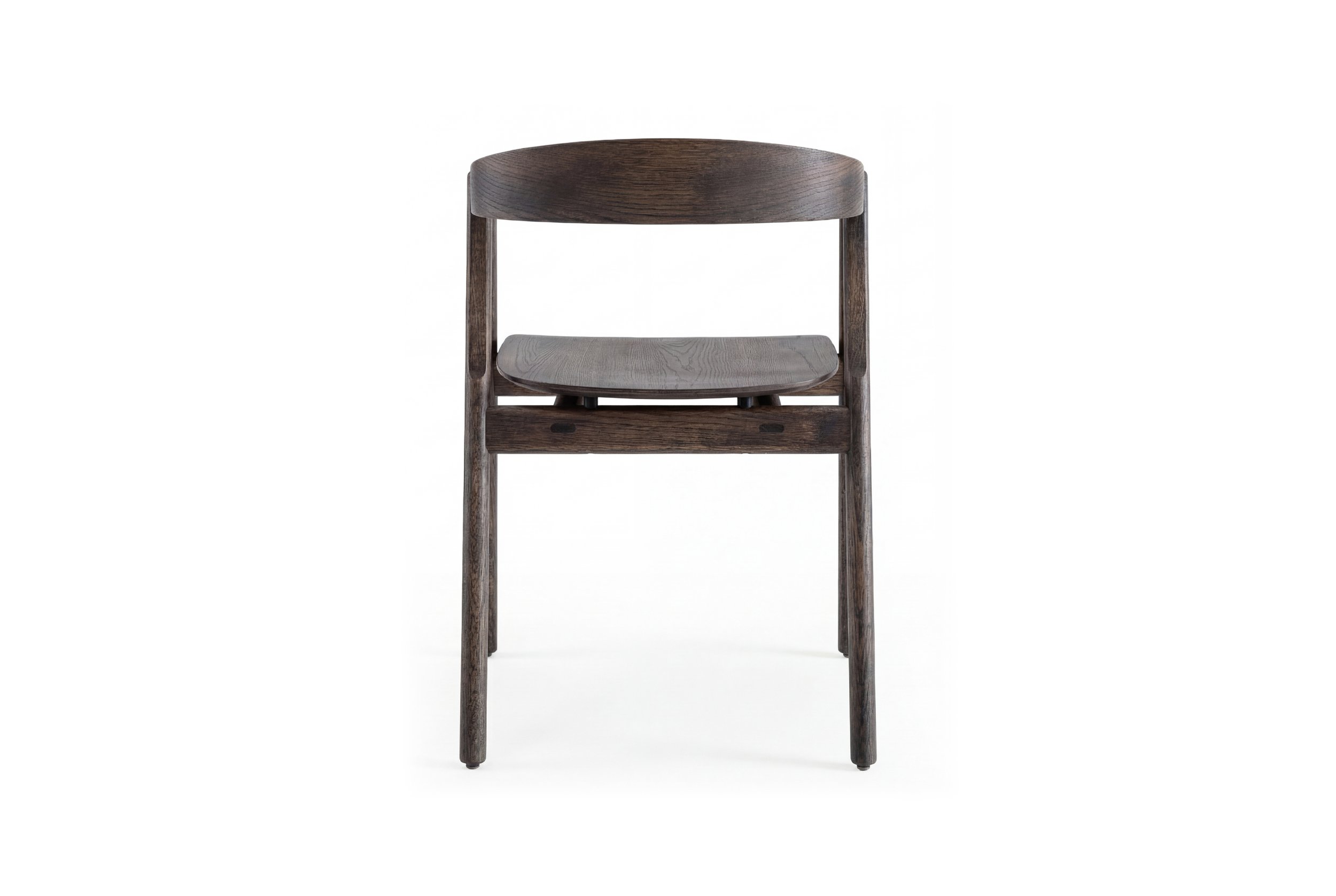
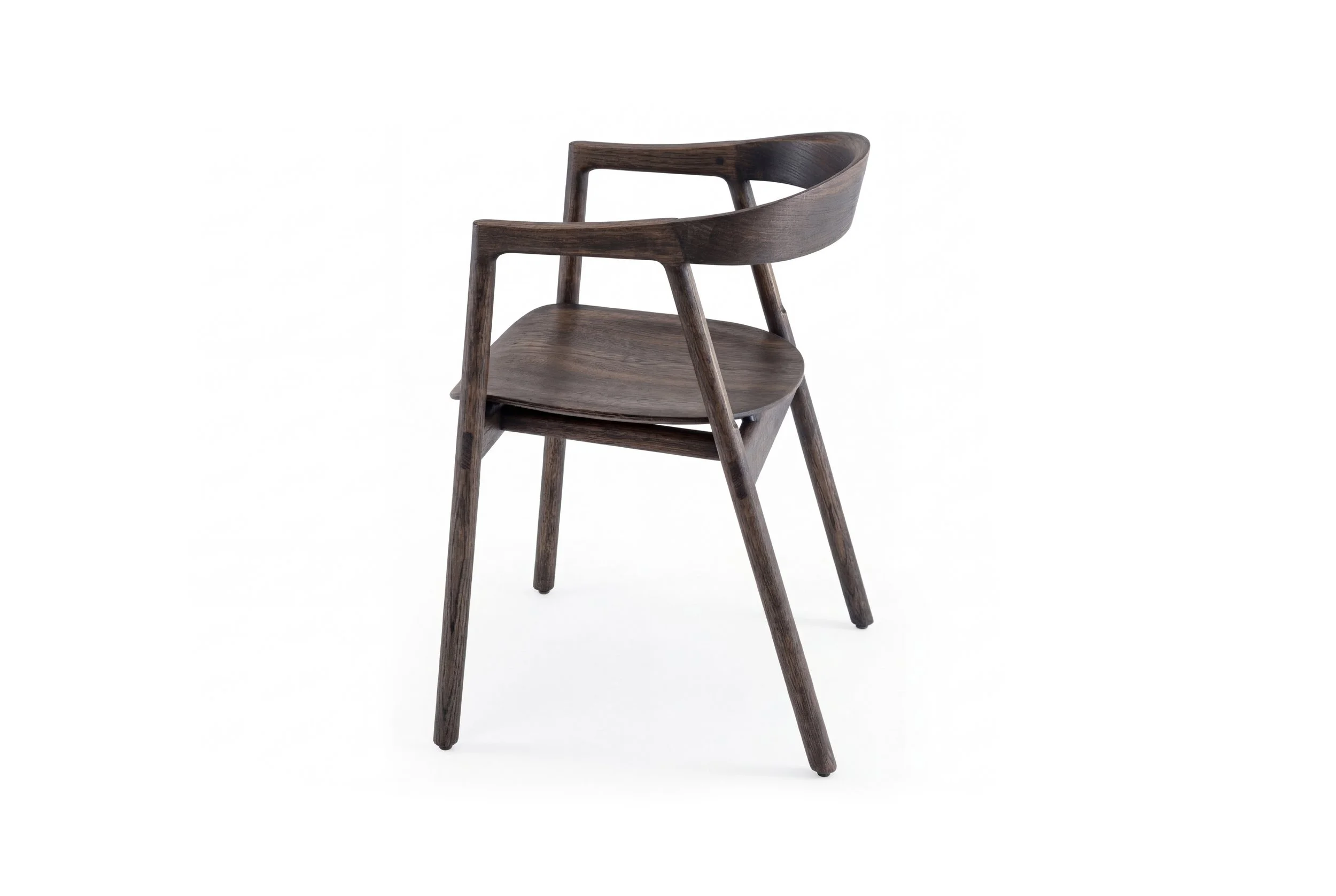
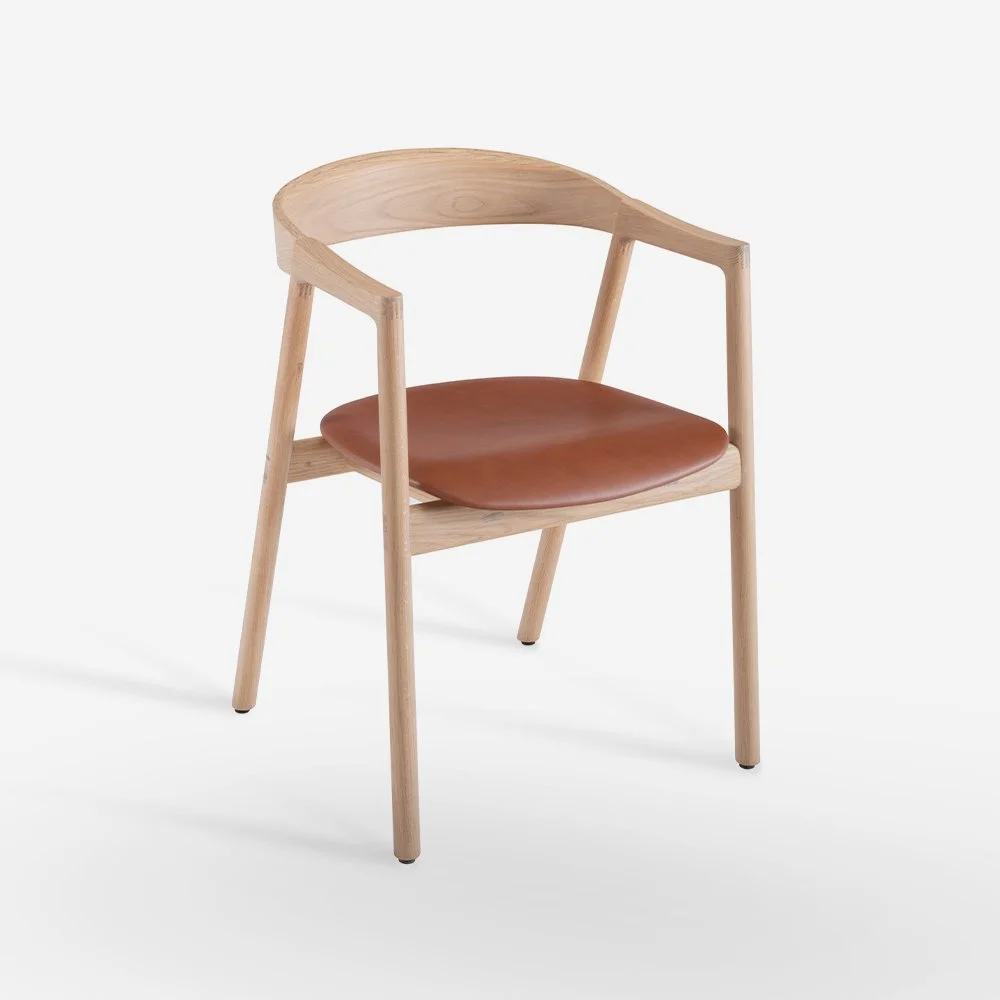
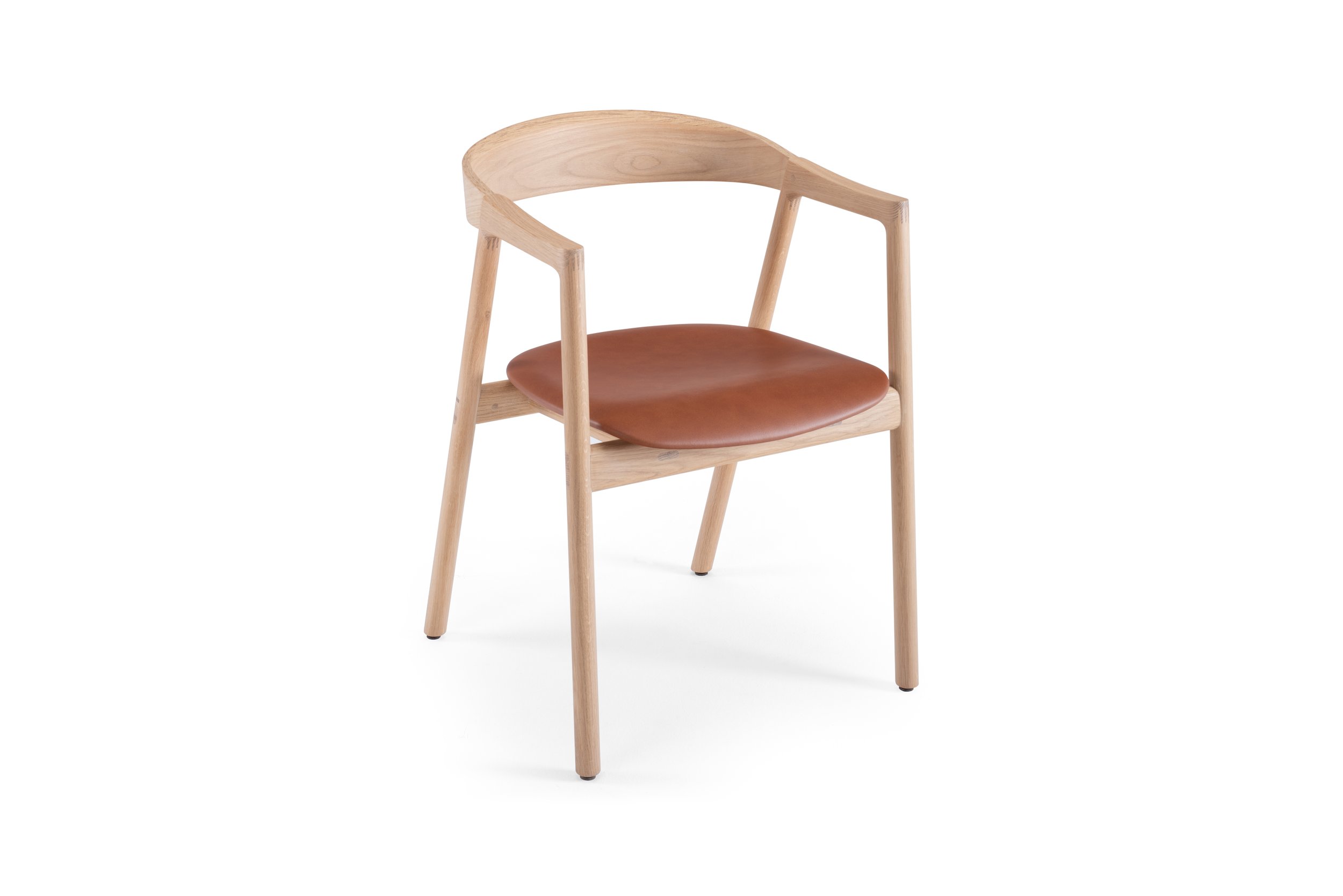
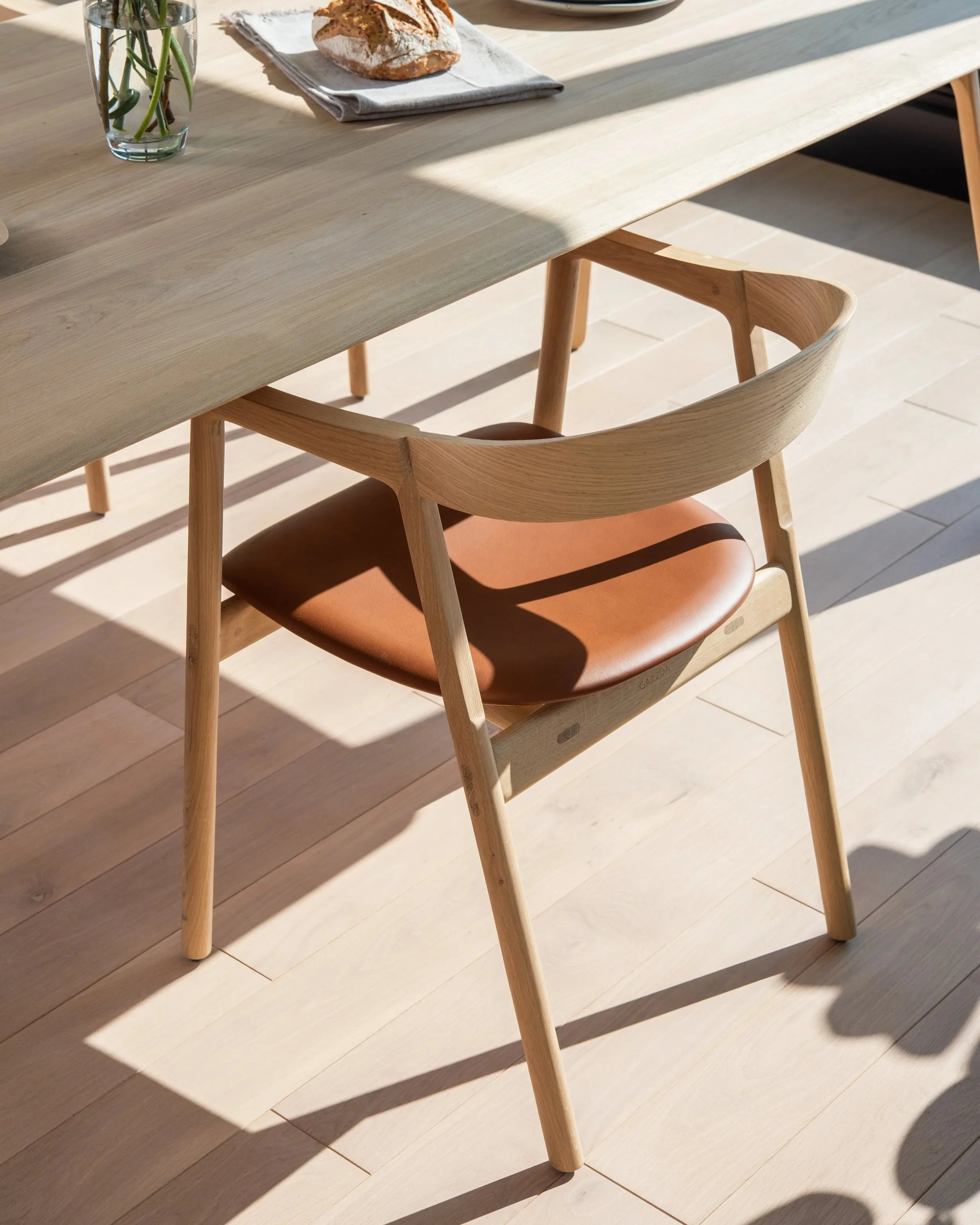
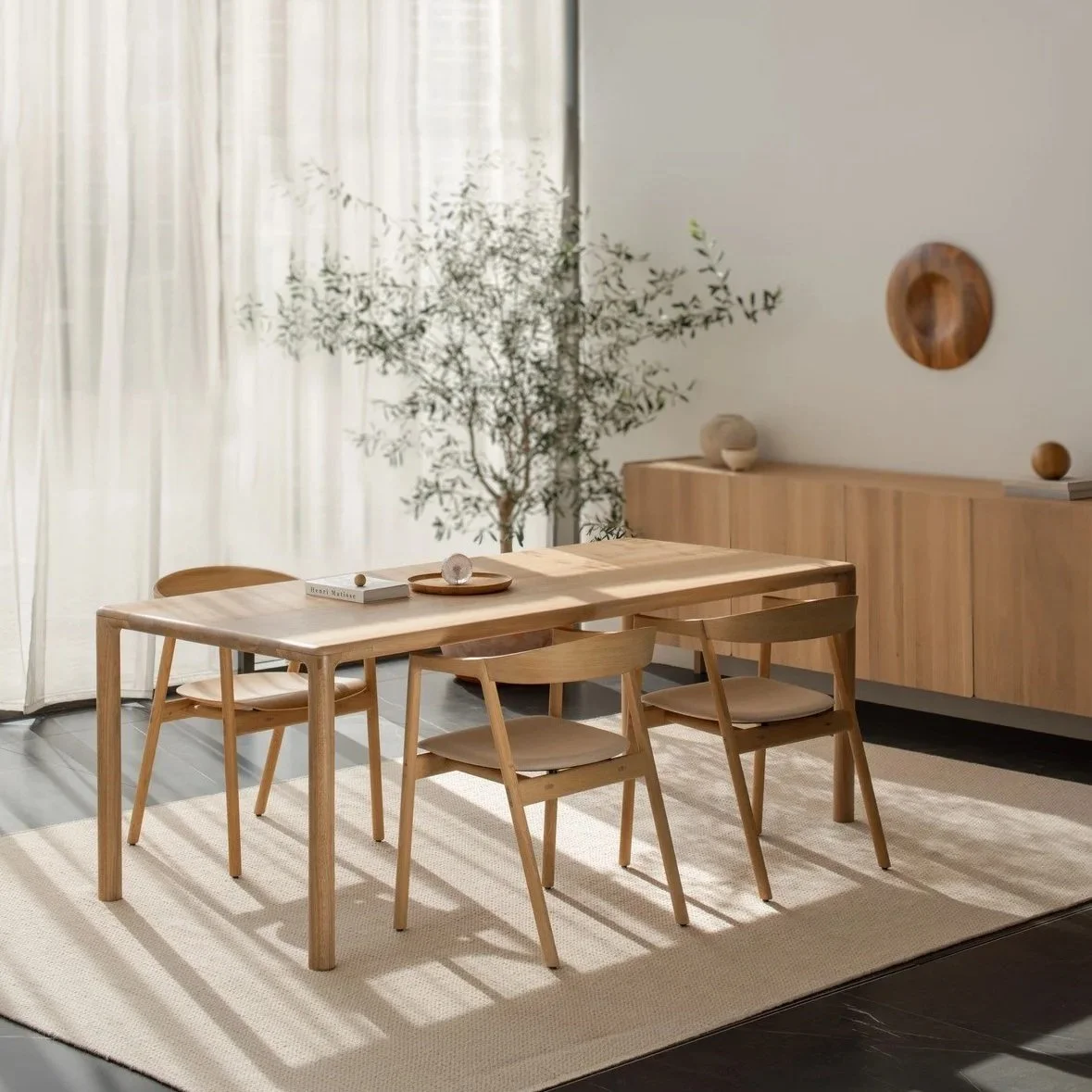
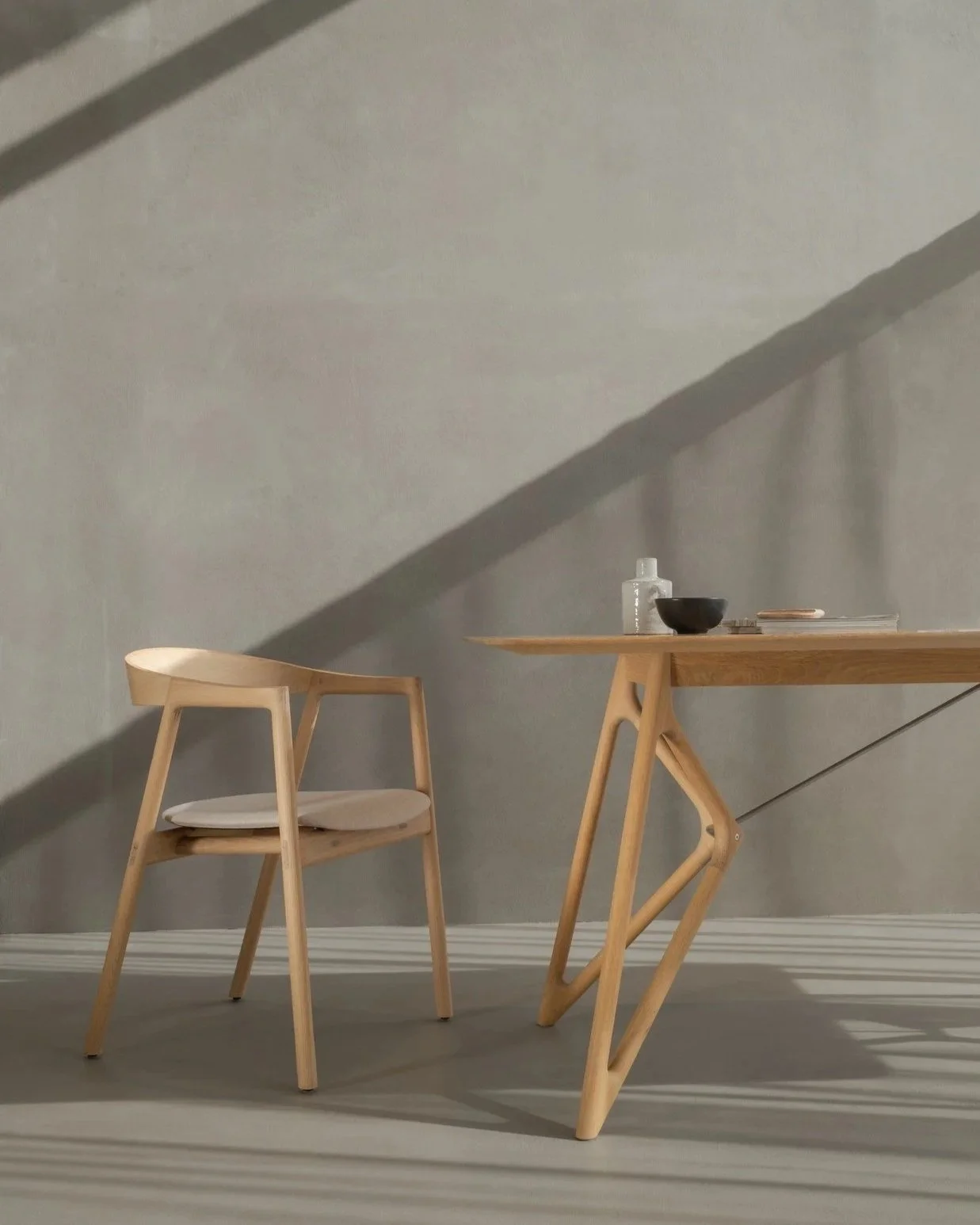
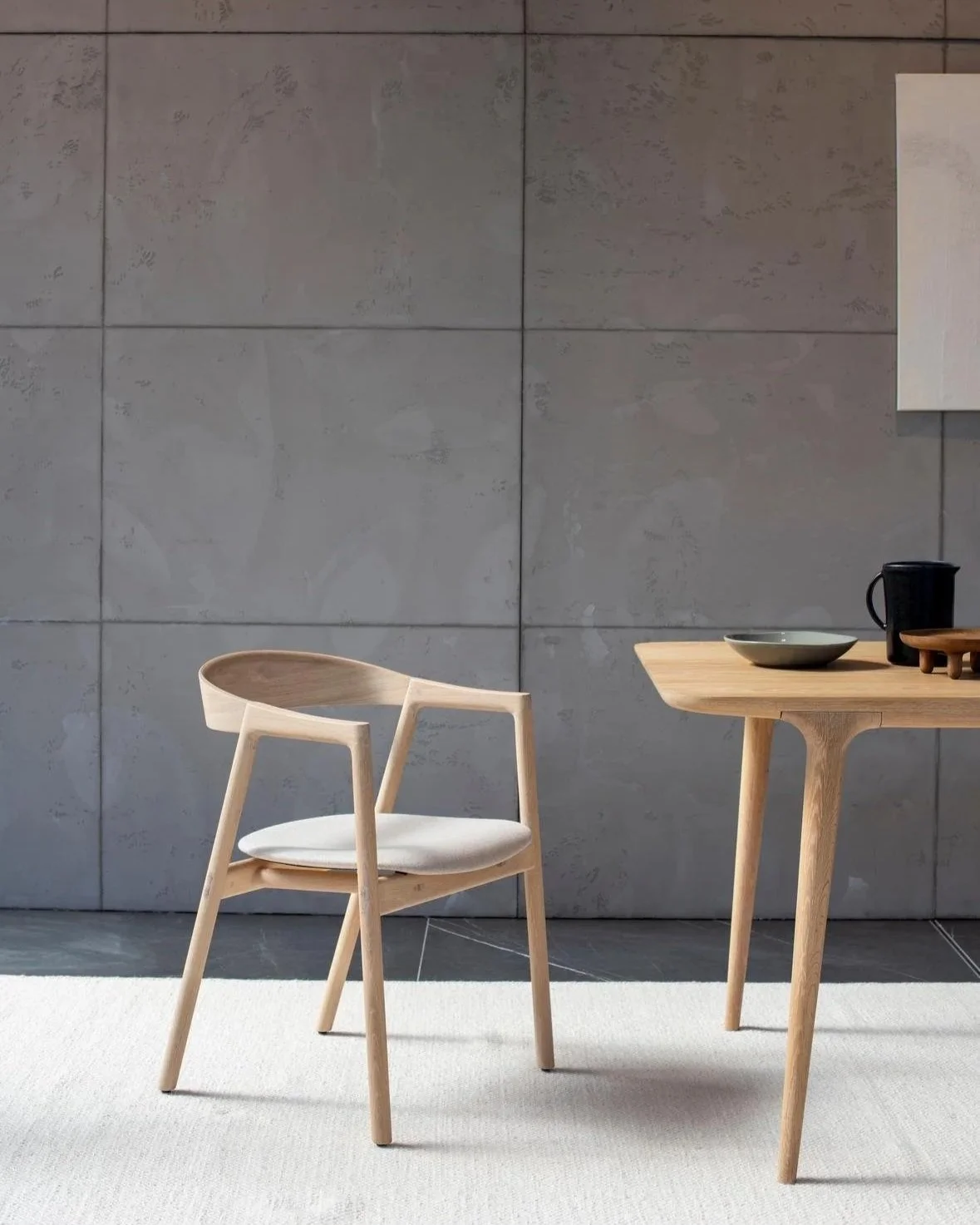
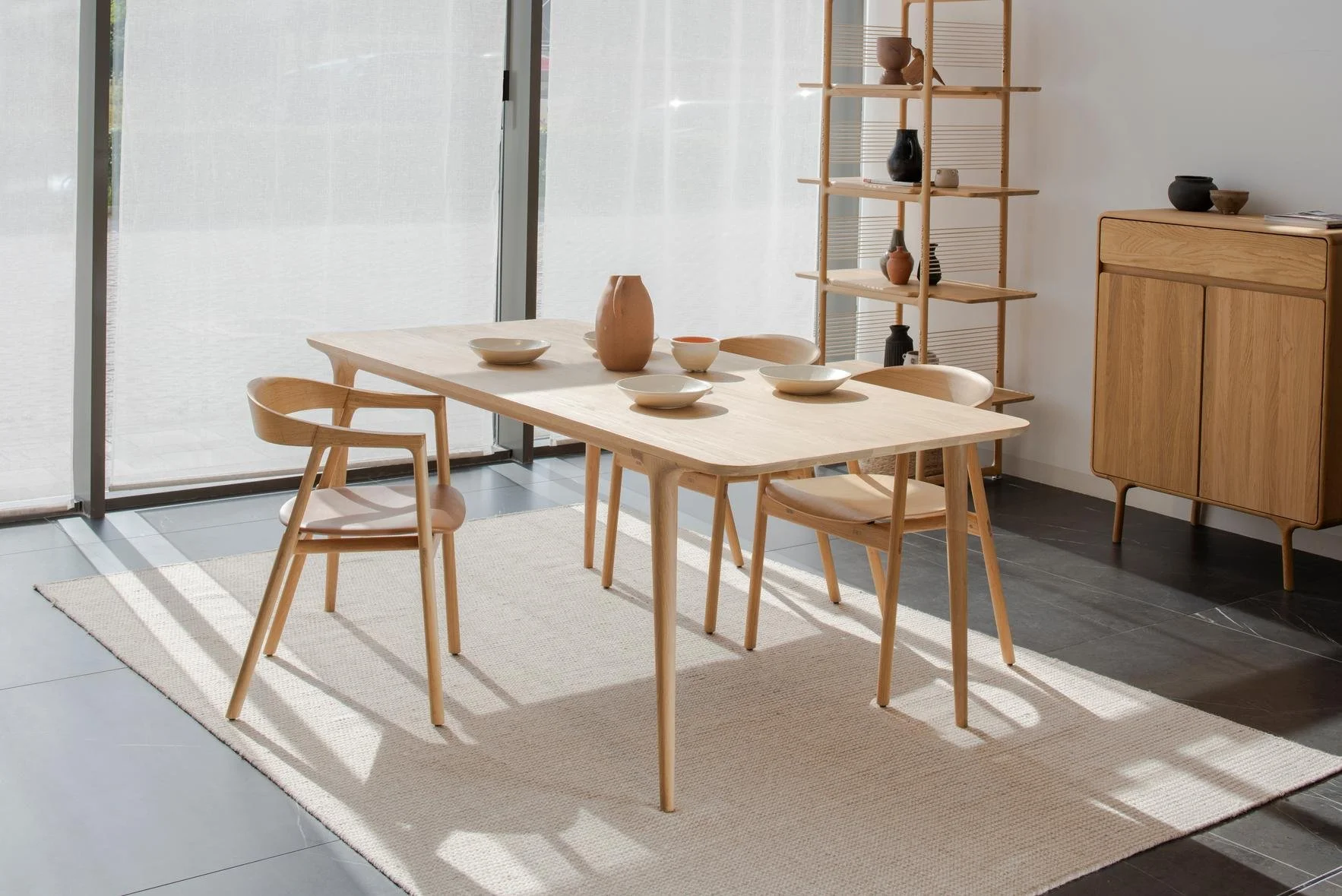
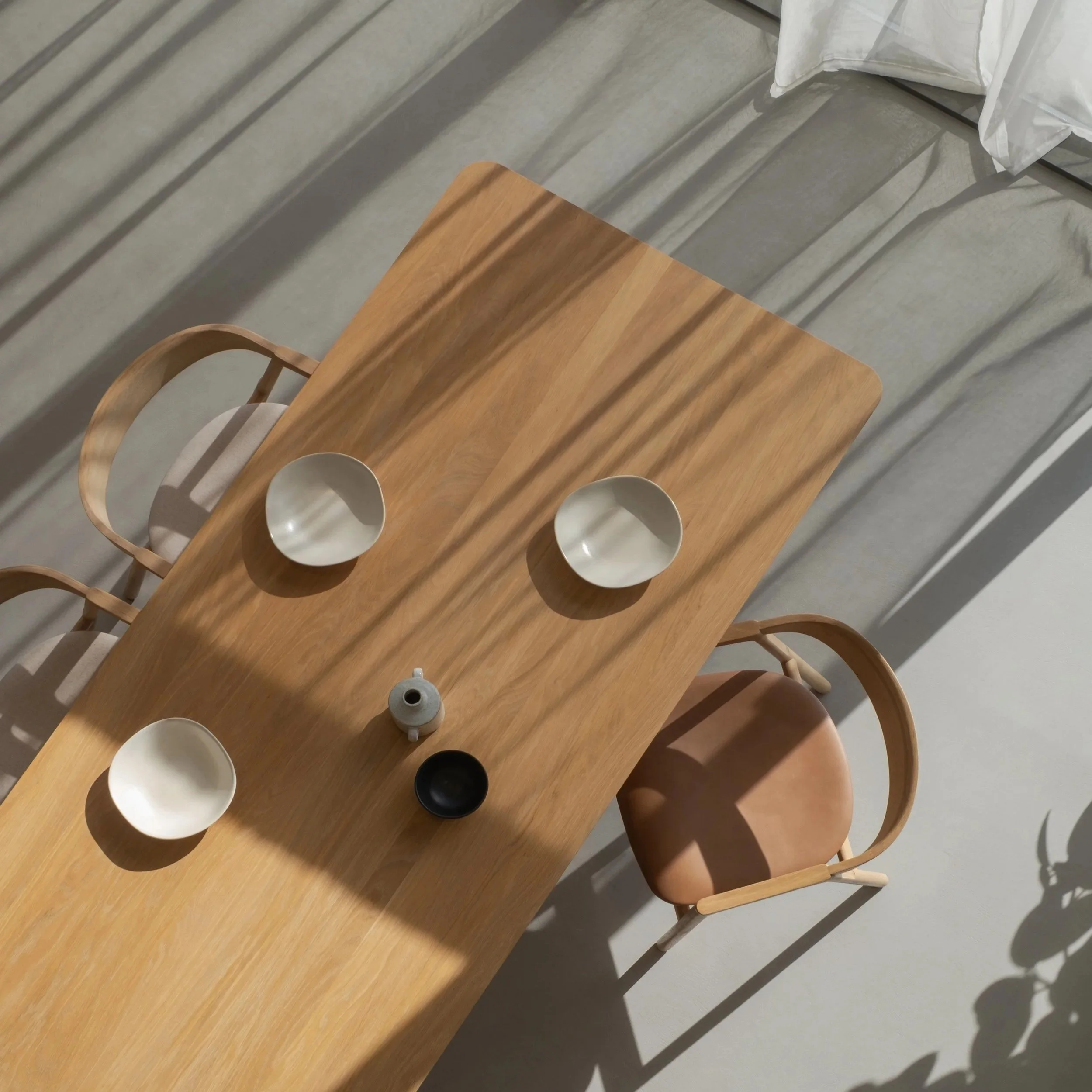
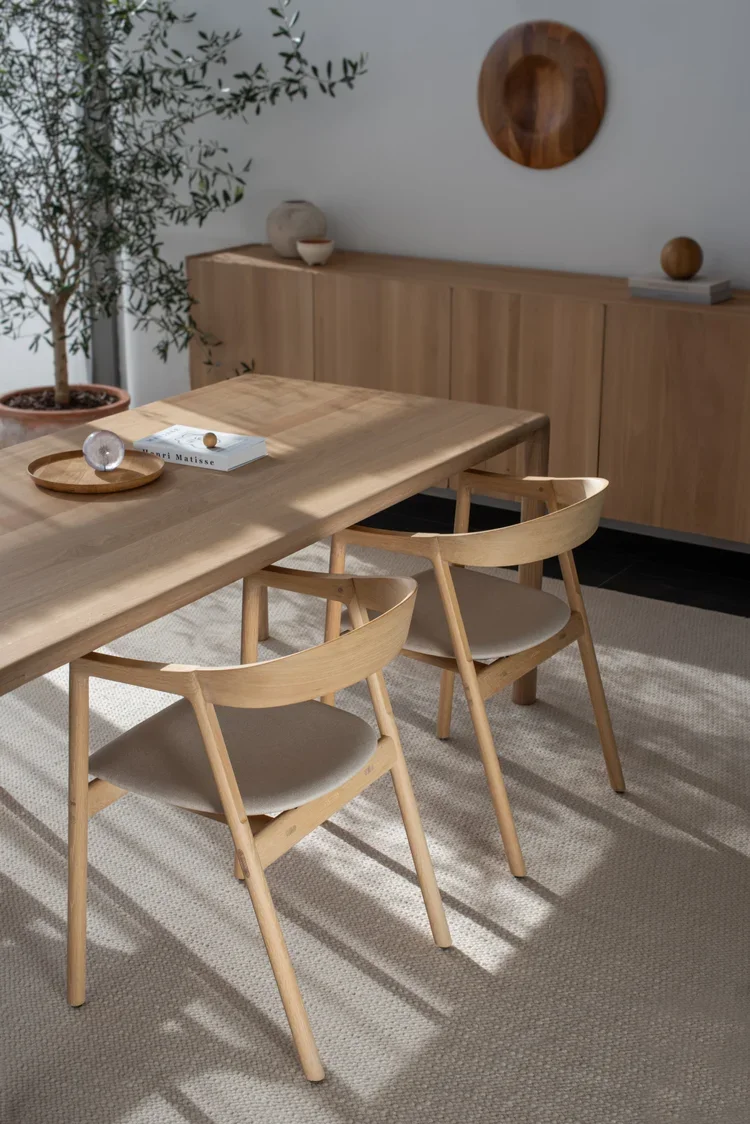
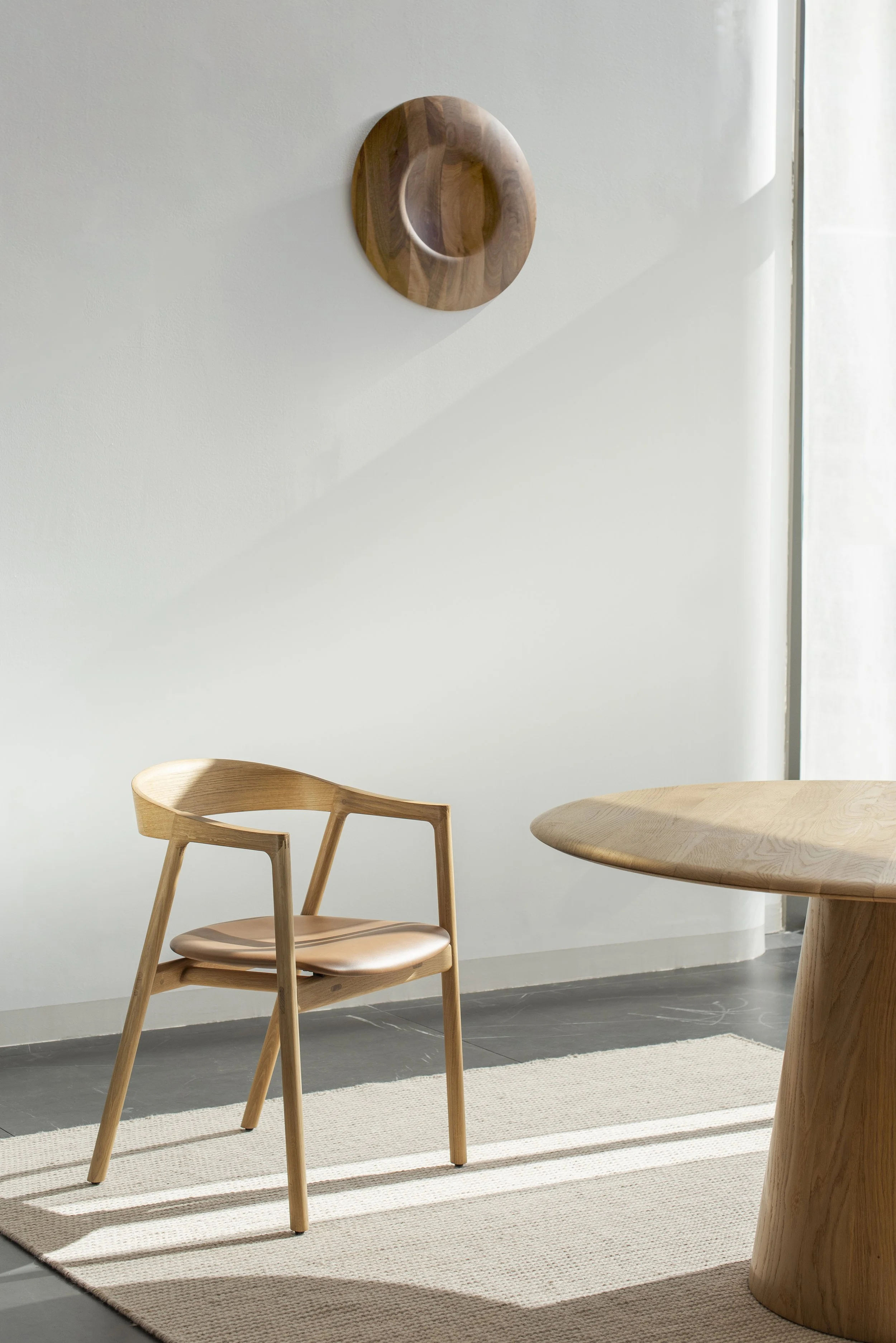
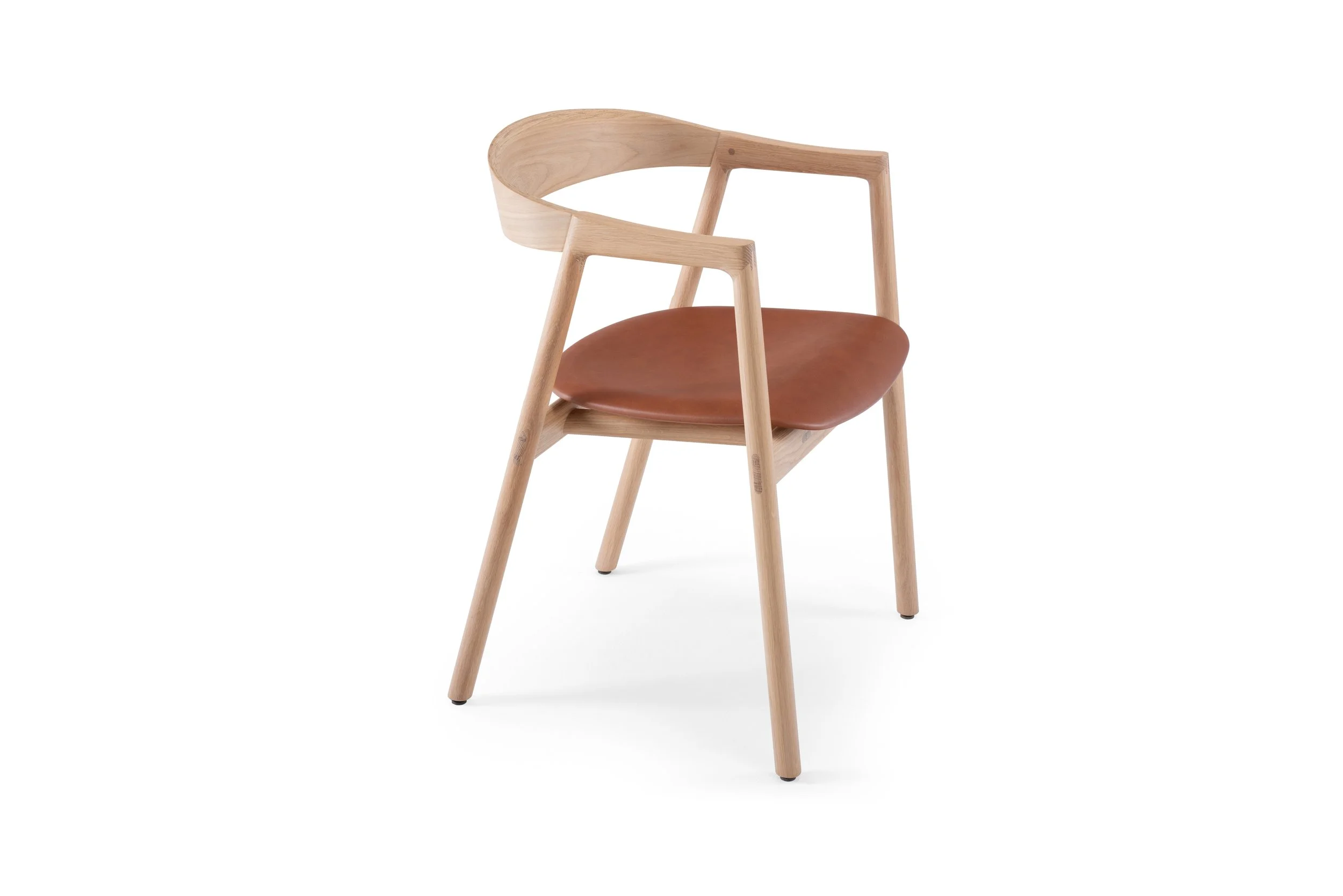
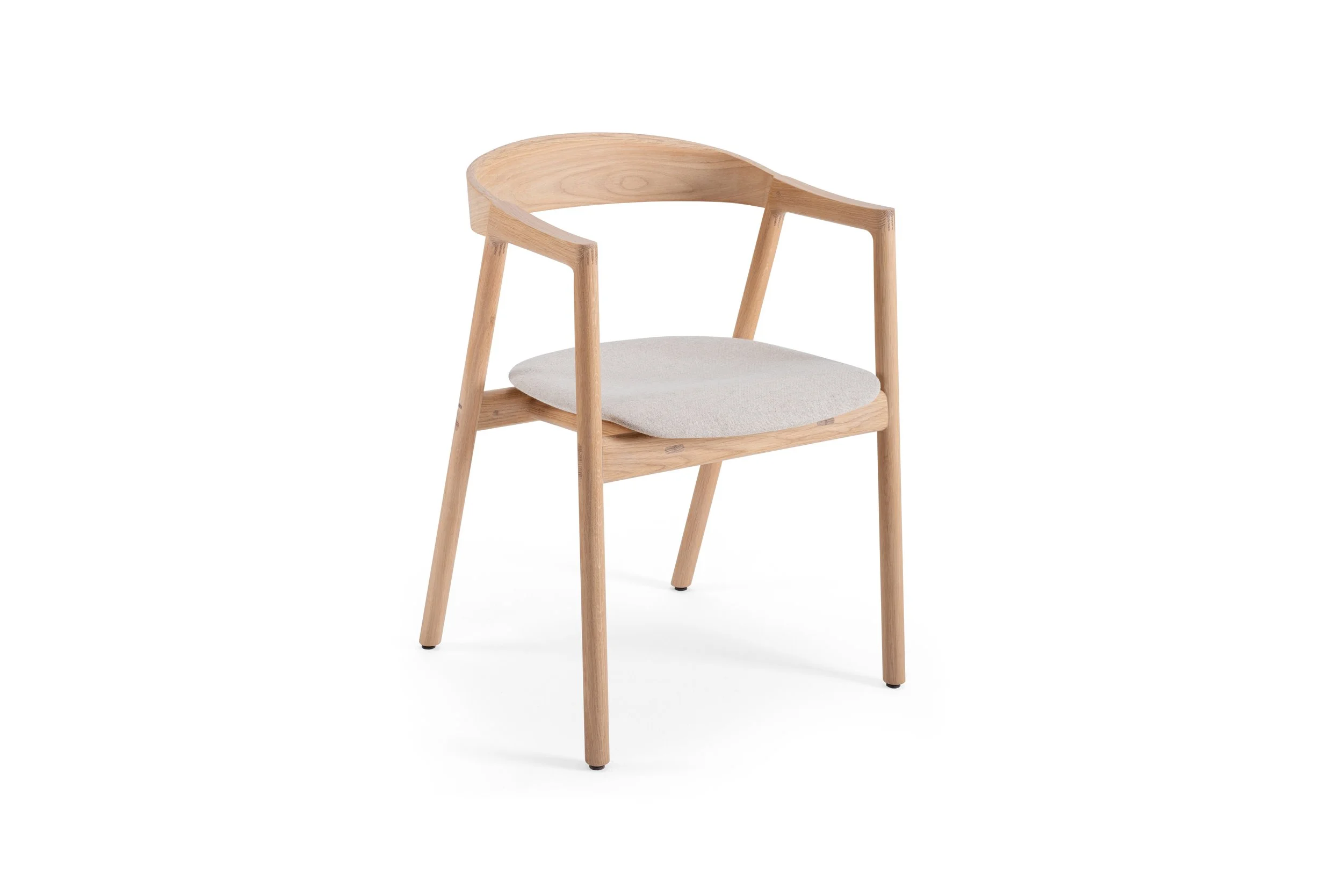
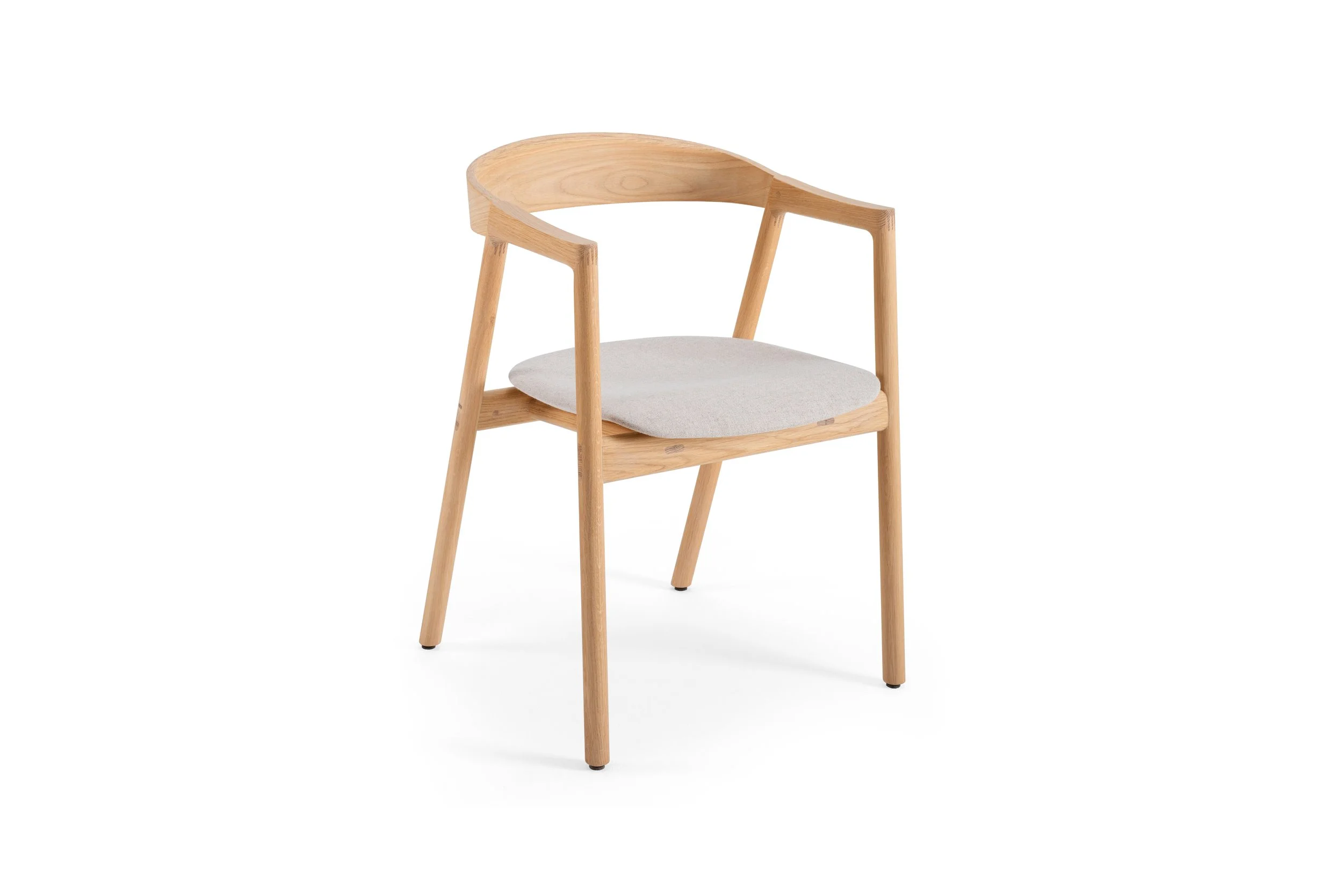
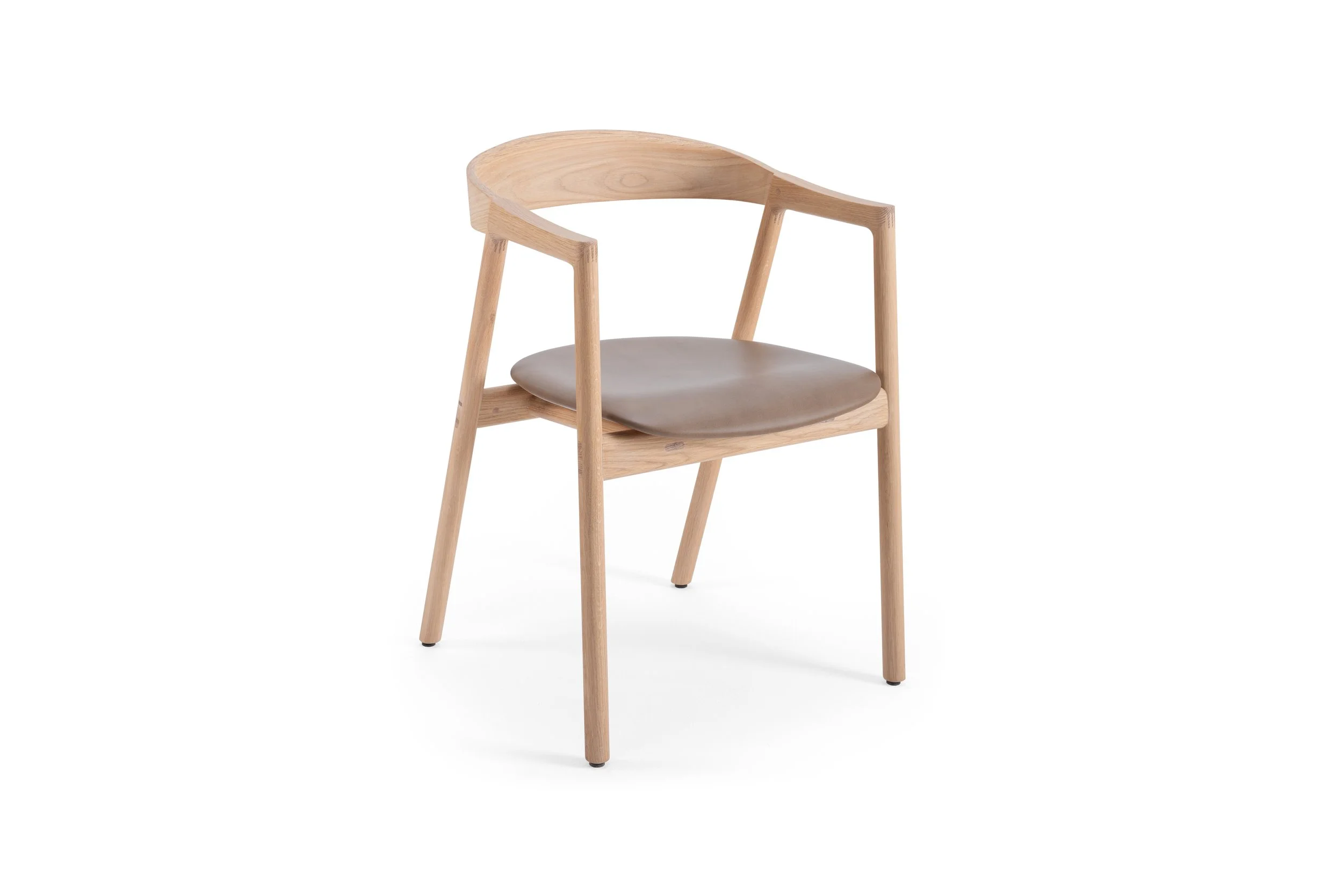
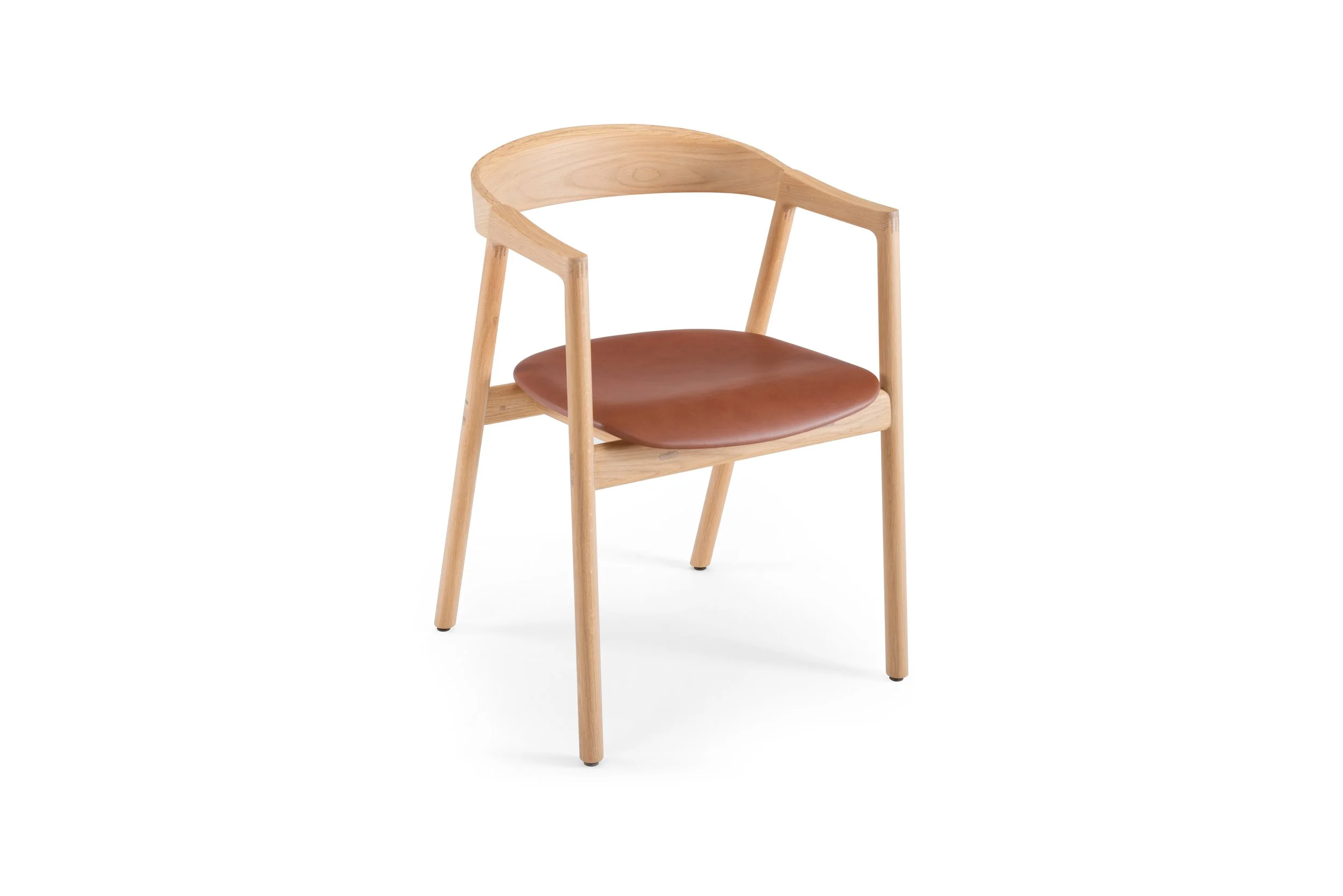
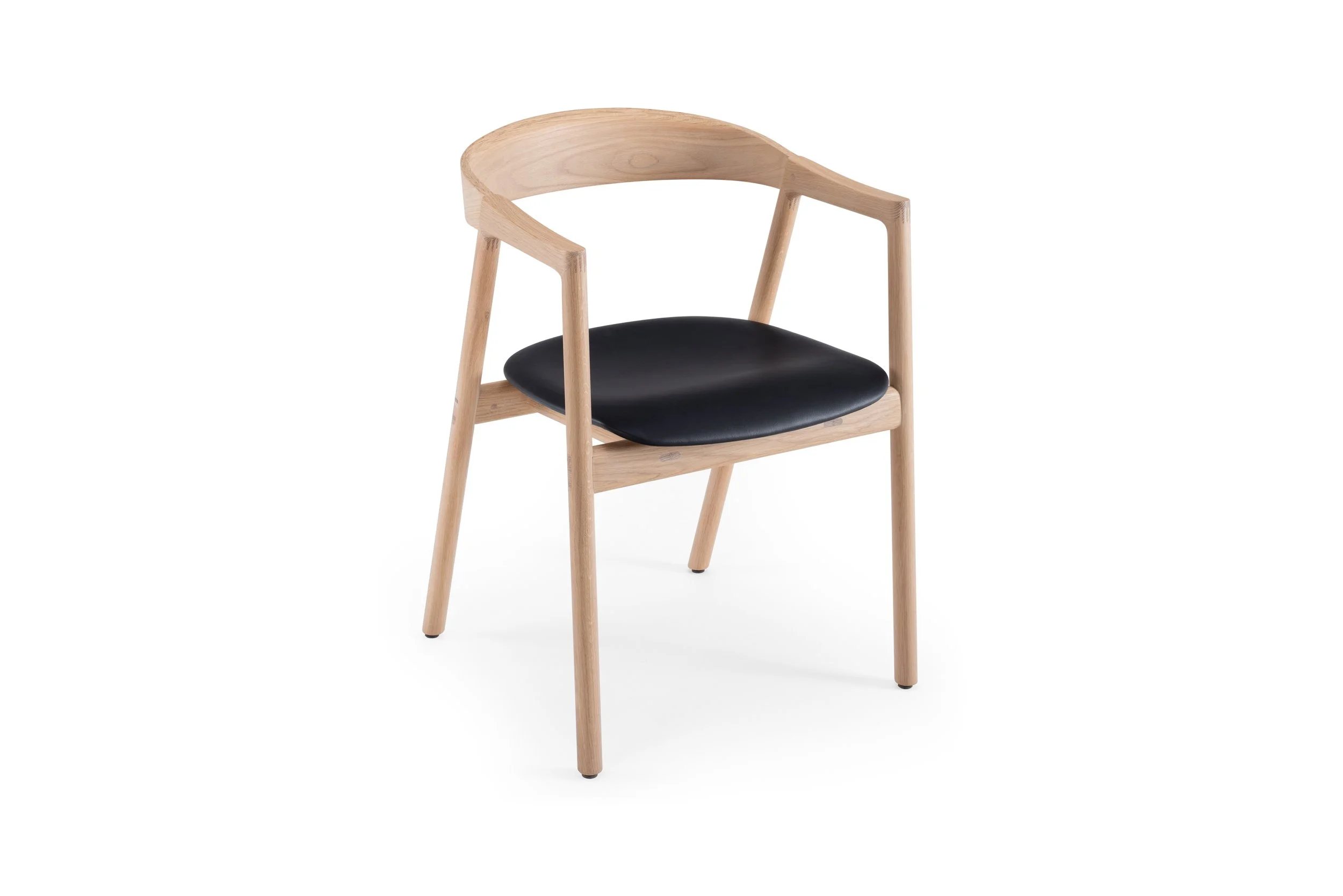
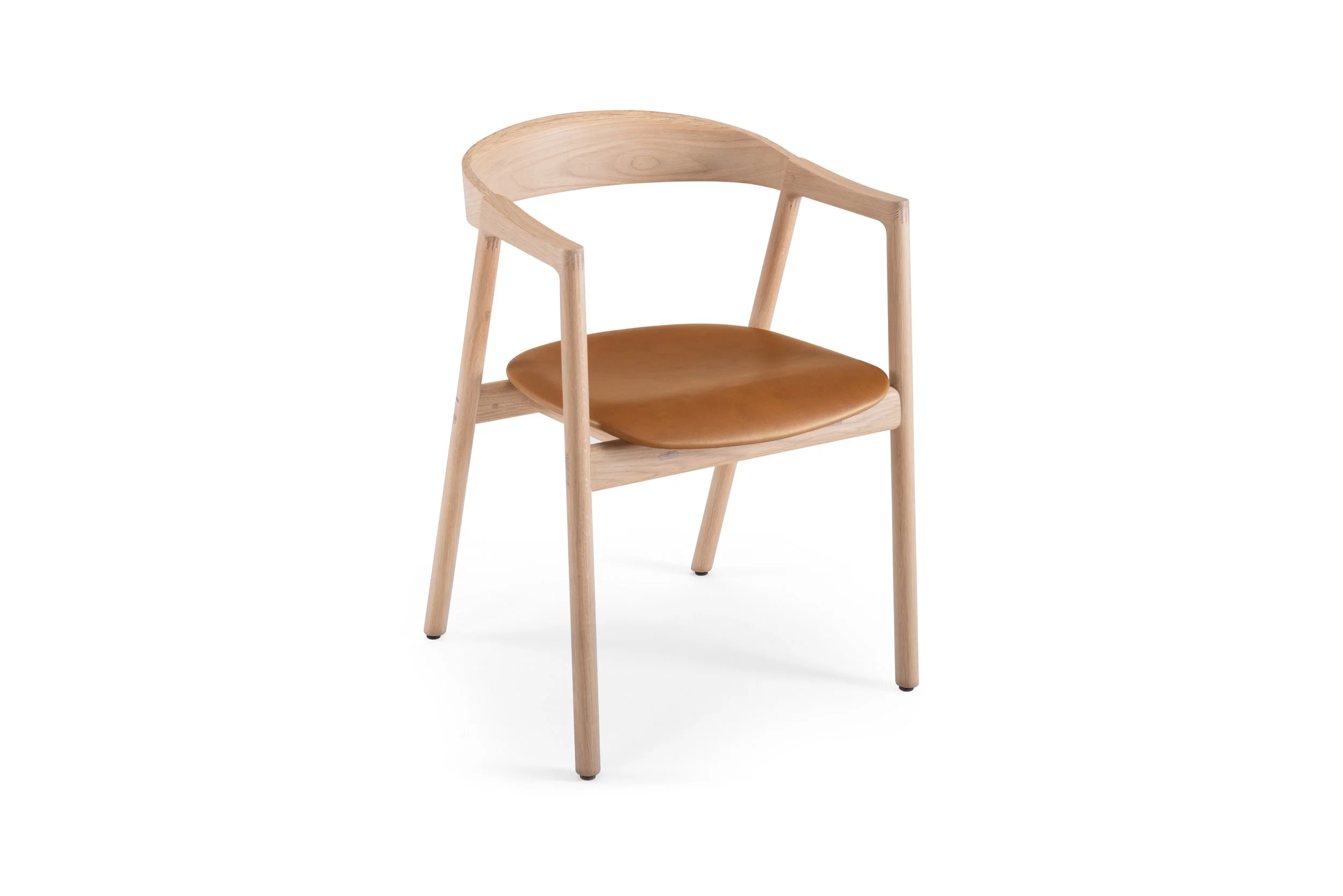
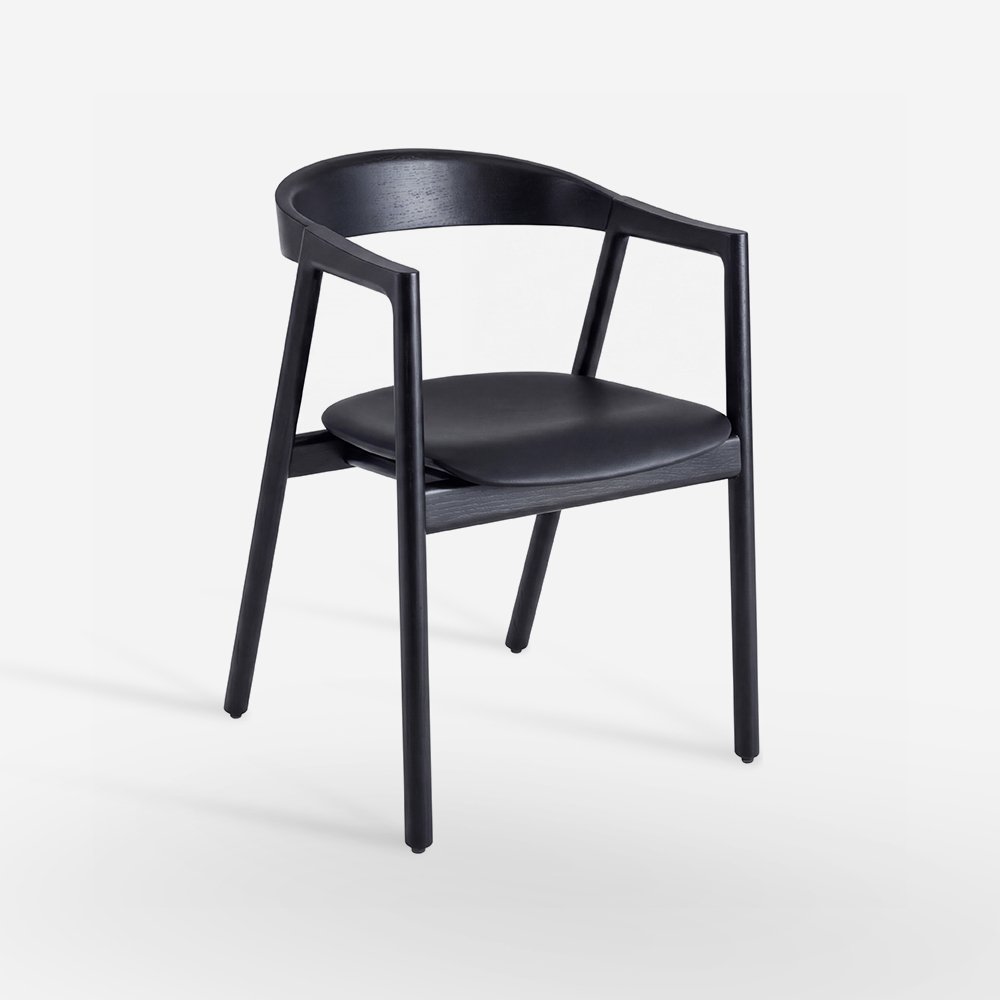
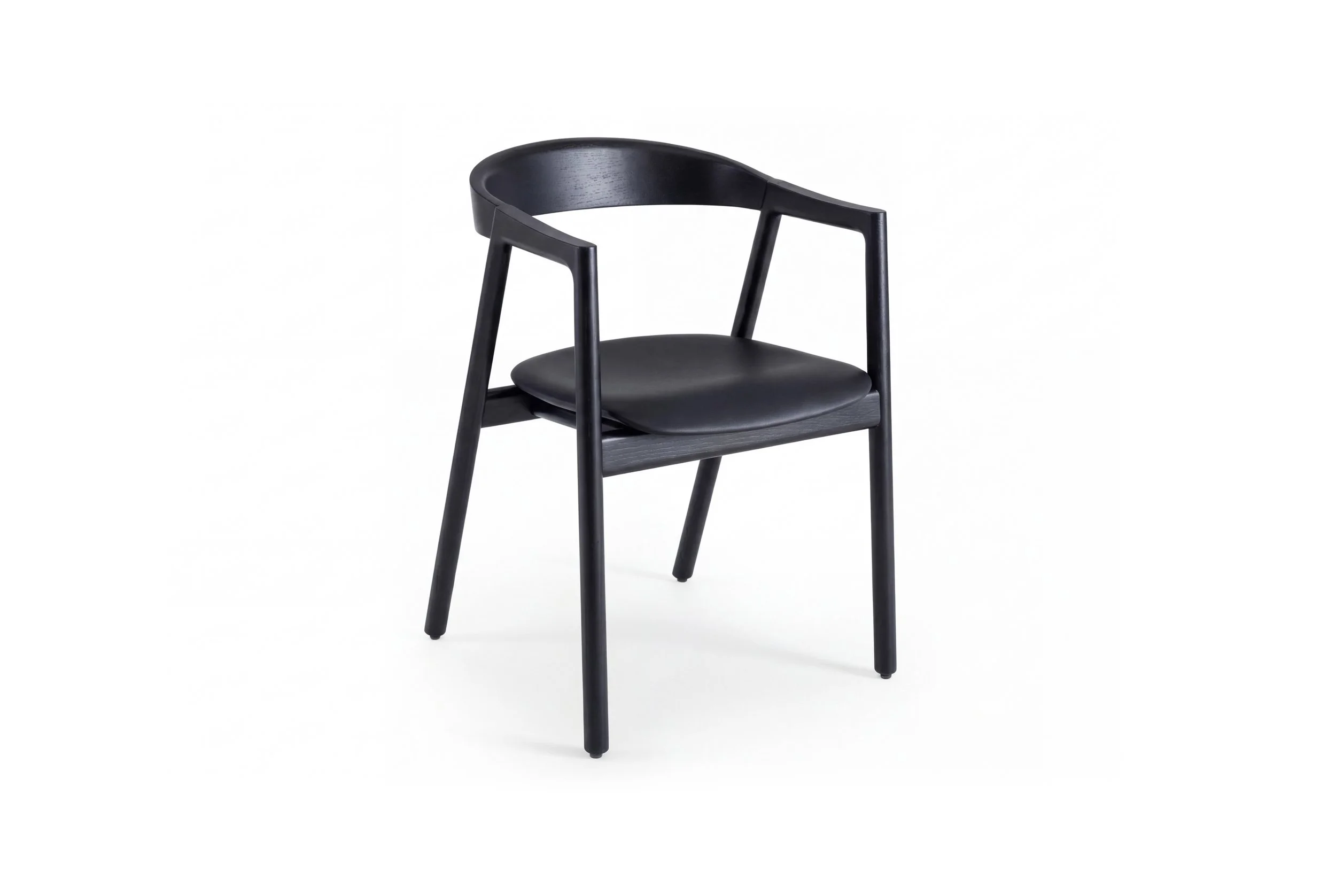
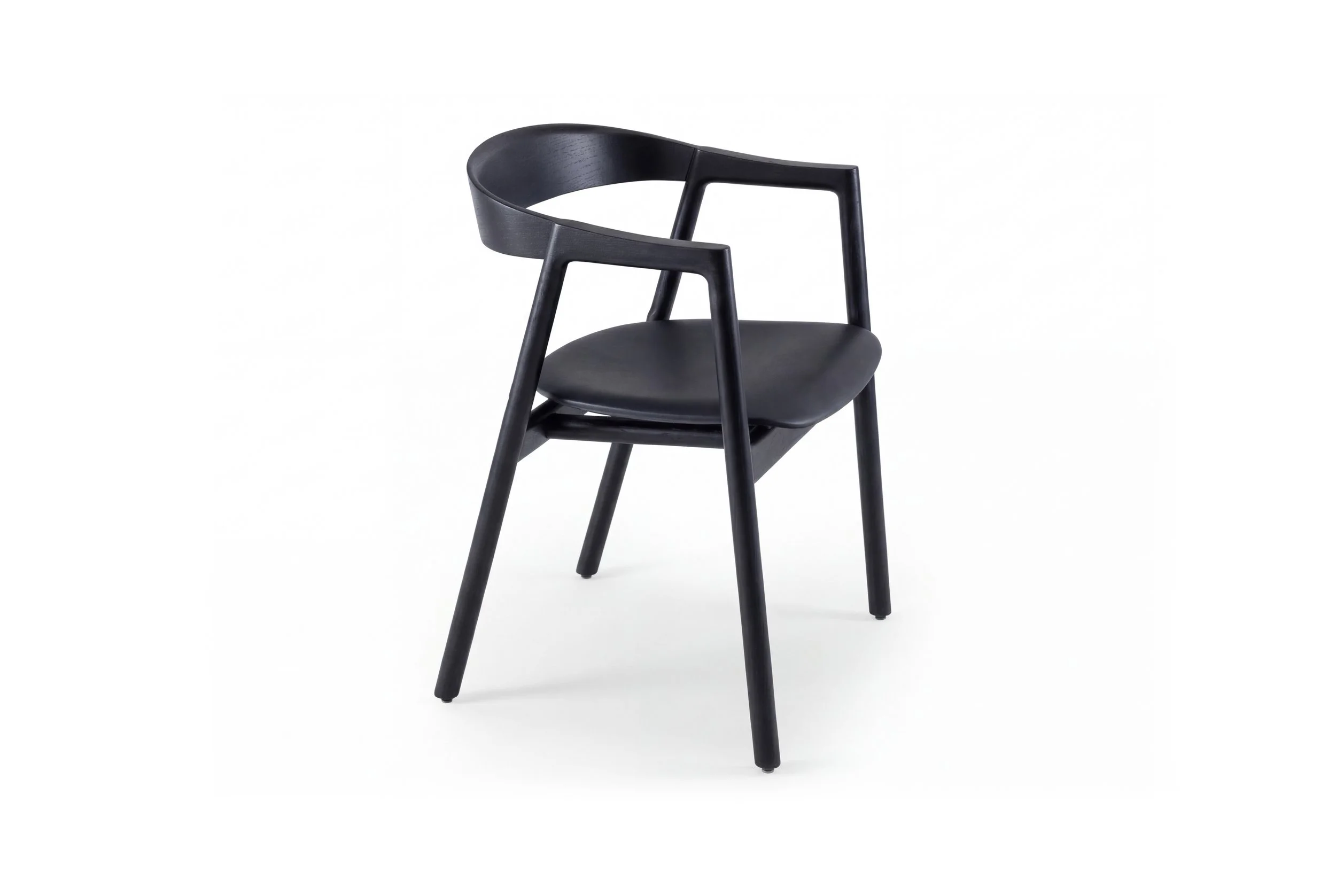
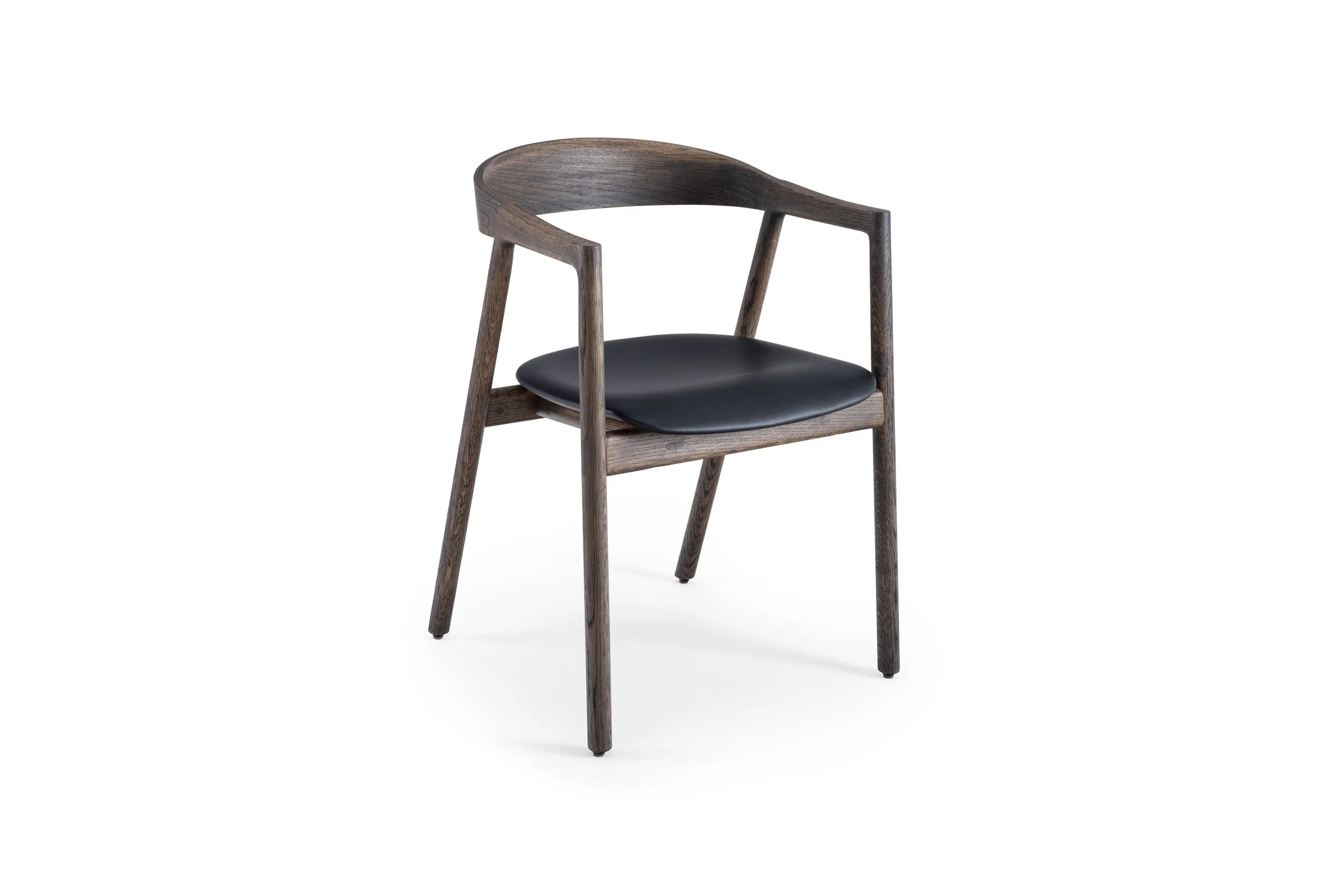
Muna is a chair built to outlast the room it sits in. A solid wood dining chair with armrests, where the backrest flows into the arms through a single, elegant joint. Oak or walnut, with a seat edge thinned to give the whole form an almost floating quality.
-
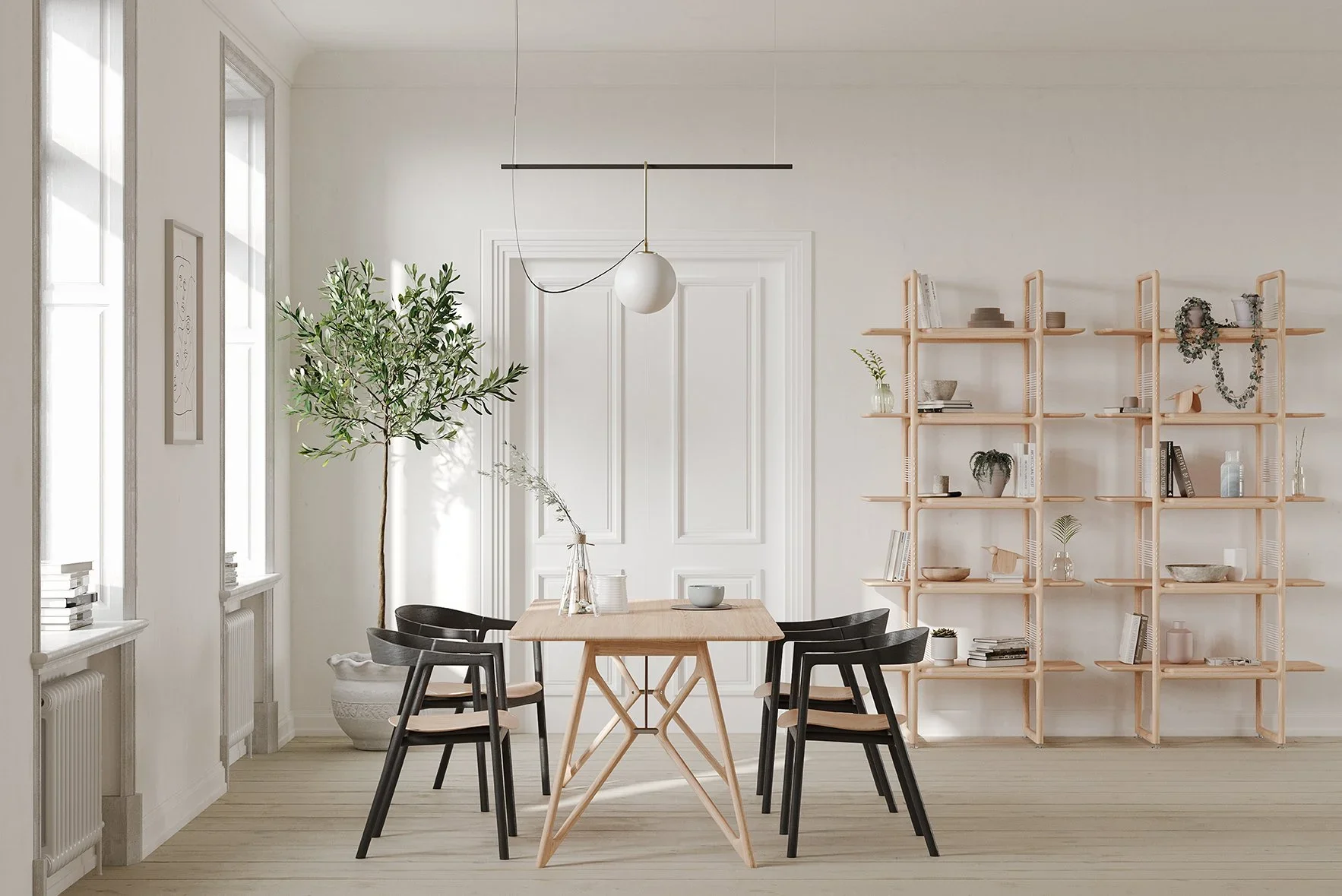
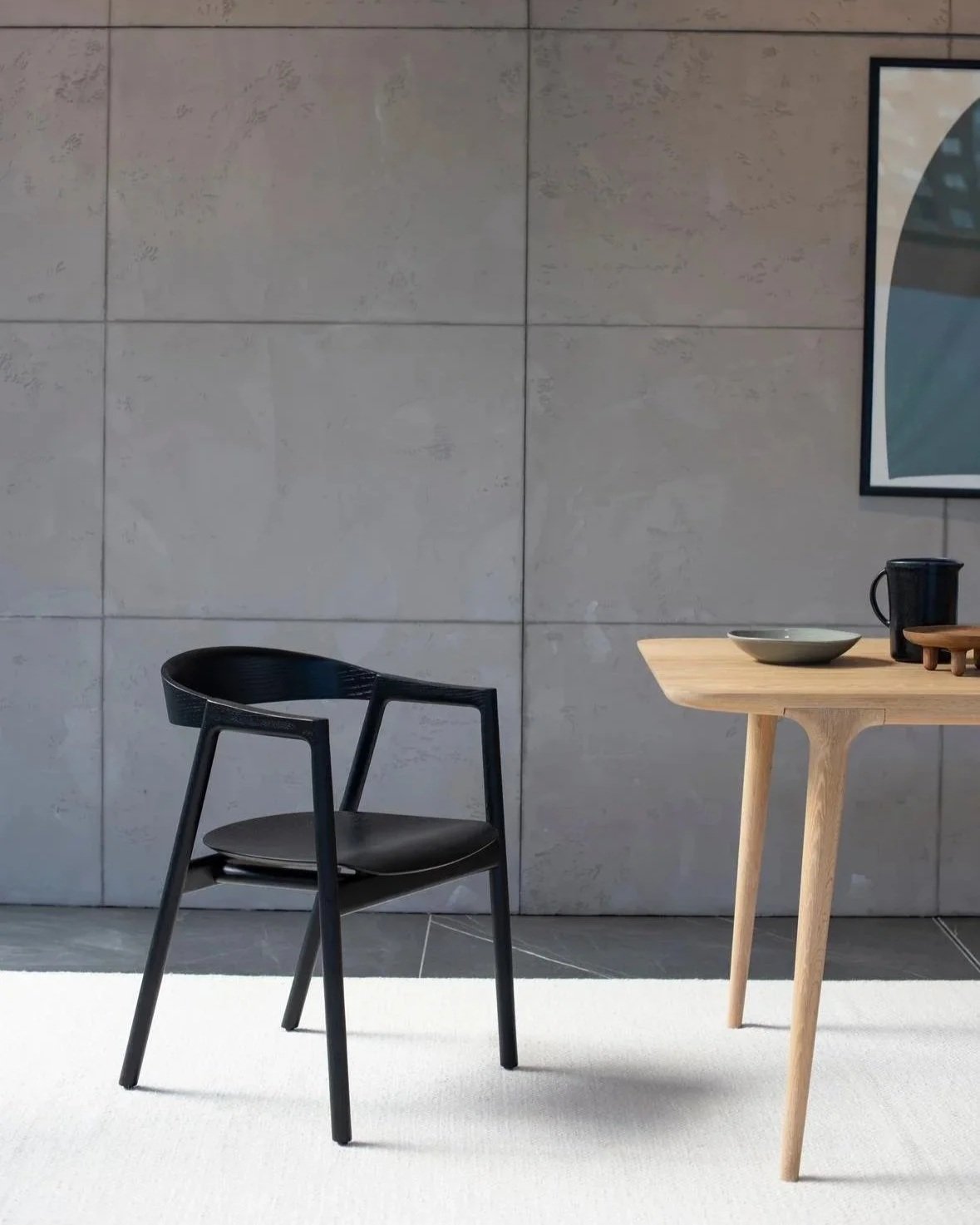
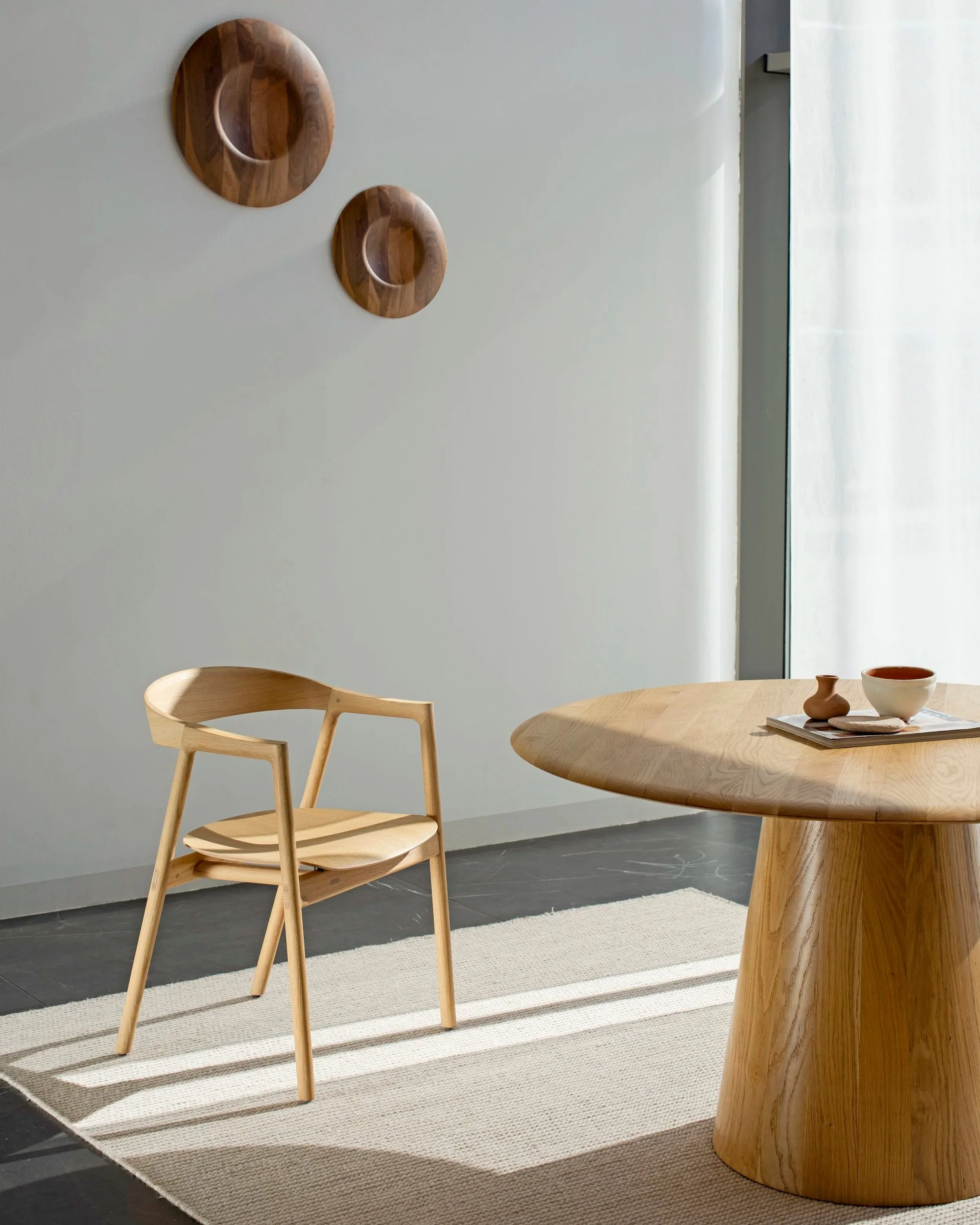
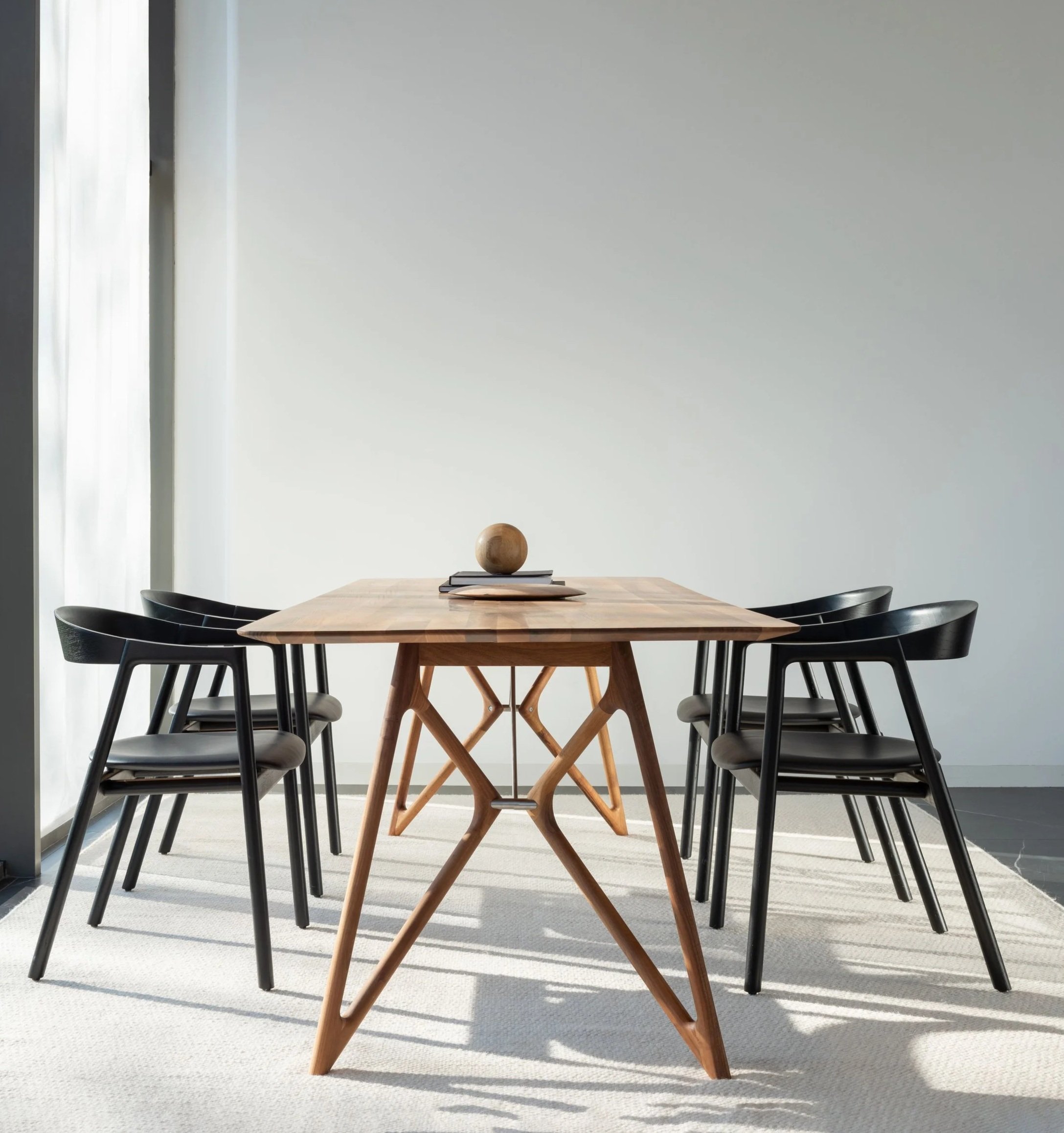
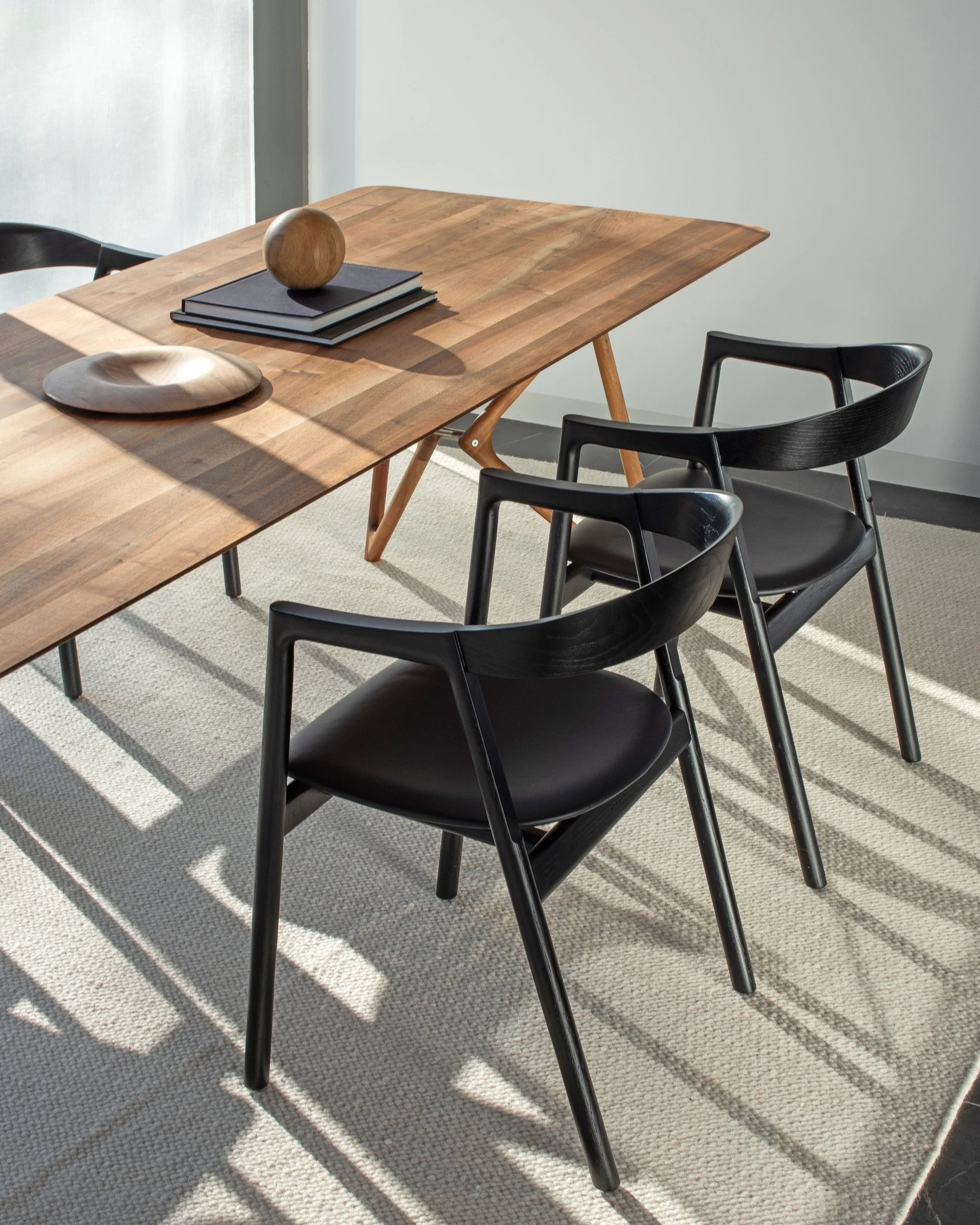
There is nothing incidental about Muna. Its proportions are balanced and unhurried, designed to sit comfortably in a dining room, a workspace, or a hotel lobby without ever feeling out of place.
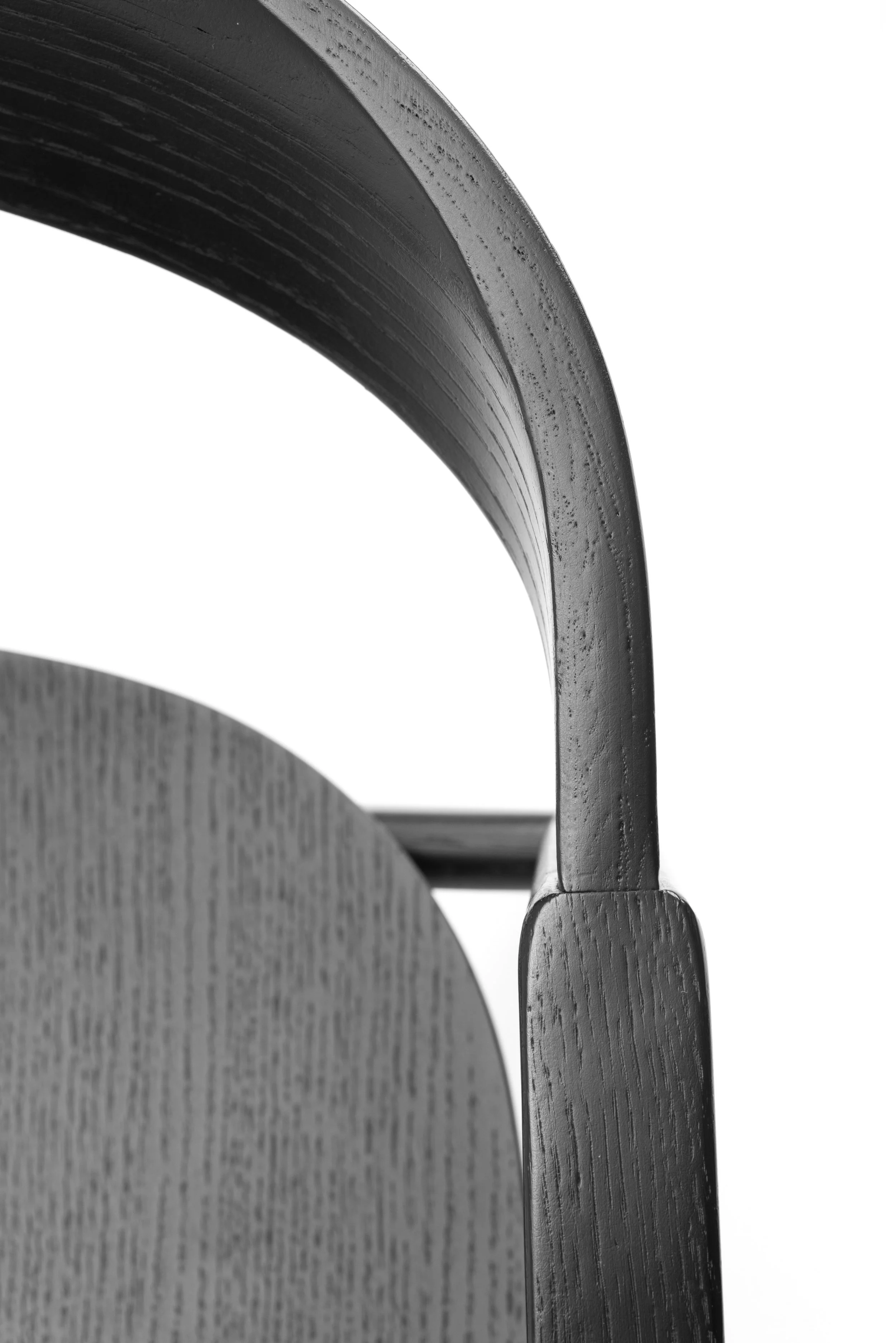
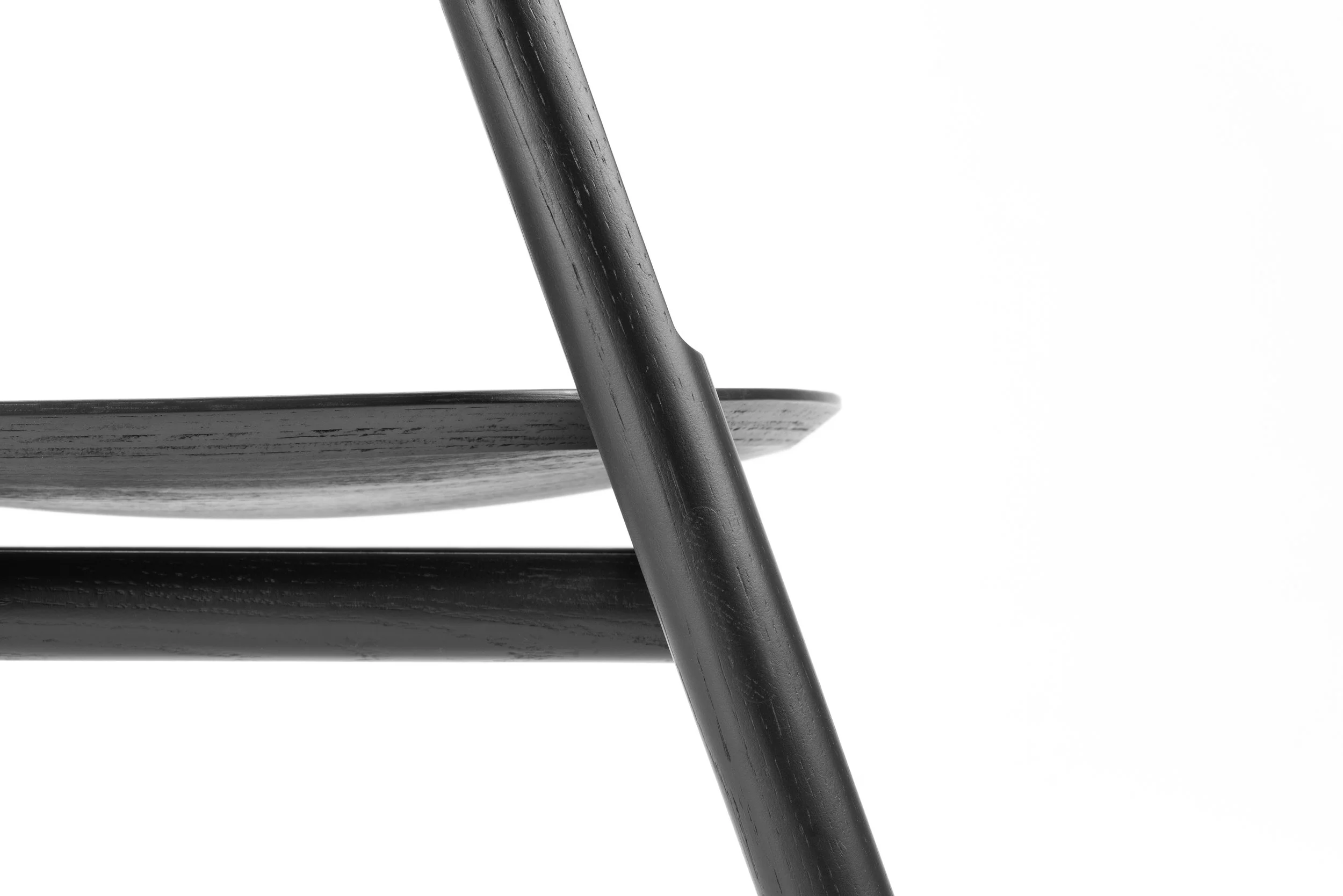
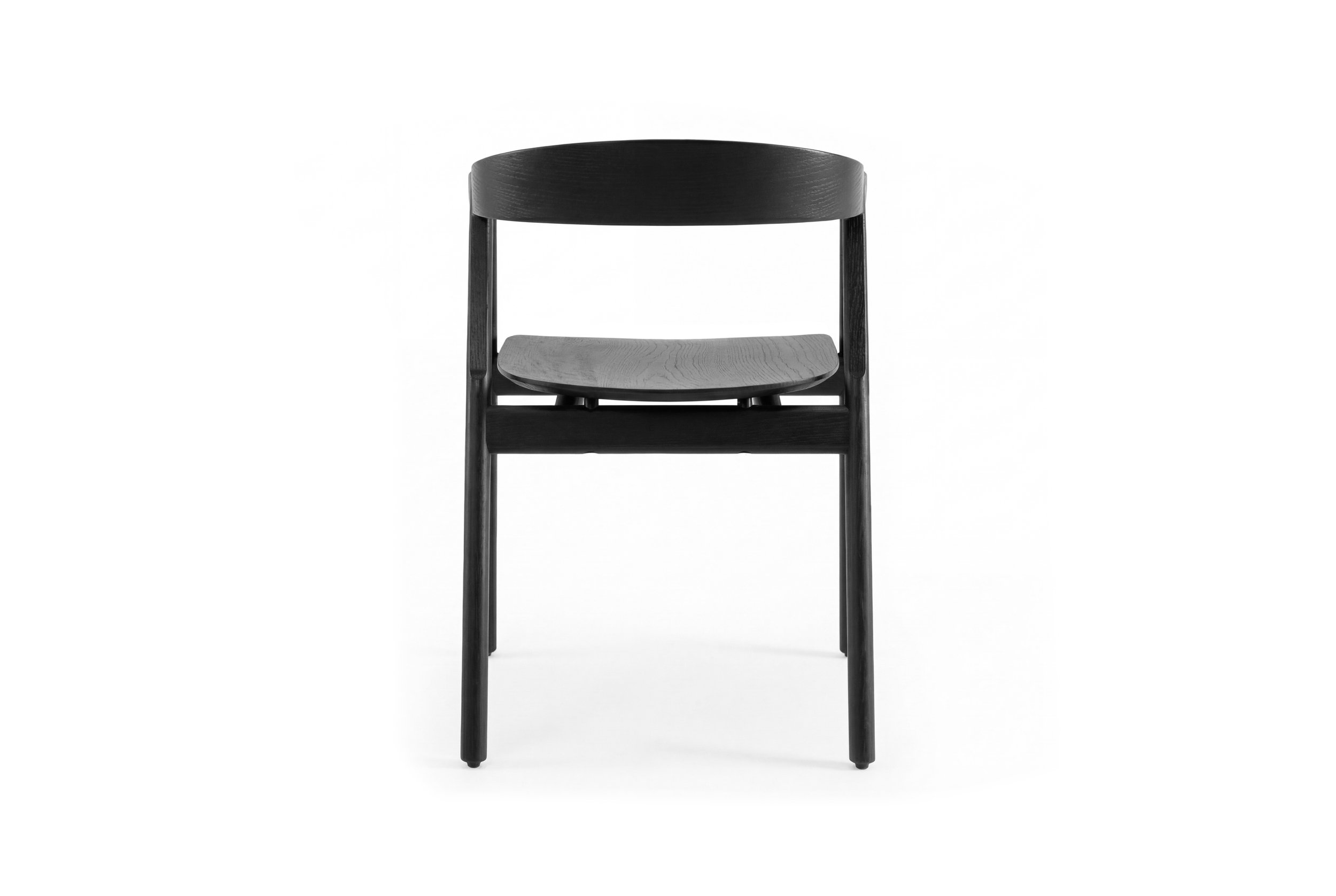
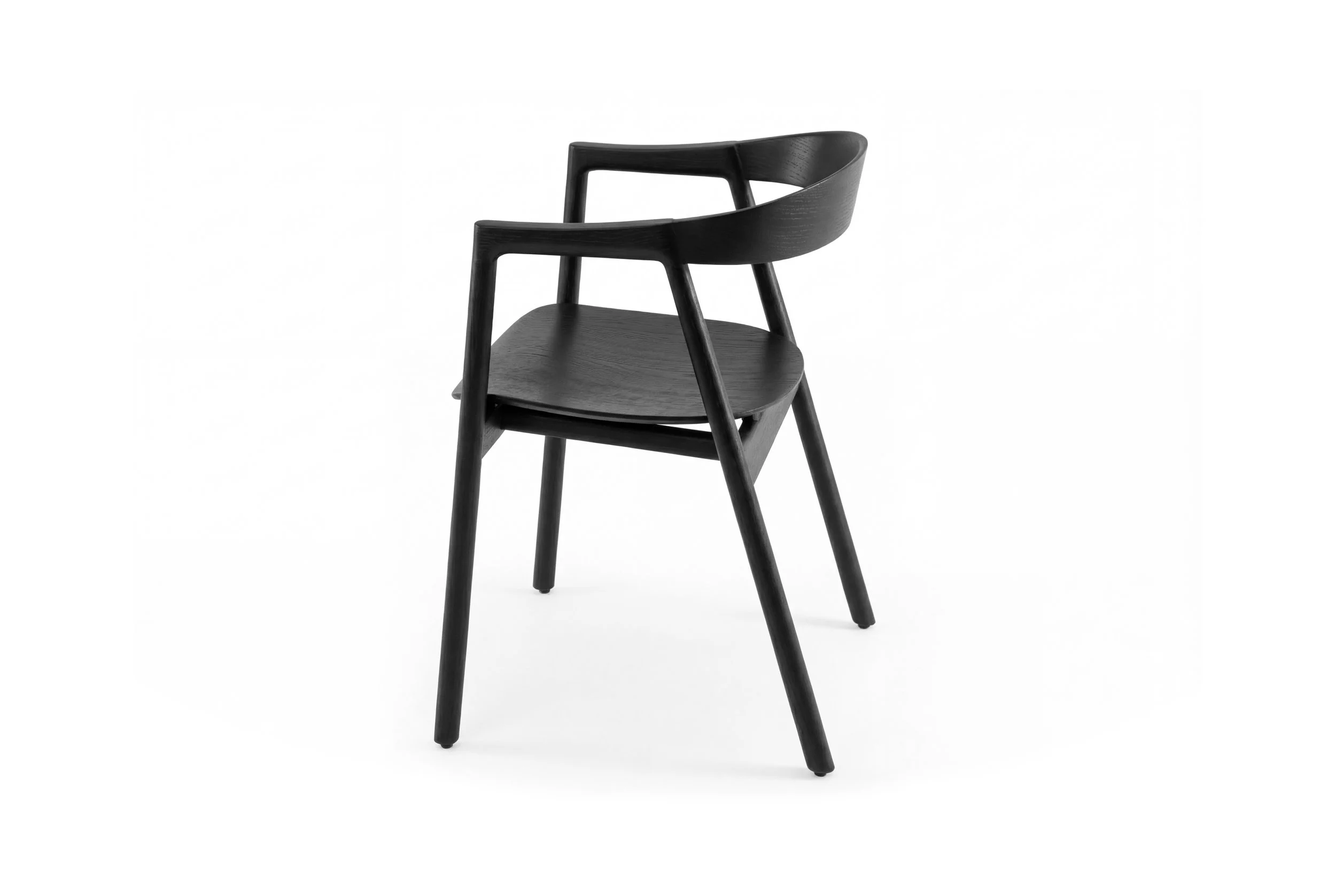
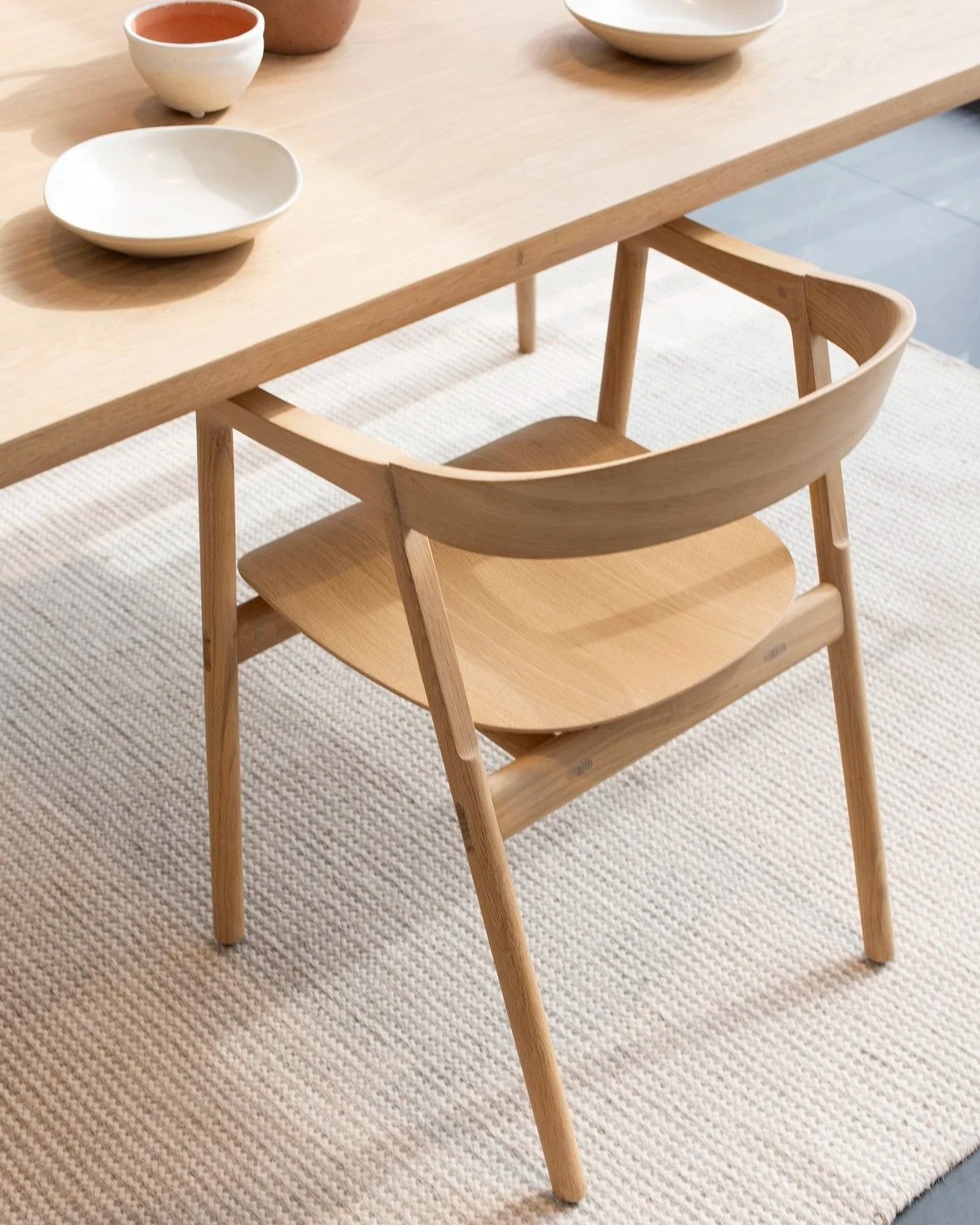
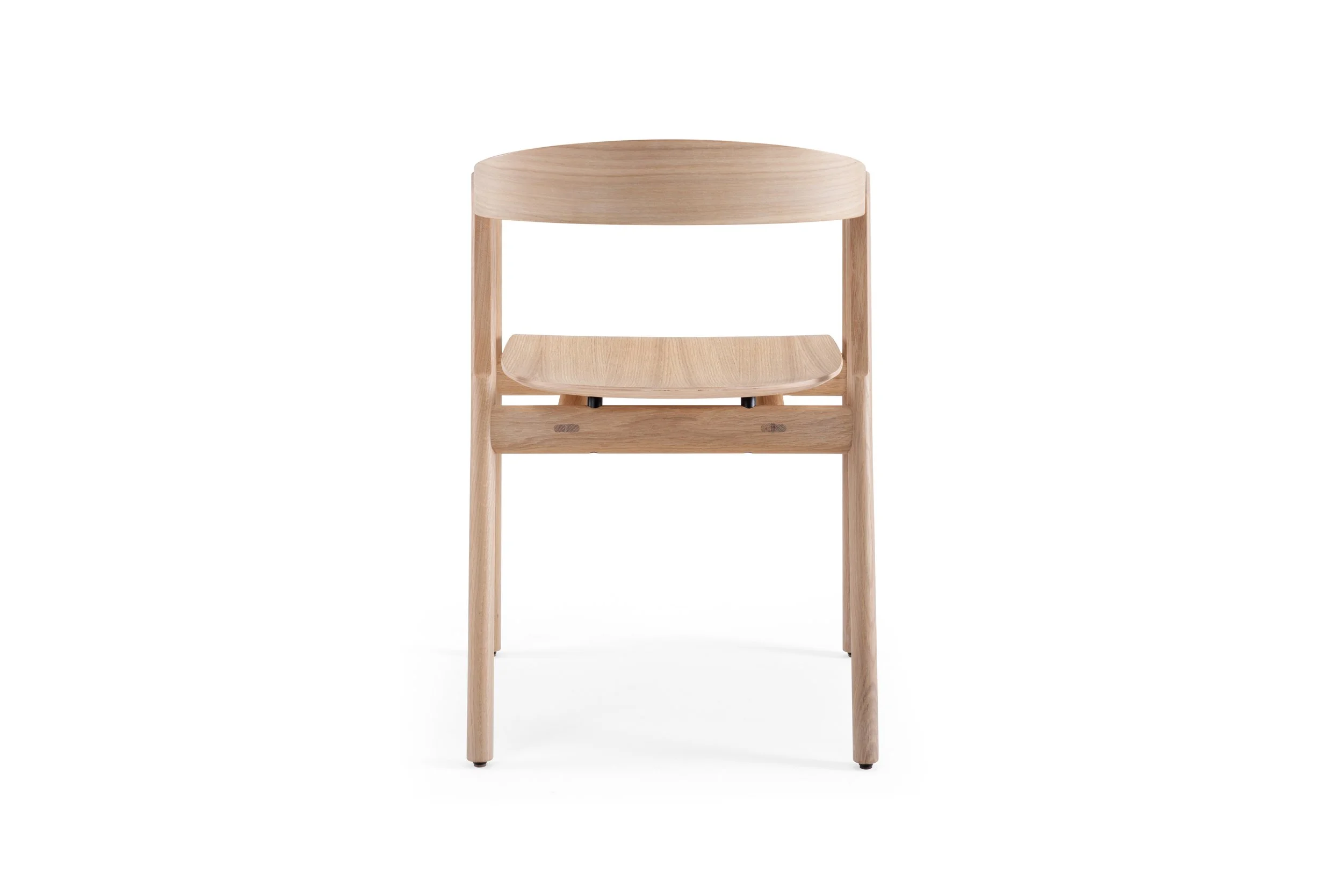
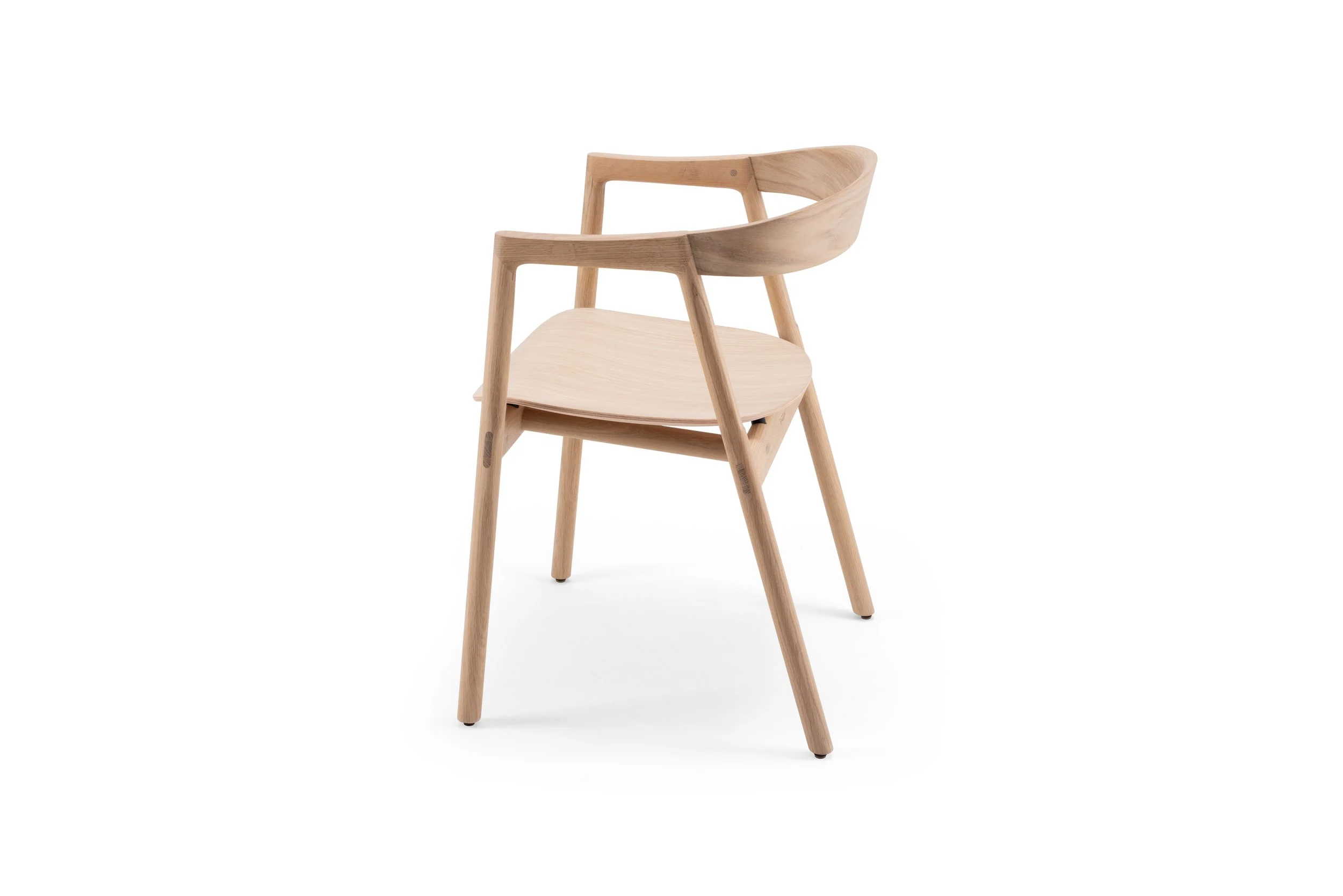
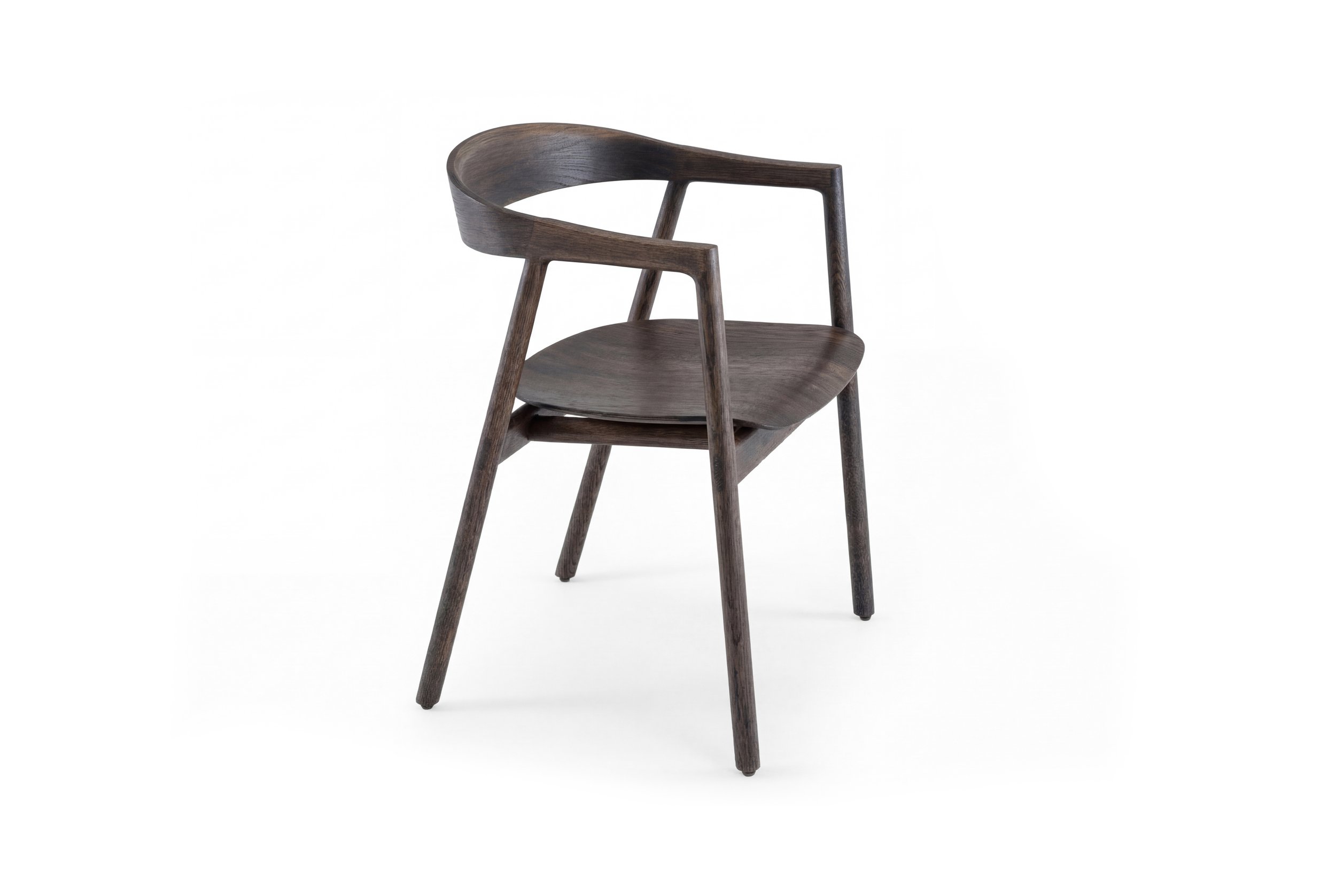
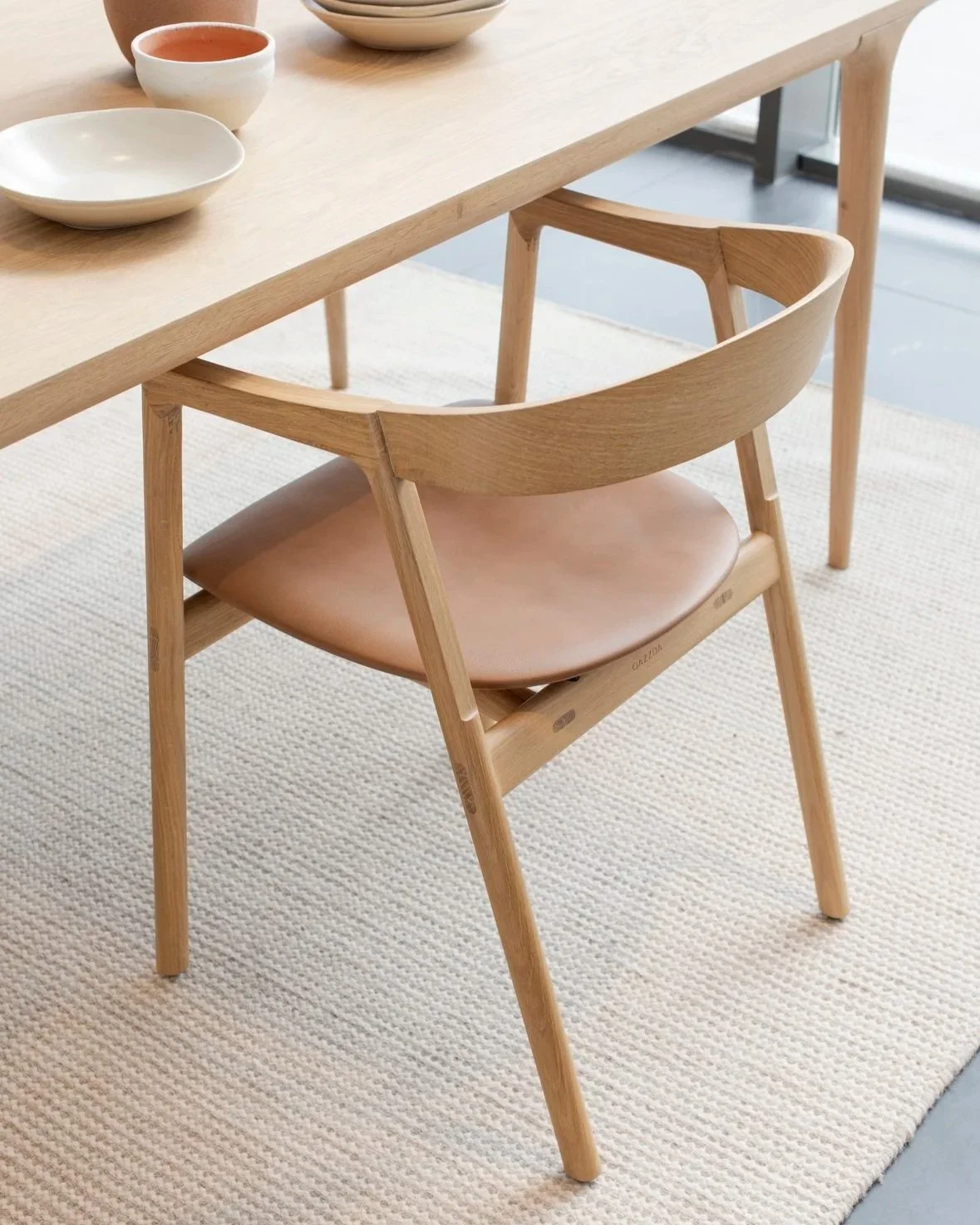
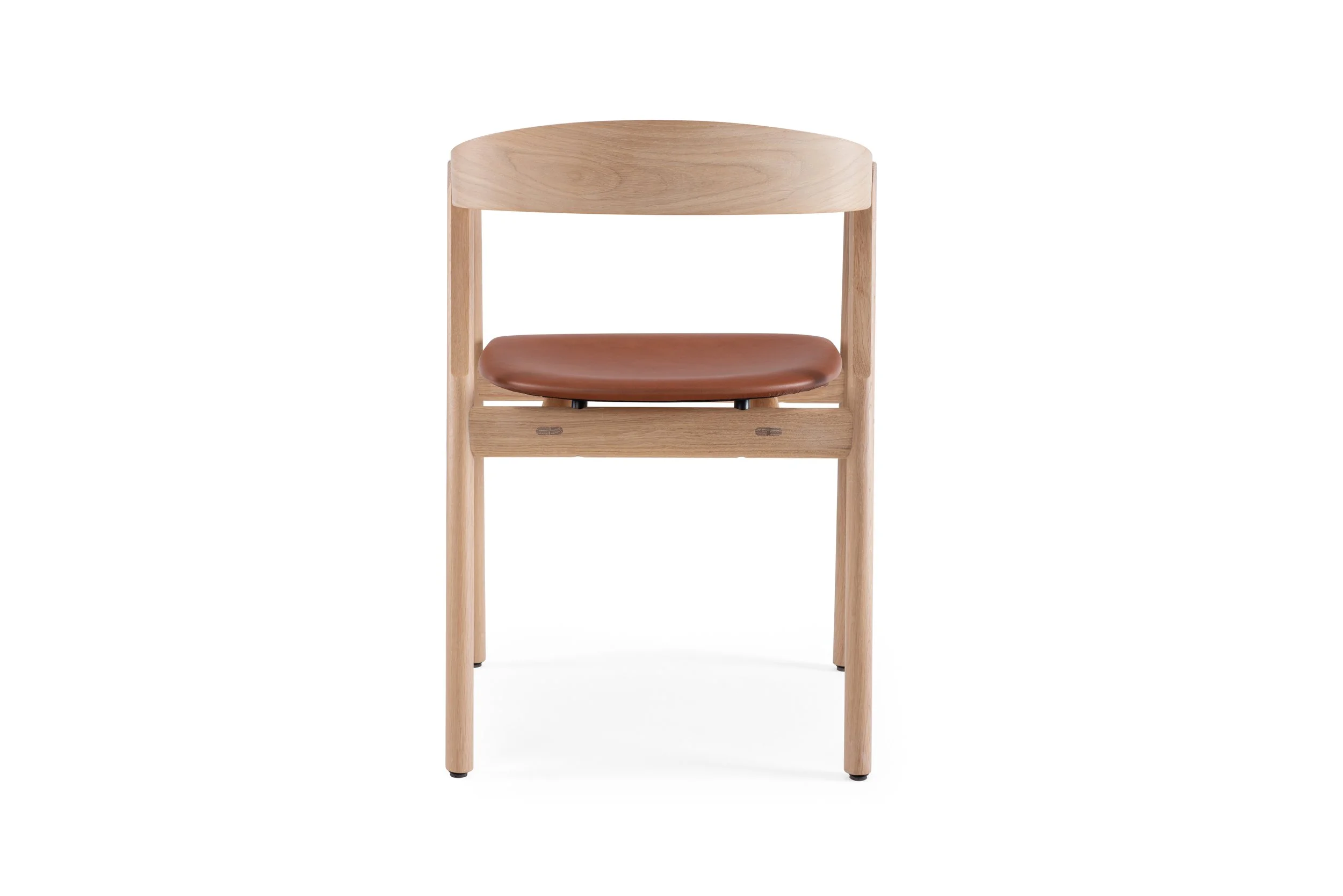
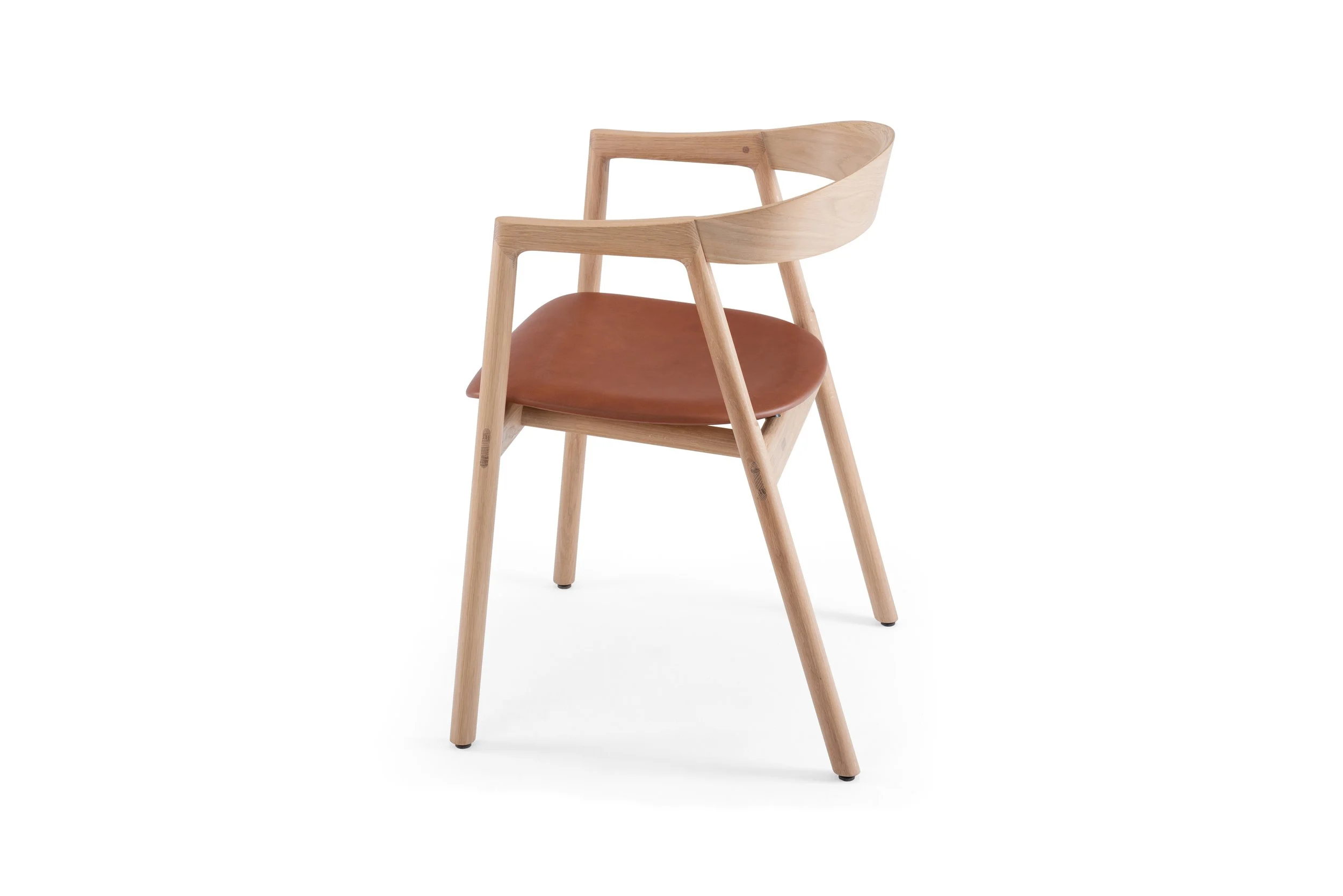
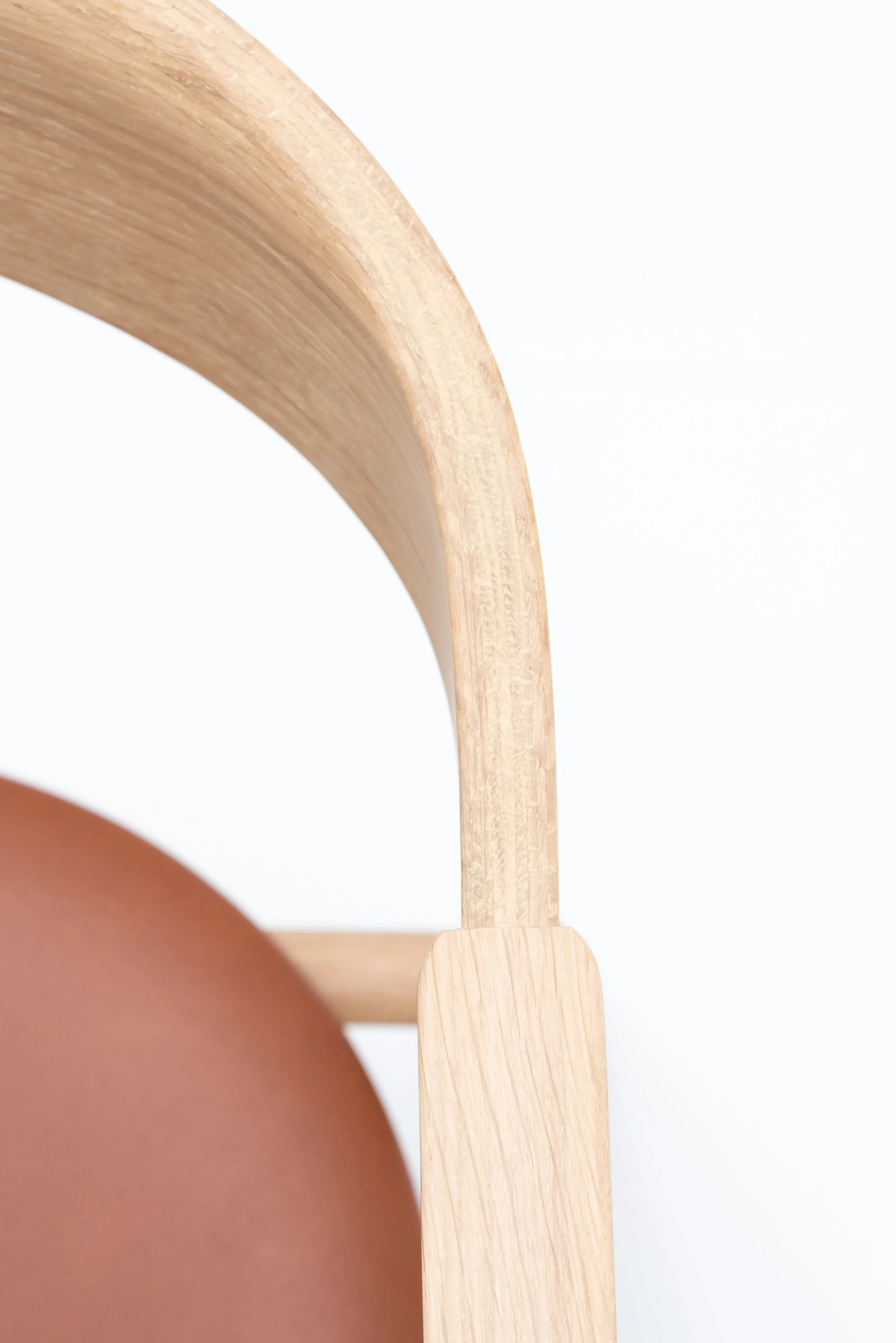
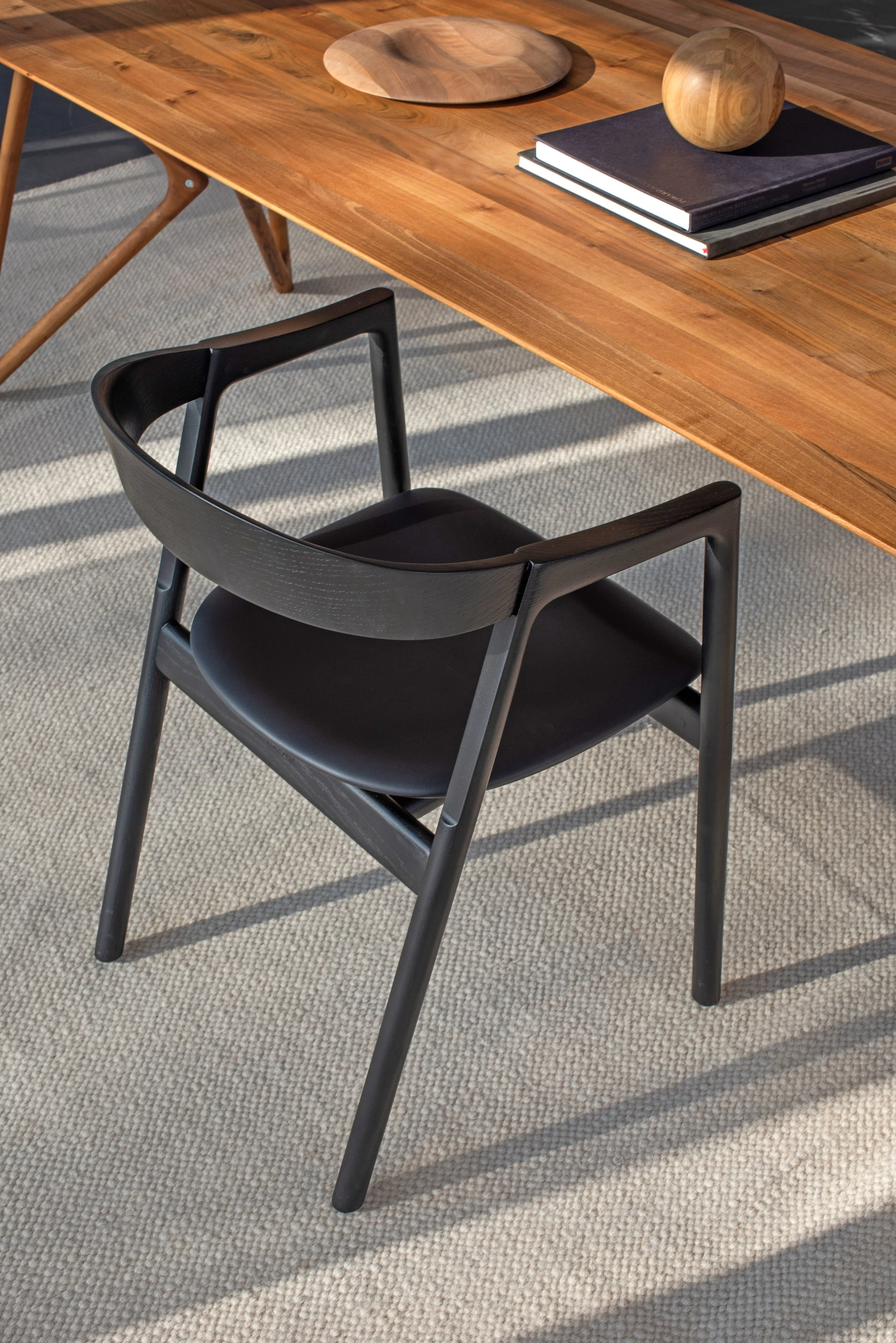
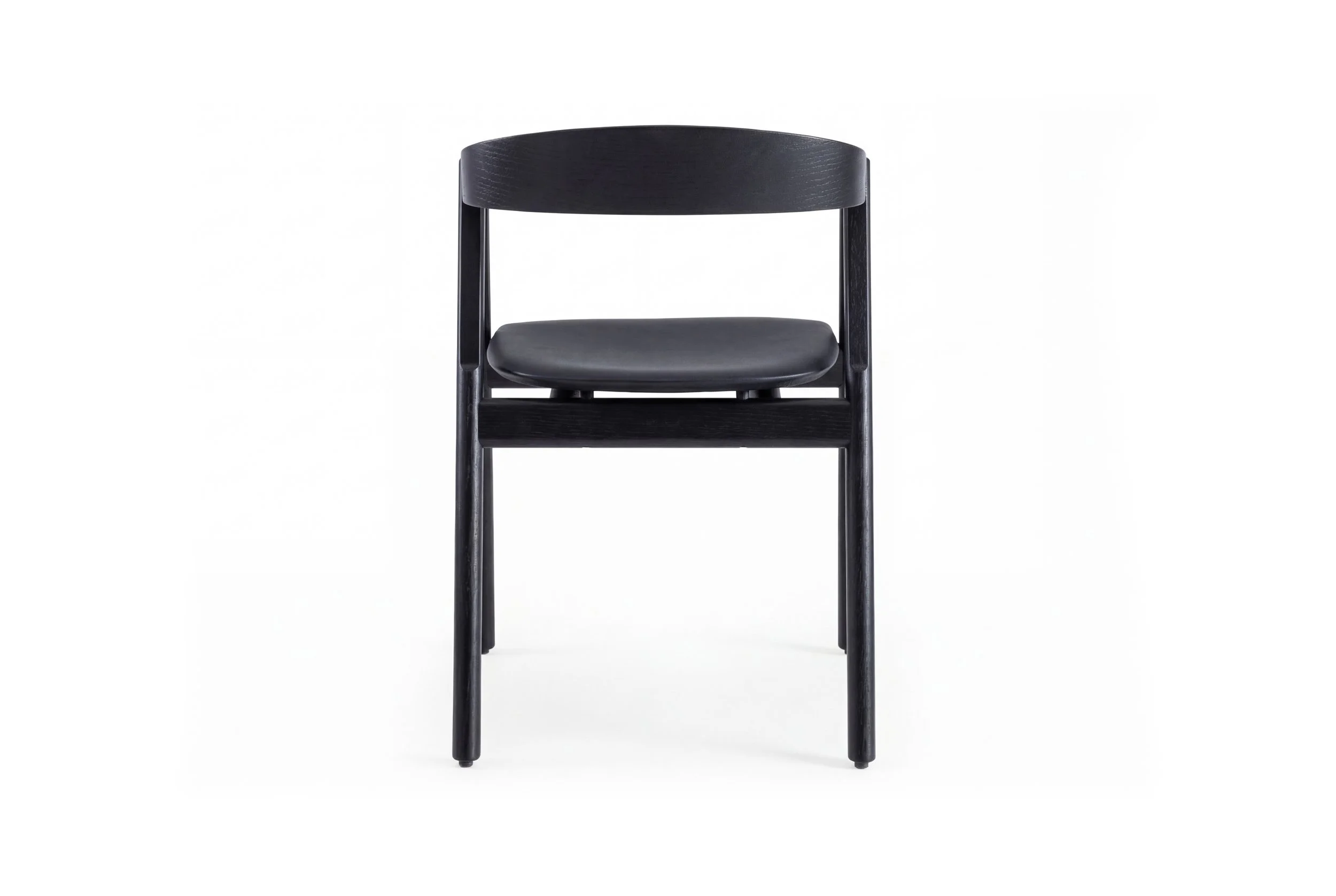
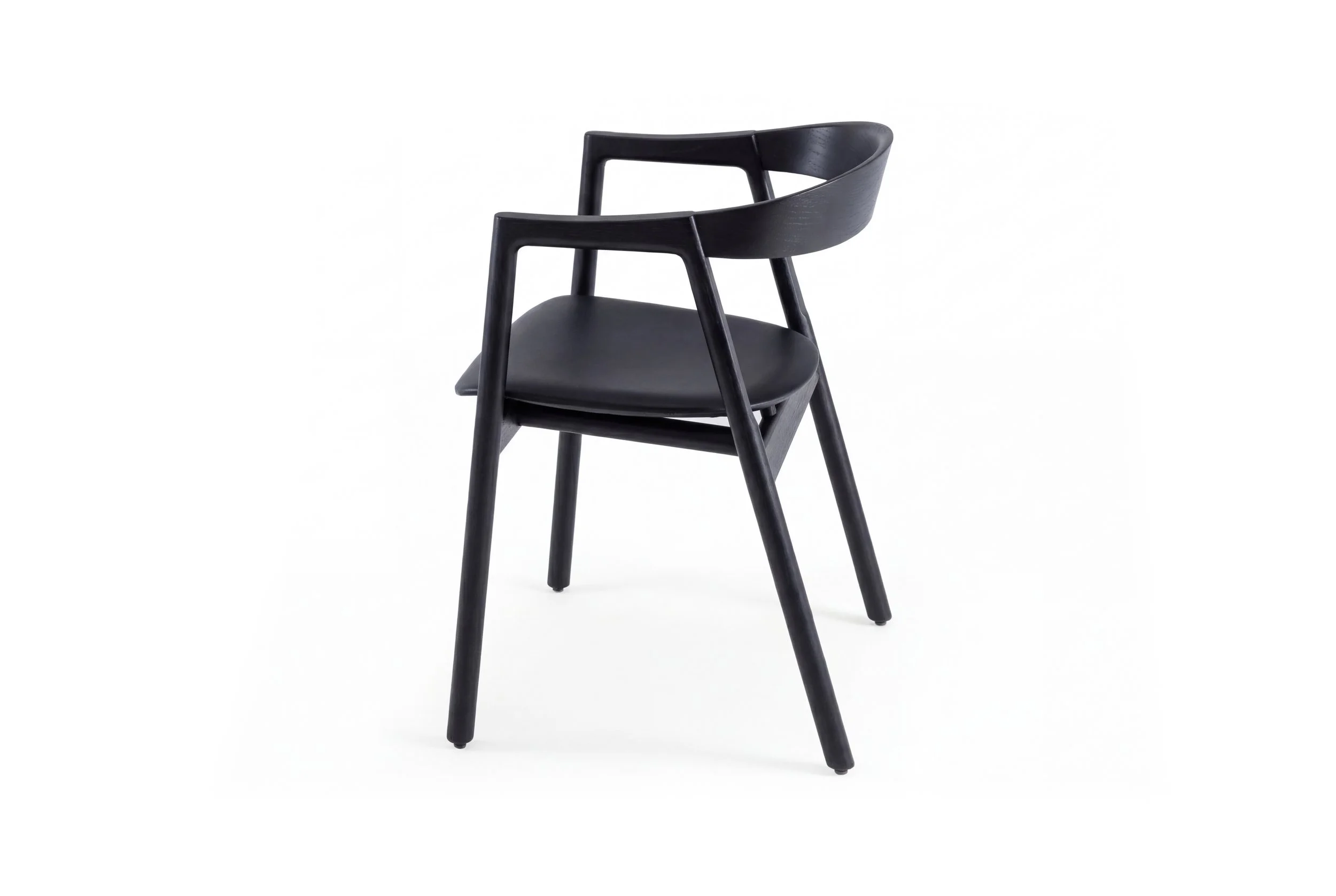
The armrests and backrest follow one continuous line. Where the backrest meets the armrest, a custom joint was developed with a stepped internal shape that provides structural strength without visible bulk. On the outside, the same connection is resolved by subtly flattening the cylindrical armrest, creating a clean transition between round and flat forms. This detail was made deliberately longer than its function requires, turning a structural need into one of the chair’s most recognizable features. At the main load-bearing points, wedged mortise and tenon joints are left visible, adding mechanical strength and a quiet visual accent.
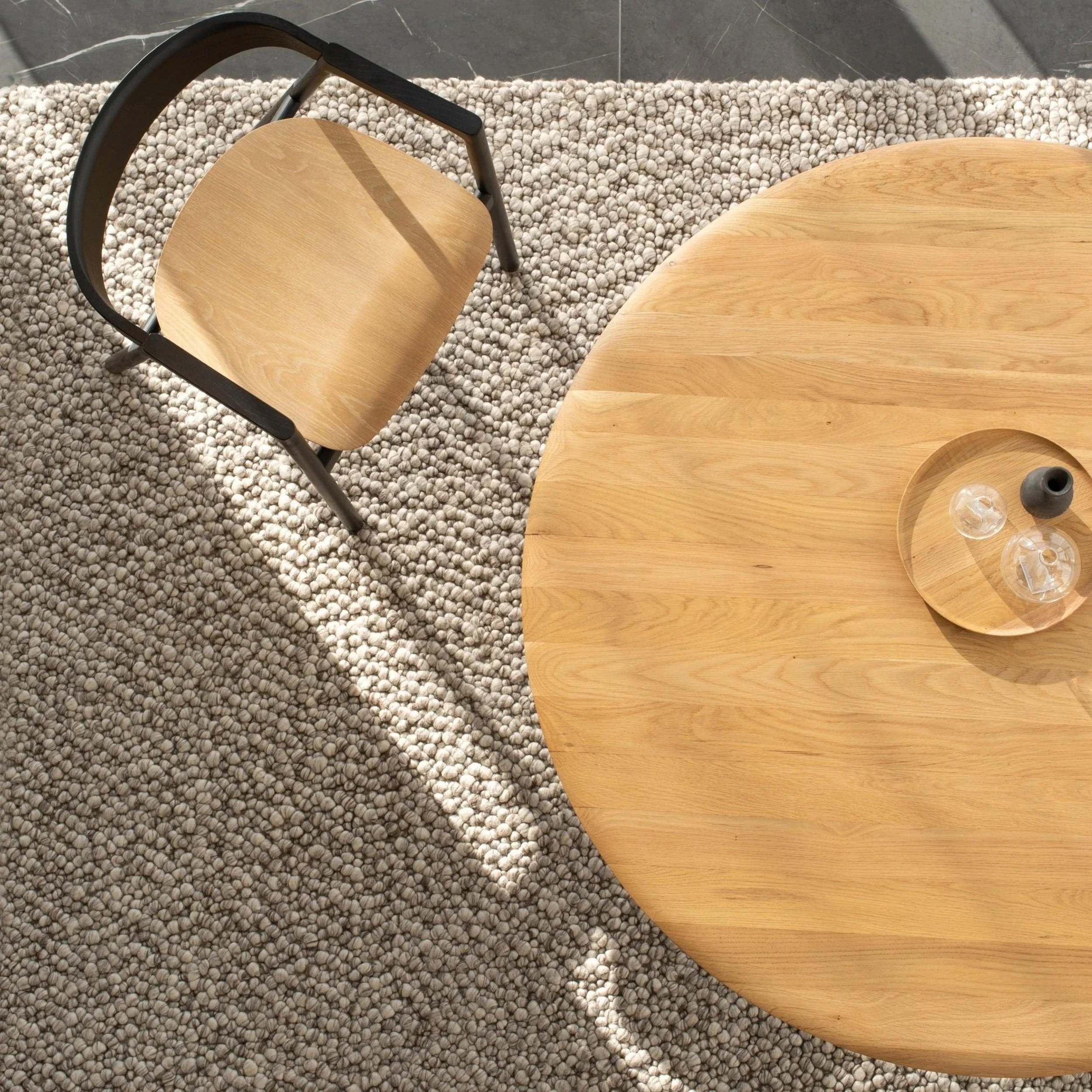
The frame is solid oak or walnut, available in oiled or lacquered finishes. The upholstered seat is tucked into a hidden channel underneath, leaving no visible staples or fixings. The seat is gently thinned at the sides, which gives it an almost floating quality and a lighter, more elegant profile than its solid construction might suggest. Even from below, every surface is cleanly resolved.
Muna was designed by Salih Teskeredžić, who refined the chair over six prototypes. His background in workshop-led development shows in the way structural logic drives the form: nothing is added for effect, and nothing needed is hidden.
Named after the designer’s aunt Munevera, Muna carries a sense of family in its name and a sense of permanence in its build. It is a chair made to be lived with.
FSC® Certified - Oak

One pivotal aspect of our commitment to sustainability is our firm dedication to sourcing wood exclusively from FSC®-certified forestry. As this product bears the FSC® label (FSC-C130602), you can be assured of its ethical origin and its contribution to preserving our precious forests.
Share your inspiration - tag us or use #GAZZDA for a chance to be featured.


-
-
Muna Chair fulfil requirements of standard BAS EN 16139:2014 + BAS EN 16139/Cor1:2014 Furniture - Strength, durability and safety - Requirement for non-domestic seating.
Download Certificate >> -
Image bank
Packshots & Lifestyle images
Download images >>
Architect files
(3dsmax, Revit, Archicad, Skechup, Autocad)
Download 2D, 3D & BIM >> -
Body
The chair’s body is crafted from solid wood, while the bent backrest is made from thin slices of high-quality veneer. The base is connected using characteristic, visible wedged mortise and tenon joints. Felt gliders are attached to the legs and are suitable for most types of flooring. The seat is secured to the frame with matte black plastic seat spacers.Seat
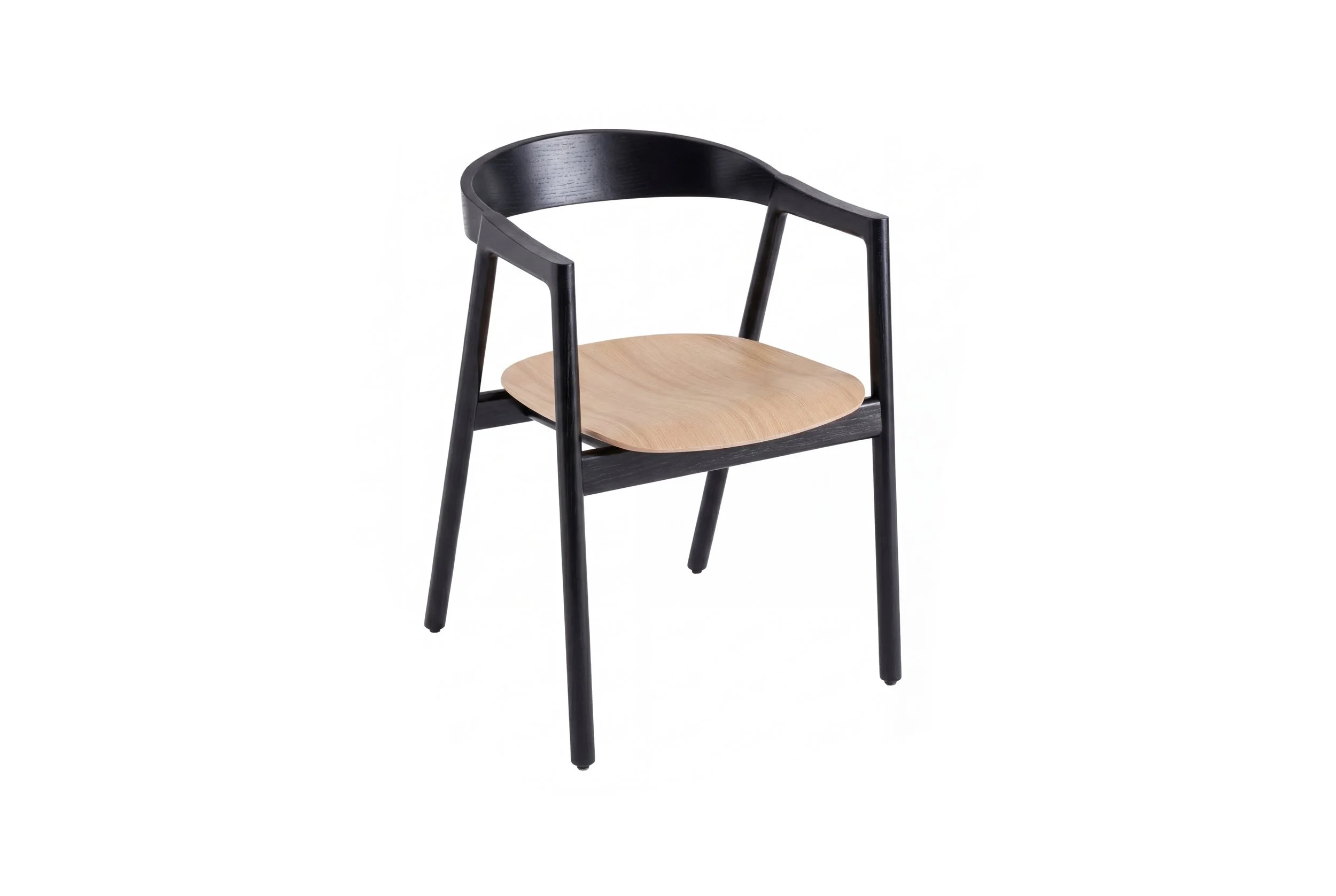
Three material options are available for the seat: form-pressed veneer, leather upholstery, or fabric upholstery.Finish
Available in three plant-based Hardwax Oil finishes that preserve the wood’s natural appearance: White, Natural, and Smoked Oil (for the solid oak version). A black lacquered option is also available. The walnut version is offered exclusively in a Natural Oil finish.Care & Maintenance
Please see the Materials page on our website. -
Size (cm)
W: 54, D: 53, H: 75

Meet the designer

Salih Teskeredzic
Muna was designed by Salih Teskeredžić, who works closely with craftspeople in the workshop throughout the development process. Salih refined the chair over six prototypes across six months, with each iteration solving a specific structural or proportional question. His approach is rooted in workshop logic: he develops forms by making and testing rather than finalising from drawings alone. This shows in Muna’s construction, where every visible detail originated from a structural decision made during prototyping.
Muna’s Creation
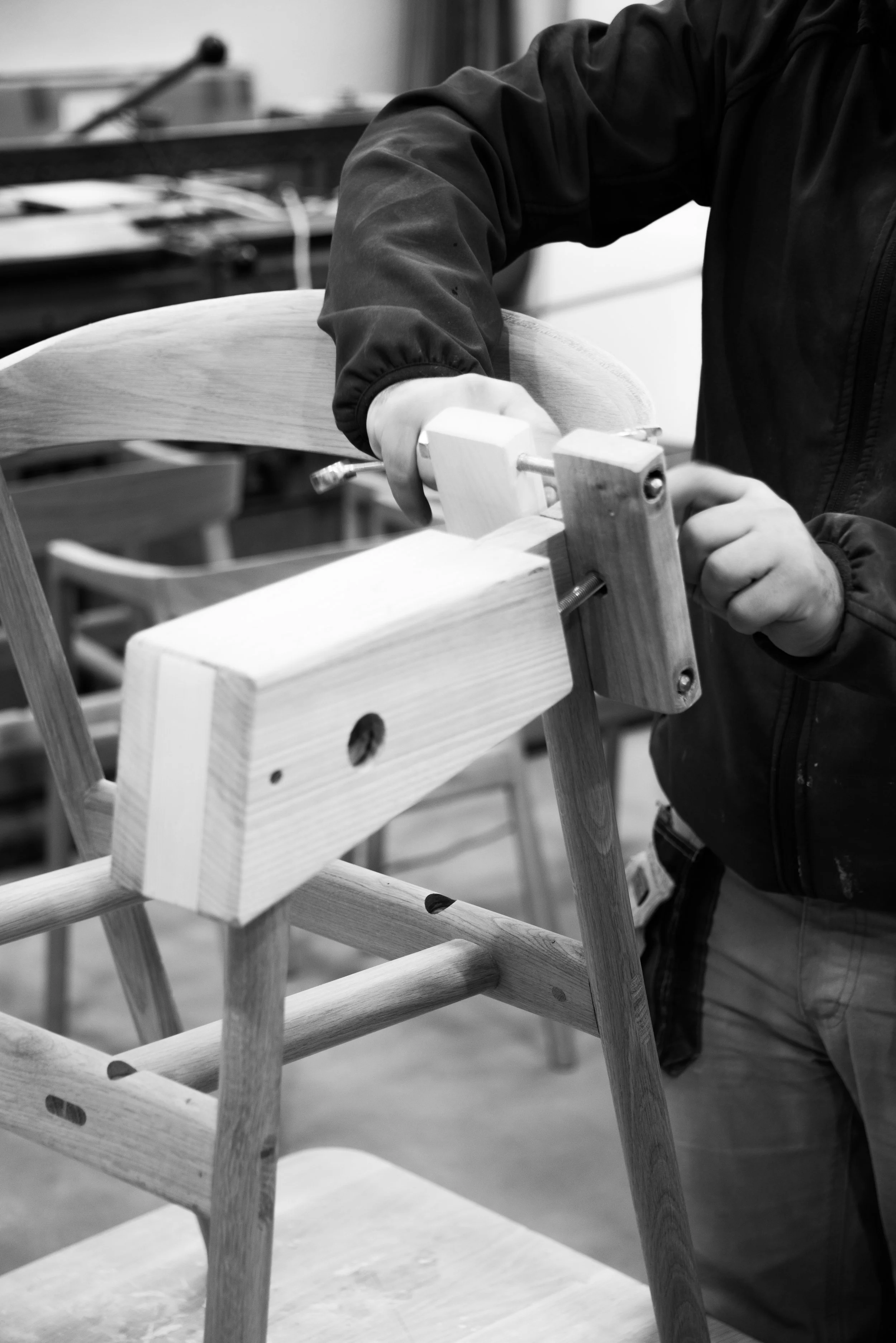
Over six months and six prototypes, the design was shaped through a series of structural challenges. The most significant was the connection between backrest and armrest.
A custom joint was developed, with a stepped internal form that locks the pieces together without visible bulk.